no scripts enabled
Medikabazaar
Cart
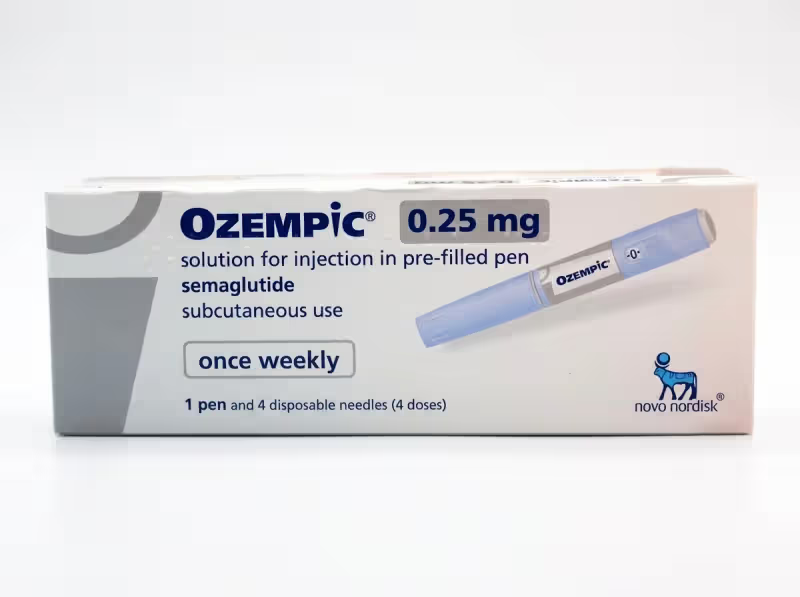
Ozempic 0.25mg Injection

Your Advantages

Brand novo-nordisk

Ozempic 0.25mg Injection contains Semaglutide, a glucagon-like peptide-1 (GLP-1) receptor agonist, used to improve blood sugar control in adults with type 2 diabetes mellitus.


Benefits

Ozempic 0.25mg helps to improve glycemic control and lower A1C levels in adults with type 2 diabetes. For patients with type 2 diabetes and established cardiovascular disease, it can reduce the risk of major cardiovascular events such as heart attack, stroke, or cardiovascular death. Additionally, in adults with type 2 diabetes and chronic kidney disease, it helps to lower the risk of worsening kidney disease, kidney failure, and cardiovascular death. The active ingredient, semaglutide, mimics a natural hormone to stimulate insulin release when blood sugar is high, decrease glucagon production, and slow stomach emptying, contributing to better blood sugar management.


Uses and Indications

  • Treatment of adults with insufficiently controlled type 2 diabetes mellitus, as an adjunct to diet and exercise.
  • To reduce the risk of major adverse cardiovascular events (cardiovascular death, non-fatal myocardial infarction, or non-fatal stroke) in adults with type 2 diabetes mellitus and established cardiovascular disease.
  • To reduce the risk of kidney function decline, kidney failure, and cardiovascular death in patients with type 2 diabetes and chronic kidney disease.

The Ozempic 0.25mg Injection contains:

  • Semaglutide 0.25mg (active ingredient).
  • Excipients: Propylene glycol, phenol, disodium phosphate dihydrate, sodium hydroxide/hydrochloric acid (for pH adjustment), and water for injections.
Active Ingredient(s)Semaglutide
Therapeutic ClassGLP-1 receptor agonist
Route of AdministrationSubcutaneous injection
Storage ConditionsUnopened: Refrigerate (2°C to 8°C). After first use: Store at room temperature (up to 30°C) or refrigerate (2°C to 8°C) for up to 56 days.
Regulatory ApprovalCDSCO (India), FDA (US)
Licensed IndicationsType 2 Diabetes Mellitus; Reduction of major adverse cardiovascular events in adults with type 2 diabetes and established cardiovascular disease; Reduction of kidney function decline, kidney failure, and cardiovascular death in patients with type 2 diabetes and chronic kidney disease.

Dosage and Administration

  1. Administer as a subcutaneous injection once weekly, on the same day each week, at any time of the day, with or without meals.
  2. The starting dose is 0.25 mg once weekly for 4 weeks. This dose is intended for treatment initiation and is not effective for glycemic control.
  3. After 4 weeks, the dose should be increased to 0.5 mg once weekly. Further dose increases to 1 mg or 2 mg once weekly may be made after at least 4 weeks on the previous dose, if additional glycemic control is needed, as determined by your healthcare professional.
  4. Inject subcutaneously in the abdomen, thigh, or upper arm. Use a different injection site each week when injecting in the same body region.
  5. Always use a new needle for each injection and remove it after each use.


Storage and Disposal

  • Before first use, store in a refrigerator (2°C to 8°C / 36°F to 46°F). Do not freeze and keep away from the cooling element. Keep the pen cap on to protect from light.
  • After first use, the pen can be stored for up to 56 days (8 weeks) at room temperature (up to 30°C / 86°F) or in a refrigerator (2°C to 8°C / 36°F to 46°F).
  • Do not use if the solution is not clear and colorless or almost colorless, or if particulate matter is seen.
  • Dispose of the pen after 56 days, even if some solution remains.
  • Keep out of sight and reach of children.

Precautions and Safety

  • Ozempic carries a boxed warning regarding the risk of thyroid C-cell tumors, including medullary thyroid carcinoma (MTC), observed in rodents. The human relevance of this risk is currently unknown.
  • This medicine is contraindicated in patients with a personal or family history of MTC or in those with Multiple Endocrine Neoplasia syndrome type 2 (MEN 2). Patients should be informed about the potential risk of MTC and symptoms of thyroid tumors, such as a mass in the neck, difficulty swallowing, shortness of breath, or persistent hoarseness.
  • Ozempic is not recommended for use in patients with a history of pancreatitis.
  • It is not a substitute for insulin and is not indicated for type 1 diabetes mellitus or diabetic ketoacidosis.
  • Serious side effects may include inflammation of the pancreas (pancreatitis), changes in vision (diabetic retinopathy complications), low blood sugar (hypoglycemia), kidney problems due to dehydration, gallbladder problems (cholelithiasis), and serious allergic reactions.
  • The risk of hypoglycemia increases when Ozempic is used in combination with sulfonylurea or insulin.
  • Never share your Ozempic pen with other people, even if the needle is changed, as this increases the risk of transmitting blood-borne pathogens.
  • This medicine is not recommended for children and adolescents under 18 years of age.


Side Effects and Risks

  • Common side effects include nausea, vomiting, diarrhea, abdominal pain, and constipation. These are often more frequent when initiating treatment or increasing the dose.
  • Other possible side effects may include decreased appetite, headache, and reactions at the injection site.
  • Serious side effects, though less common, can include pancreatitis, vision changes, severe low blood sugar, kidney problems, gallbladder issues, and severe allergic reactions.


Disclaimer

Use this medicine only under the prescription and guidance of a qualified doctor or pharmacist.

twitterlinkedinfacebookinstagramyoutube
@Copyright Boston Ivy Healthcare Solutions Private Limited