

Hospitals
Specifying the Right Gauze Piece: A Clinical and Operational Breakdown
An operational guide for clinicians and procurement managers on selecting the correct gauze piece. Understand ply, sterility, material, and standards for optimal patient care.


The humble gauze piece is one of the most fundamental consumables in any healthcare setting, from a high-dependency ICU to a local dental clinic. Its ubiquity can sometimes lead to a lack of scrutiny during procurement. However, making a precise, application-specific selection has direct implications for patient outcomes, infection control protocols, and overall operational efficiency.
Thinking beyond a single "gauze piece" and instead specifying based on material, construction, sterility, and application is the hallmark of a clinically-aware and operationally-sound procurement strategy. This guide breaks down the critical parameters to consider from a peer's perspective.
Woven vs. Non-Woven: Understanding the Core Construction
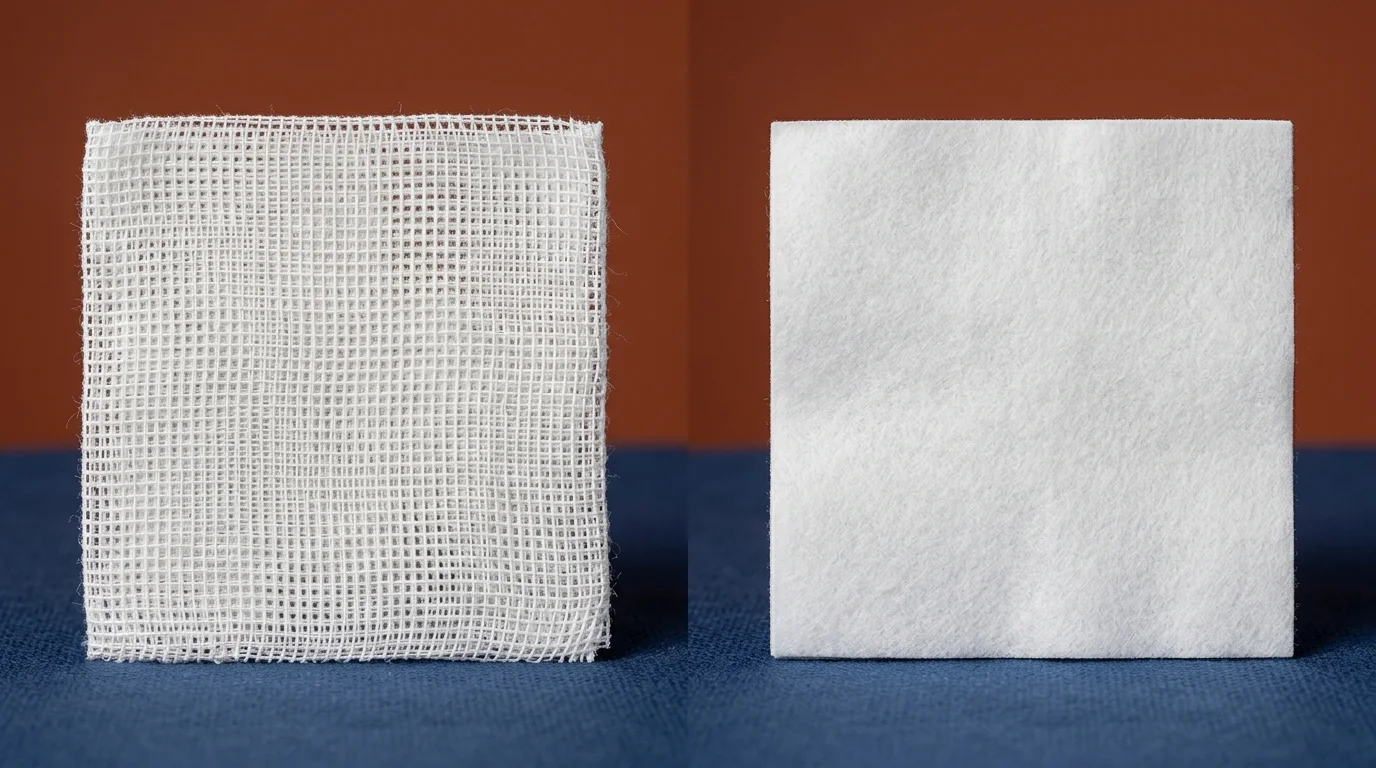 The primary distinction in gauze construction lies in whether the fibres are woven or non-woven. This single factor dictates the material's strength, absorbency, and potential for linting, making it the first decision point in your selection process.
- Woven Gauze: This is the traditional material, typically made from 100% cotton threads woven together in a crisscross pattern. Its structure gives it high tensile strength, making it ideal for applications requiring durability.
- Clinical Strengths: Excellent for packing deep or tunnelling wounds, debridement procedures, and as a primary dressing where mechanical strength is needed. The open weave structure is also effective for wicking away thicker exudate.
- Operational Considerations: Can potentially leave behind lint or fibres in a wound bed if cut. To mitigate this, high-quality surgical gauze pieces have their edges folded and stitched in, creating a "swab" that minimises fraying.
- Non-Woven Gauze: Manufactured by pressing and bonding fibres (often polyester, rayon, or blends) together, non-woven gauze has a fabric-like texture.
- Clinical Strengths: Exceptionally soft and low-linting, making it much safer for use around open wounds, sensitive areas, and for cleaning medical instruments. It generally possesses superior absorbency compared to woven gauze of the same weight, wicking moisture away quickly.
- Operational Considerations: While highly absorbent, it has less mechanical strength than woven gauze. It is not suitable for aggressive debridement or packing where structural integrity is paramount.
At a glance:
| Feature | Woven Gauze | Non-Woven Gauze |
| Material | 100% Cotton | Polyester, Rayon, or Blends |
| Construction | Interlaced threads | Pressed and bonded fibres |
| Linting | Higher potential | Very low |
| Absorbency | Good | Excellent, often superior |
| Strength | High tensile strength | Lower tensile strength |
| Best For | Packing, debridement, cushioning | General dressing, cleaning, low-lint needs |
Key Specification Parameters for Procurement
Once you have decided between woven and non-woven, the next step is to drill down into the specific technical parameters. These details are what separate a generic consumable from a fit-for-purpose clinical tool.
Ply and Thread Count
These two parameters define the density and absorbency of the gauze piece.
- Ply: Refers to the number of layers of material folded together. Common configurations include 8-ply, 12-ply, and 16-ply. A higher ply count directly increases absorbency, cushioning, and bulk. An 8-ply gauze might be sufficient for minor wound cleaning, while a 12-ply or 16-ply sterile swab is standard for absorbing significant fluid in a surgical setting.
- Thread Count (for Woven Gauze): This specifies the number of threads per square inch (e.g., 24 x 20, 19 x 15). It is often aligned with Bureau of Indian Standards (BIS) classifications such as Type 13 or Type 17. A higher thread count results in a tighter, denser weave with greater strength and less linting, while a lower count produces a more open, porous material.
Size and Form Factor
Gauze pieces are available in standard sizes—5x5 cm, 7.5x7.5 cm, and 10x10 cm being the most common. Procuring the correct size for the intended application is critical for both clinical efficacy and waste reduction. Using a 10x10 cm piece where a 5x5 cm would suffice is an unnecessary operational expense repeated hundreds of times a day.
Sterility: A Non-Negotiable Divide
The distinction between sterile and non-sterile gauze is absolute and dictates its permissible use.
- Sterile Gauze: Each piece or small pack is individually sealed and sterilised using validated methods like Ethylene Oxide (EO) gas or Gamma radiation. The packaging must be intact, with clear sterility indicators and an expiry date. Sterile gauze is mandatory for any procedure that breaks the skin barrier: surgery, invasive procedures, dressing open wounds, and packing cavities.
- Non-Sterile (Bulk) Gauze: Supplied in larger packs, this is a high-volume consumable for applications that do not involve contact with non-intact skin. This includes general cleaning of surfaces, skin prepping before an injection, padding, or as a component in a kit that will be sterilised in-house via an autoclave. Using non-sterile gauze on an open wound is a serious breach of infection control protocol.
Matching the Gauze Piece to the Clinical Application
The true test of a procurement strategy is ensuring the right product is available at the point of care. Different hospital departments have vastly different requirements.
- Operating Theatre & Casualty: This environment demands the highest specifications. Sterile, high-ply (12-ply or 16-ply) woven gauze with an X-ray detectable thread is the standard. The radiopaque thread is a critical safety feature to prevent gossypiboma (retained surgical item). For surgical and wound care applications, selecting from a range of sterile and X-ray detectable gauze swabs is a standard part of OT and casualty stock planning.
- Wards and Outpatient Departments (OPD): A mix of sterile and non-sterile options is required. Sterile non-woven gauze is excellent for routine dressing changes due to its high absorbency and low adherence to the wound bed. Non-sterile woven gauze is a workhorse for cleaning skin, trolleys, and minor spills.
- Dental Practices: Small, sterile cotton gauze pieces are essential. They are used for applying pressure post-extraction, managing bleeding, and isolating areas during procedures. Absorbency and softness are key criteria.
- Diagnostic and Pathology Labs: Low-linting non-woven gauze is heavily preferred. It is used for applying pressure after phlebotomy without leaving fibres on the puncture site and for wiping down sensitive equipment like microscope slides and lenses.
Compliance and Quality Assurance in Sourcing
Sourcing medical consumables like gauze pieces requires a robust quality assurance framework. The clinical risk associated with a poor-quality product is significant.
- Regulatory Standards: Ensure your supplier's products conform to relevant standards. Look for compliance with BIS specifications for medical textiles (e.g., IS 758) and manufacturing under a license as per the Indian Medical Device Rules, 2017.
- Quality Management Systems: A supplier with an ISO 13485 certification demonstrates a commitment to a quality management system specifically for medical devices. This is a strong indicator of reliable manufacturing processes.
- Packaging and Traceability: This is non-negotiable for sterile products. Every pack must clearly display the batch number, manufacturing date, expiry date, and method of sterilisation. This information is vital for inventory management (implementing a strict First-Expiry, First-Out system) and for traceability in the unlikely event of a batch recall.
Equip Your Facility Today
Ensuring your clinical teams have access to the appropriate type and quality of gauze is fundamental to patient safety and operational readiness. Evaluate your facility's needs across the OT, wards, OPD, and labs to build and maintain a well-managed, specification-driven inventory. By making informed choices, you directly contribute to better clinical outcomes and a more efficient healthcare environment.
FAQs

