

Hospitals
Selecting the Correct Bandage Tape: A Clinical and Operational Breakdown
An essential resource for clinicians and procurement heads on choosing the right bandage tape based on material, adhesion, patient factors, and clinical use-case.


In any clinical setting, from a high-volume outpatient department to a critical care unit, the humble bandage tape is a constant. Its function, however, is far from simple. Selecting the wrong tape can lead to consequences ranging from minor skin irritation to serious medical adhesive-related skin injuries (MARSI), compromised wound dressings, or dislodged IV lines.
For the procurement manager or senior clinician, specifying the correct bandage tape is not a trivial decision. It's an exercise in balancing clinical need, patient safety, and operational efficiency. This guide moves beyond basic descriptions to provide a functional framework for evaluating and standardizing your facility’s tape selection.
Understanding the Core Components: Material and Adhesive
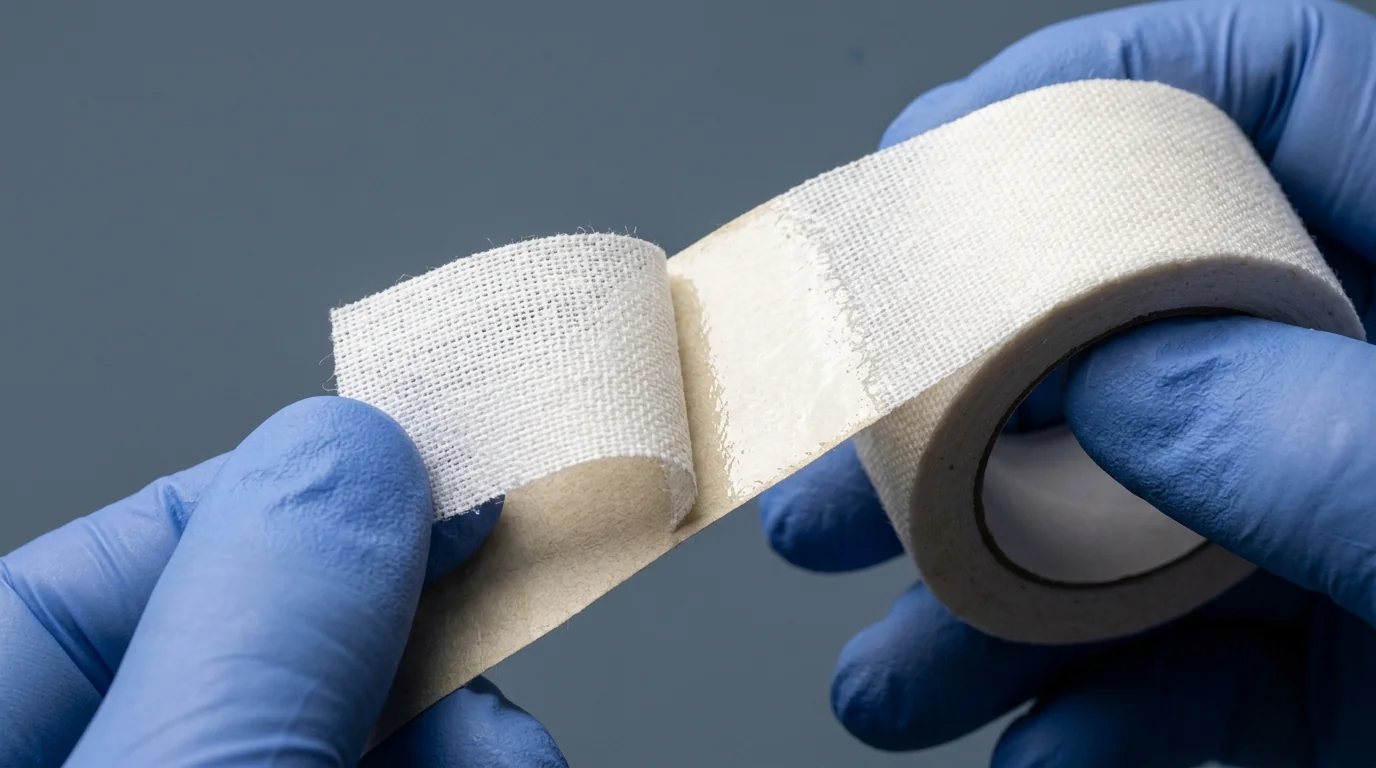 A bandage tape is not a single entity but a system composed of two key elements: the backing material and the adhesive. The interplay between these two defines its performance, application, and suitability for a given patient or procedure.
Backing Materials: The Foundation of Functionality
The material of the tape dictates its strength, breathability, conformability, and resistance to fluids.
- Fabric (Cloth): Typically made of cotton or a polyester blend, fabric tapes offer high tensile strength and excellent adhesion. They are highly conformable to body contours. Their primary use is for securing heavier dressings, splints, or tubing where robust fixation is paramount. While some are breathable, they can absorb fluids.
- Paper: This is the go-to for sensitive or fragile skin, common in geriatric and paediatric patients. Paper tapes are lightweight, highly breathable (preventing skin maceration), and generally hypoallergenic. The adhesive is gentle, allowing for frequent dressing changes with minimal trauma.
- Plastic (Polymer Film): These tapes are occlusive and waterproof, providing a barrier against external contaminants like water and bacteria. Transparent versions are particularly useful for securing IV catheters, as they allow for continuous monitoring of the insertion site without removing the dressing. Perforated versions offer a degree of breathability.
- Foam: Offering cushioning and significant stretch, foam tapes are ideal for securing dressings over joints or areas prone to movement. Their padding provides extra protection and comfort, and they conform exceptionally well to uneven anatomical surfaces.
- Elastic: Designed to stretch and move with the patient, elastic tapes are used for compression applications or to secure dressings in dynamic areas. They provide controlled compression without constricting circulation when applied correctly.
Adhesive Types: The Science of Securement
The adhesive determines how well the tape sticks, how gently it removes, and its potential for causing skin reactions.
- Acrylate-based: This is the most common adhesive in medical tapes. It provides a reliable and durable bond that strengthens over time. It offers a good balance of performance and gentleness for the general patient population.
- Silicone-based: The gold standard for at-risk skin. Silicone adhesives are extremely gentle upon removal, repositionable, and minimise skin stripping and patient discomfort. They are the preferred choice in neonatology, geriatrics, oncology, and for patients with compromised skin integrity.
- Zinc Oxide-based: This is a strong, rigid adhesive often found in athletic or strapping tapes. While its adhesion is very aggressive and long-lasting, it can be occlusive and difficult to remove, making it suitable for specific orthopaedic applications rather than general ward use.
Key Evaluation Criteria for Procurement and Clinical Use
A systematic approach to selection ensures that the chosen tape meets the specific demands of the clinical environment. Run through this checklist when evaluating options for your facility.
Patient-Specific Factors
- Skin Integrity: Is the patient elderly, a neonate, or receiving medication (e.g., steroids) that compromises skin? If so, a gentle paper or silicone tape is indicated.
- Known Allergies: While most modern tapes are latex-free, sensitivities to specific acrylate adhesives can occur. A clear protocol for documenting and responding to skin reactions is essential.
- Anatomical Location: A flat, non-mobile area like the back can tolerate a stronger adhesive. A joint like the elbow or a contoured area like the neck requires a more conformable, flexible tape.
Application-Specific Requirements
- Duration of Use: Will the tape be in place for hours or days? Long-term applications demand breathability to prevent maceration.
- Required Adhesion Strength: Securing a critical arterial line requires a different level of adhesion than holding a small piece of gauze over a phlebotomy site.
- Fluid Exposure: Will the site be exposed to water, sweat, or exudate? A waterproof plastic tape is necessary to protect the area and maintain adhesion.
Operational Considerations
- Ease of Use: Is the tape hand-tearable? A tape that can be torn easily from the roll saves time in fast-paced environments like the casualty or OT.
- Sterility: Is the tape intended for use in a sterile field? Ensure you are sourcing sterile-packaged rolls for surgical applications.
- Inventory Standardisation: While specialisation is crucial, analyse your usage patterns. Can two or three versatile tape types (e.g., a paper tape for sensitive skin, a plastic waterproof tape for IVs, and a fabric tape for heavy-duty needs) cover 80% of your facility's requirements? This simplifies inventory management and training.
A Practical Matrix for Selecting Bandage Tape
To simplify decision-making, consider this summary. Evaluating the full spectrum of available surgical tape for medical use against these criteria ensures you select the optimal product for each application.
| Tape Type | Key Properties | Primary Clinical Applications | Considerations |
| Paper | Hypoallergenic, breathable, gentle adhesion | Frequent dressing changes, fragile/elderly skin, securing lightweight tubing | Lower adhesion strength, not water-resistant |
| Fabric (Cloth) | High strength, strong adhesion, conformable | Securing heavy dressings, splints, immobilisation | Can be occlusive, may leave residue |
| Plastic | Waterproof, transparent, easy to clean | Securing IV lines, catheters; protective cover | Non-breathable (can cause maceration), less conformable |
| Foam | Cushioned, highly conformable, stretchable | Pressure dressings, securing dressings on joints | Can be bulky, higher material volume |
| Elastic | Provides compression, flexible, self-adherent | Compression wraps, support for sprains/strains | Requires proper application technique to avoid constriction |
| Silicone | Extremely gentle removal, repositionable | Neonates, geriatrics, compromised or at-risk skin | Adhesion may be less aggressive than acrylates |
Note: Always refer to the manufacturer's specifications for detailed properties and indications for use.
Best Practices for Application and Removal
Proper technique is as important as proper product selection. In the varied Indian climate, particularly in areas with high humidity, these steps are critical.
Application Protocol
- Prepare the Skin: The skin must be clean and completely dry. Use an alcohol wipe to remove oils and allow it to air dry. This step is non-negotiable for achieving proper adhesion, especially in humid conditions.
- Apply Without Tension: Never stretch the tape during application. Applying tape under tension creates shear forces that can lead to blistering and skin tearing.
- Activate the Adhesive: After applying the tape, apply light but firm pressure, rubbing from the centre outwards for several seconds. This ensures the pressure-sensitive adhesive makes full contact with the skin.
Removal Protocol
- Low and Slow: Do not pull the tape upwards (at a 90-degree angle). Instead, loosen one edge and pull it back slowly, parallel to the skin, in the direction of hair growth.
- Support the Skin: Use your other hand to press down on the skin adjacent to the peeling tape. This counter-pressure stabilises the skin and minimises epidermal stripping.
- Use Adhesive Removers: For tightly adhering tapes or extremely sensitive skin, use a medical-grade adhesive remover. This breaks down the adhesive bond, allowing for atraumatic removal.
FAQs
Q1. What is the main difference between hypoallergenic and standard bandage tape? Hypoallergenic tape is formulated with adhesives that are less likely to cause an allergic reaction. It does not mean it is allergy-proof, but the components are selected to minimise the potential for contact dermatitis in the majority of the population. It is a critical specification for patients with known sensitivities or atopic skin.
Q2. Can a single type of bandage tape be standardized for our entire facility? While standardizing on one tape is not recommended due to diverse clinical needs, a "formulary" approach is highly effective. This involves selecting a primary general-use tape (e.g., a quality paper or fabric tape) and specific specialised tapes (e.g., silicone for NICU/geriatrics, waterproof plastic for IVs) that are approved for use in designated areas. This balances efficiency with patient safety.
Q3. How does climate, such as high humidity, affect bandage tape performance? High humidity introduces moisture at the skin-tape interface, which can significantly weaken the adhesive bond and lead to premature lifting or failure. In such conditions, meticulous skin preparation (ensuring the skin is bone-dry) is paramount. Selecting a tape with a more aggressive or water-resistant adhesive may also be necessary for critical applications.
Q4. What are the signs of a Medical Adhesive-Related Skin Injury (MARSI)? MARSI can present in several ways. Be vigilant for erythema (redness that mirrors the shape of the tape), maceration (whitened, waterlogged skin), blistering, skin erosion, or epidermal stripping (where the top layer of skin is torn away upon removal). Any such observation should be documented and prompt a re-evaluation of the tape type and technique being used.
Equip Your Facility Today
Ensuring your clinical teams have access to the appropriate bandage tape for every patient and procedure is fundamental to providing quality care. Review your facility’s protocols and stock to align with these best practices for improved patient outcomes and operational excellence.
FAQs

