
Home
Blogs
Microporous vs Transparent vs Silk Surgical Tape: A Practical Comparison for Hospital Wards

Hospitals
Microporous vs Transparent vs Silk Surgical Tape: A Practical Comparison for Hospital Wards
Micropore, Transpore or Durapore? Compare microporous, transparent and silk surgical tape on hold, water resistance and skin safety, with ward-by-ward picks.


microporous (paper) tape is the gentlest and most breathable surgical tape, but it has the lightest hold and is not water-resistant. Transparent plastic tape holds more firmly, resists water and lets you see the skin underneath. Silk-type tape gives the strongest everyday hold for heavier dressings and tubing. Most hospital wards need all three, each for different jobs.
This guide compares them side by side, using the names most doctors and nurses know: 3M Micropore (microporous paper tape), Transpore (transparent tape) and Durapore (silk-type tape). The same comparison applies to equivalent tapes from other manufacturers.
Which Surgical Tape to Use When
| Situation on the ward | Best choice | Why |
| Light gauze dressing on dry skin, changed daily | Microporous | Holds enough and removes gently with repeated changes |
| Fragile skin: elderly, neonates, long-term patients | Microporous or silicone | Lowest risk of skin stripping and tearing |
| Site that must stay visible (around an IV cannula or catheter) | Transparent | See-through and water-resistant |
| Damp, sweaty or wet areas; patients who bathe | Transparent | Keeps its hold when damp, where paper tape lifts |
| Heavy or bulky post-operative dressings | Silk-type | Highest holding strength of the three |
| Tubing under tension, splints, drains | Silk-type | Resists pulling and conforms to contours |
| Nasogastric tube on the nose | Transparent or silk-type; microporous on sensitive skin | Balances hold with skin tolerance |
What Makes Microporous Tape Different
Microporous tape has a thin, non-woven backing (rayon or a paper-like material) with tiny pores that let air and moisture vapour escape from the skin. Most microporous tapes use a hypoallergenic, latex-free acrylic adhesive. The result is a tape that stays comfortable on skin, removes with little trauma, and tears cleanly by hand, even when wearing gloves. Nurses can also write on it to date or label a dressing.
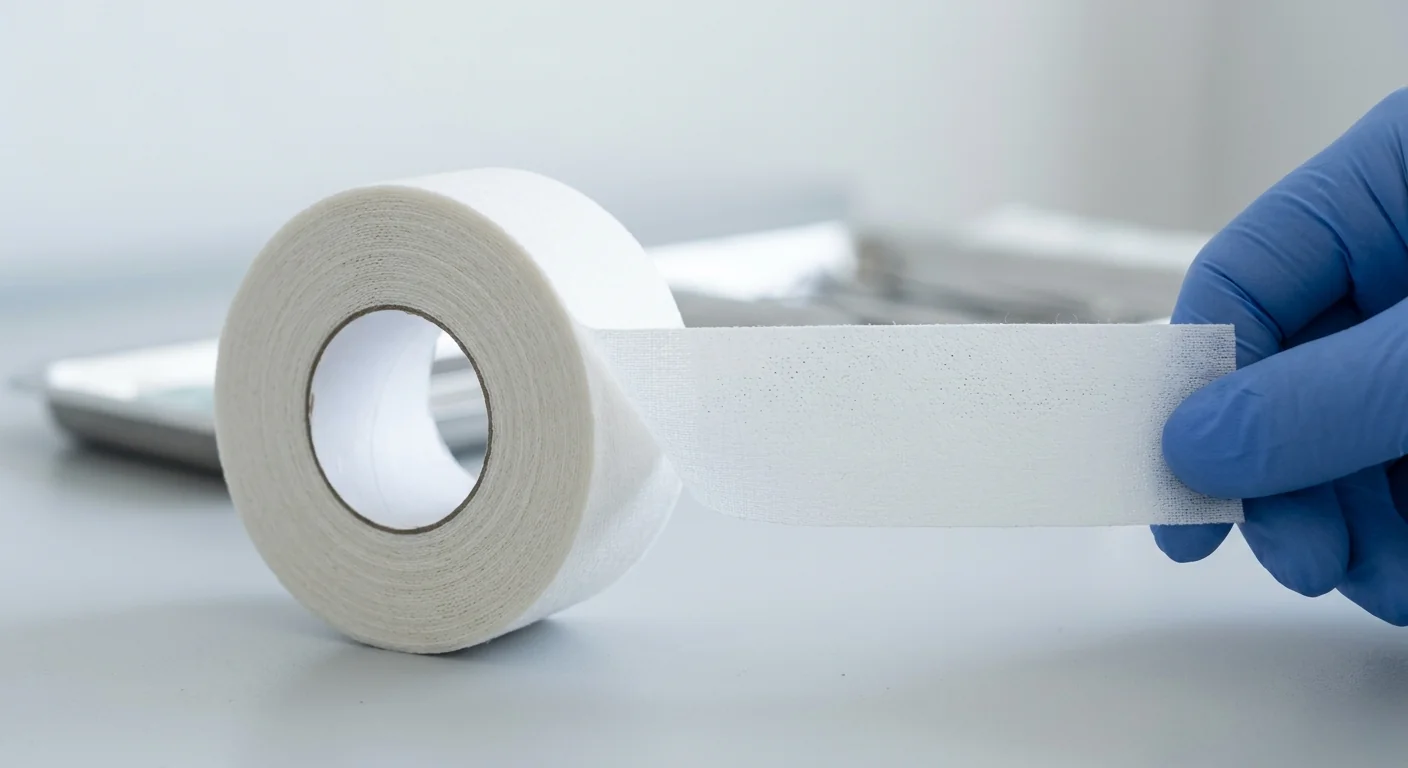 Its limits come from the same gentleness. Microporous tape has a low-to-moderate hold, loosens when it gets wet, and can lift under tension or on moving joints. For step-by-step application and removal technique, see how to apply and remove micropore tape.
Microporous vs Transparent Tape (Micropore vs Transpore)
Transparent tape uses a perforated plastic (polyethylene) film backing instead of a porous paper-like one. Compared with microporous tape:
- Hold: transparent tape adheres more firmly and is better for securing tubes and devices.
- Water: transparent tape is water-resistant; microporous tape is not and lifts when wet.
- Visibility: transparent tape lets staff check the skin and site without removing it.
- Tearing: both tear by hand; transparent tape tears along its perforations in either direction.
- Breathability and skin: microporous tape breathes better and is gentler, so it is the safer choice for fragile skin and frequent changes.
Choose microporous for light dressings on dry, sensitive skin. Choose transparent where the site must stay visible or dry, or where tubing needs a firmer hold.
Microporous vs Silk Tape (Micropore vs Durapore)
Silk-type tape has a woven, cloth-like backing with strong adhesion. Compared with microporous tape:
- Hold: silk-type tape is much stronger and suits heavy dressings, splints and tubing that is pulled during movement.
- Conformability: it moulds well around joints and contours.
- Tearing: it tears cleanly in both directions, which speeds up application in emergency and OT settings.
- Skin: its stronger adhesive is harsher to remove and more likely to strip fragile skin.
Choose microporous when gentleness matters more than strength. Choose silk-type when a dressing or device must not move.
Where Zinc Oxide and Silicone Tapes Fit
Zinc oxide tape has a cotton cloth backing and a rubber-based adhesive. It holds even more firmly than silk-type tape and is used for strapping and firm fixation, but it is the least breathable and most likely to irritate skin or leave residue.
Silicone tape sits at the opposite end. Its soft silicone adhesive removes with almost no skin stripping and can often be repositioned, so it is a better option than microporous tape for very fragile skin in neonatal, geriatric and long-term care. It costs more and holds less well on oily or moving skin.
Side-by-Side Comparison
| Property | Microporous | Transparent | Silk-type | Silicone |
| Reference name | 3M Micropore | 3M Transpore | 3M Durapore | 3M Kind Removal |
| Backing | Non-woven, paper-like | Perforated plastic film | Woven, cloth-like | Soft film with silicone adhesive |
| Holding strength | Low to moderate | Moderate to high | High | Low to moderate |
| Water resistance | No | Yes | Limited | Varies by product |
| Breathability | High | Moderate | Moderate | Moderate |
| Gentleness on skin | High | Moderate | Lower | Highest |
| Tears by hand | Yes | Yes (perforated) | Yes, both directions | Usually needs cutting |
| See-through | No | Yes | No | Some versions |
| Best for | Light dressings, sensitive skin | IV and tube sites, wet areas | Heavy dressings, splints, tubing | Very fragile skin |
Common Mistakes When Choosing Surgical Tape
- Using microporous tape on wet or sweaty skin. It will lift; use transparent tape instead.
- Using strong tape on fragile skin. Silk-type and zinc oxide tapes can strip thin skin; use microporous or silicone tape and a skin barrier.
- Stretching tape while applying it. Tension causes blisters at the tape edges with any tape type.
- Taping directly over an open wound. Tape rolls are not sterile. Cover the wound with a sterile dressing and use tape only to hold the dressing in place.
- Relying on plain tape at an IV insertion site. Follow your facility's IV securement protocol; sterile IV dressings or purpose-made cannula fixators are designed for the insertion site.
Standardising Tape Across Hospital Wards
A simple, practical set-up for most hospitals is to stock microporous tape as the default general-purpose tape for wards and OPDs, transparent tape for IV and tube care, and silk-type tape for the OT, orthopaedics and emergency. Silicone tape can be added for NICU, geriatric and long-term care units. Keeping each type in the areas that need it reduces misuse, such as paper tape on wet sites or strong tape on fragile skin.
Microporous paper tapes such as the 4Upore non-woven surgical paper tape, along with transparent and silk-type tapes, are available across Medikabazaar's range of surgical tapes. For a wider overview of every tape category, see the guide to medical adhesive tape types.
FAQs

