

Hospitals
Mastering Vessel Occlusion: A Practical Guide to Ligation Clips
An essential guide for clinicians and procurement heads on selecting and using ligation clips. Covers materials, sizing, applier compatibility, and best practices.


In any operating theatre, achieving reliable and swift haemostasis is non-negotiable. While sutures have been the mainstay for centuries, the ligation clip has become an indispensable tool for vessel and duct occlusion in a vast range of surgical procedures, from open appendectomies to complex laparoscopic cholecystectomies.
Selecting the appropriate ligation clip is far from a simple line item on a procurement list. It is a clinical decision with direct implications for surgical time, patient safety, and post-operative outcomes. This guide provides a practical, peer-to-peer overview of the critical factors your clinical and procurement teams should consider.
Understanding Ligation Clip Fundamentals
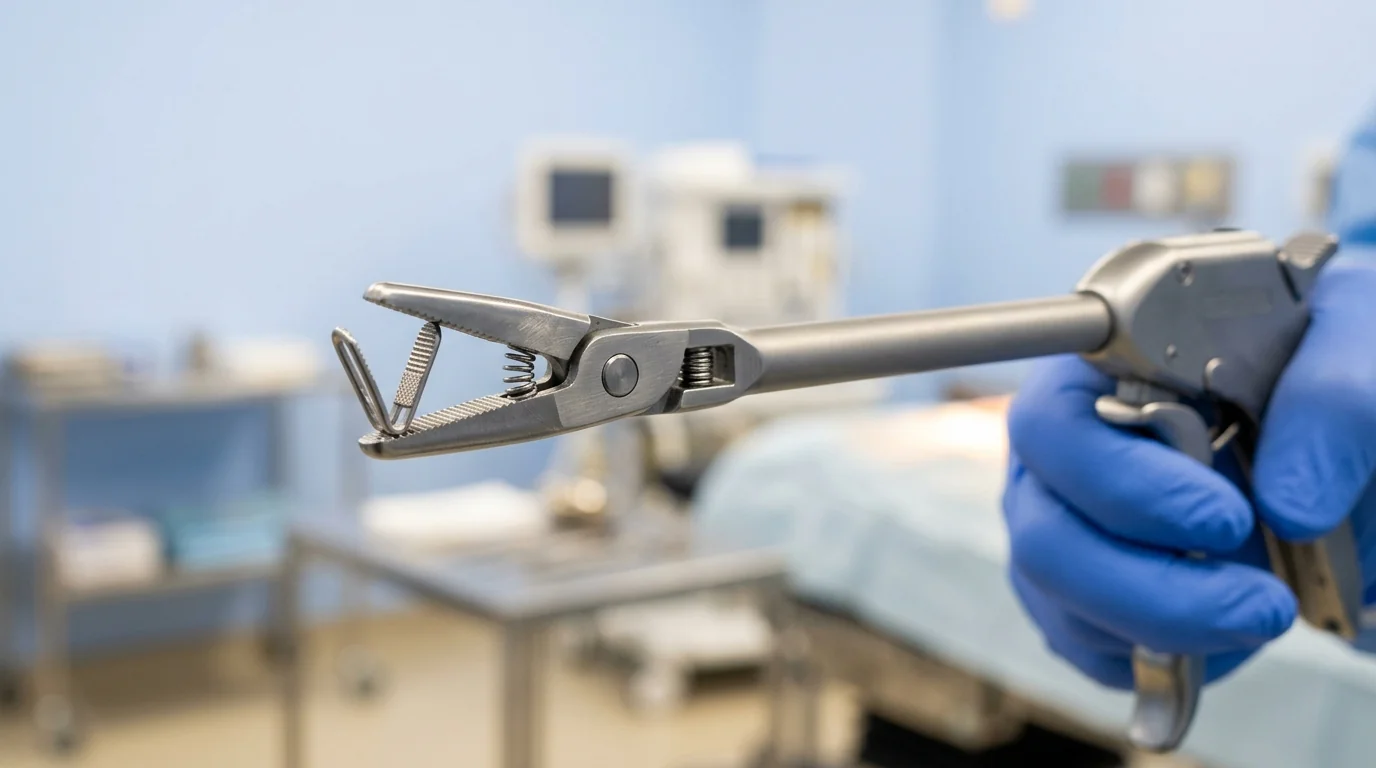 At its core, a ligation clip is a small, V-shaped device designed to be crimped around a vessel, duct, or other small tissue structure, providing mechanical occlusion. Unlike sutures, which require tying knots, clips offer rapid, consistent closure with a dedicated applier, a significant advantage in both open and minimally invasive surgery.
Key principles of their function include:
- Mechanical Occlusion: The clip is closed around the target structure, physically stopping the flow of fluid (e.g., blood in an artery or bile in the cystic duct).
- Secure Grip: Most clips feature transverse grooves or striations on their inner surfaces. This design increases the coefficient of friction, ensuring the clip remains securely in place and resists slippage.
- Applier-Driven Closure: Clips are loaded into a specific applier (either for open or laparoscopic surgery) which provides the precise mechanical force needed to close the clip correctly without over-crushing the tissue.
Their application spans nearly every surgical specialty, including general surgery, gynaecology, urology, and thoracic surgery, for procedures requiring the ligation of vessels and ducts where a permanent closure is needed.
Material Selection: Titanium vs. Polymer Clips
The choice of material is the first major decision point, with each type presenting distinct clinical and operational characteristics.
Titanium Ligation Clips For decades, titanium has been the gold standard for surgical clips. Its properties make it exceptionally well-suited for permanent implantation.
- Biocompatibility: Titanium is biologically inert, meaning it has extremely low reactivity with human tissue, minimizing inflammation and the risk of rejection.
- Strength and Malleability: It provides the necessary strength for secure vessel occlusion while being malleable enough to be crimped effectively by the applier.
- Radiopacity: Titanium clips are visible on X-rays, which can be useful for post-operative verification of their placement.
- Imaging Artefacts: A significant consideration is that titanium clips can cause scatter and artefacts on CT scans and MRIs, potentially obscuring diagnostic details in the immediate vicinity of the clip.
The design of standard, biologically inert MB Titanium Ligating Clips is a clear example of this category, focusing on secure closure and material purity for safe implantation.
Polymer Ligation Clips A more recent innovation, polymer clips are manufactured from advanced, inert plastics and are available in both non-absorbable and absorbable forms.
- Radiolucency: This is their primary advantage. Polymer clips are radiolucent, meaning they do not show up on X-rays and, more importantly, do not create artefacts on CT or MRI scans. This is a critical benefit in oncologic surgery where clear post-operative imaging is essential.
- Locking Mechanism: Many polymer clips feature a distinct locking mechanism that provides tactile and often audible confirmation of secure closure, which surgeons find reassuring.
- Wider Footprint: They typically occlude a larger surface area of the vessel compared to a titanium clip of a similar size, which may contribute to enhanced security.
- Material: Non-absorbable versions are designed for permanence, while absorbable clips (made from materials like polydioxanone) are used when temporary occlusion is sufficient.
Decision Matrix: Titanium vs. Polymer
This table outlines the key operational differences:
| Feature | Titanium Clips | Polymer Clips |
| Material | Biologically inert titanium alloy | Absorbable or non-absorbable polymers |
| Imaging | Radiopaque (artefacts on CT/MRI) | Radiolucent (no artefacts) |
| Security | Relies on metal deformation and grooves | Often includes a positive locking mechanism |
| Occlusion | Smaller, focused footprint | Wider vessel coverage per clip |
| Common Use | General and vascular surgery | Procedures where clear post-op imaging is critical (e.g., oncology) |
Sizing and Applier Compatibility: An Operational Imperative
A ligation clip is not a standalone item; it is part of a system. Sourcing clips without considering their size and corresponding applier is a critical operational error.
Standard Sizing Clips are commonly categorized by size, often designated as Small, Medium, Medium-Large, and Large. These sizes correspond to the diameter of the vessel or duct they are designed to occlude.
- Too Small: A clip that is too small for a vessel will not close completely, leading to a high risk of haemorrhage.
- Too Large: A clip that is too large can dislodge or slip off the vessel stump, also resulting in bleeding.
Surgeon judgement is paramount, but facilities must stock an appropriate range of sizes to handle the anatomical variations encountered in daily procedures. The clip cartridges are universally colour-coded for instant size identification in the fast-paced OT environment.
Applier Compatibility This cannot be overstated: ligation clip cartridges and appliers are not universally interchangeable. Each manufacturer designs their clips to work with their specific appliers. Using a mismatched system can lead to:
- Clip malformation or scissoring during closure.
- Failure to close the clip completely.
- Damage to the applier jaws.
- The clip falling out of the applier before application.
When evaluating a new supplier, always assess the clip and applier as a single, integrated system.
A Procurement Manager's Evaluation Checklist
When sourcing ligation clips for your facility, move beyond the per-unit specification and evaluate the system based on clinical and operational performance.
Clinical Efficacy & Safety
- Security of Closure: Examine the clip's design. How deep are the transverse grooves? Does the polymer clip have a reliable locking feature? The primary goal is to prevent slippage.
- Biocompatibility: Verify the material specifications. For implantable devices, material purity and inertness are non-negotiable.
- Vessel Trauma: A well-designed clip should occlude securely without unnecessarily crushing or damaging the vessel wall, which could lead to necrosis.
Operational Factors
- Applier System: If reusable, is the applier easy to handle, disassemble, clean, and sterilize? Is it ergonomic for the surgeon, especially during long laparoscopic cases?
- Loading Mechanism: Observe how easily and securely a clip cartridge loads onto the applier. A smooth, one-handed loading process saves valuable time and reduces frustration during surgery.
- Inventory Management: How are the cartridges packaged? Is the colour-coding clear and consistent with standard practice? When evaluating options, it's beneficial to review a comprehensive range of ligation clips for surgical use to compare features like locking mechanisms and cartridge systems across different types.
Compliance and Quality Assurance
- Certifications: Ensure the product carries the necessary quality certifications, such as ISO 13485 (for medical device quality management systems) and CE marking, which indicate adherence to stringent safety and performance standards.
- Sterility: Confirm the method of sterilization (typically Ethylene Oxide - EtO) and that the sterile barrier packaging is robust and undamaged.
- Traceability: As an implantable device, each box of clips must have clear lot and batch numbers for full traceability in the event of a recall.
Best Practices for Use and Handling in the Surgical Setting
Proper technique is as important as proper product selection. Reinforce these best practices with your surgical teams.
- Pre-operative Checks: Before the procedure begins, the scrub nurse should verify the clip size, expiry date, and the integrity of the sterile packaging. The correct, compatible applier must be on hand and confirmed to be in good working order.
- Proper Vessel Preparation: The target vessel or duct must be adequately dissected and "skeletonized," freeing it from surrounding fat and connective tissue. This ensures the clip jaws can encompass the structure fully.
- Correct Application Technique: The applier should be positioned so the jaws are at a 90-degree angle to the vessel. This ensures the clip closes evenly. A sufficient tissue stump (typically 2-3 mm) should be left beyond the clip to prevent slippage.
- Confirm Closure: The surgeon should apply firm, controlled pressure until the applier handles are fully closed, often accompanied by a tactile or audible "click," confirming the clip is locked.
- Documentation: The type, size, and number of clips used should be meticulously recorded in the patient's surgical notes.
Equip Your Facility Today
Ensuring your surgical teams have access to reliable, high-quality haemostasis tools is fundamental to patient safety and operational efficiency. Evaluating the full spectrum of options, from material choice to applier compatibility, allows you to make an informed decision for your facility's specific procedural needs. For a detailed view of the available options for your institution, explore the curated selection of surgical consumables on MedikaBazaar.
FAQs

