

Small Clinics
The Clinical Guide to LS Belts: Patient Applications, Sizing, and B2B Sourcing
Equip your orthopedic facility with premium spine support. Explore our B2B guide on the uses, sizing, and clinical benefits of the Tynor LS corset belt.


The human body has a lumbosacral spine, which is the area that connects the lumbar vertebrae (lower back) and the sacrum (base of the spine). It provides strength and stability to the human body, supports your upper body weight, absorbs shock while you move, and keeps your posture upright. So, when this region is strained, tired, stressed, or pressurized a lot due to poor posture, muscle fatigue, sudden jerks, or prolonged sitting, the pain and stiffness become part of it, which affects our day-to-day movement.
Moreover, with time this can lead to several conditions such as lumbar spondylosis, disc degeneration, or chronic backache. From hours spent sitting at a desk, lifting weights at the gym, or simply standing too long, there is persistent tension in the lower spine that can slowly affect how you move, work, and, in many cases, even how you sleep.
A Lumbo Sacral Belt, also known as a lower back support belt, is a medical device designed to provide support and stability to the lumbar (lower back) and sacral (base of the spine) regions of the spine. These belts are typically made from elastic or neoprene materials and are adjustable to fit around the lower back securely.
The primary purpose of the lumbar sacral belt is to offer compression and support, helping to alleviate the pain and discomfort associated with various lower back conditions.
What are the Benefits of using an LS Belt?
Lumbo Sacral Belt provides comfortable immobilization in low back ache. It can be worn during daily routines. Its applications include lumbar spondylitis, intervertebral disc syndrome, low backache, postural fatigue, postural deformities, mechanical stresses due to poor posture and osteoporotic pain of the lumbar spine.
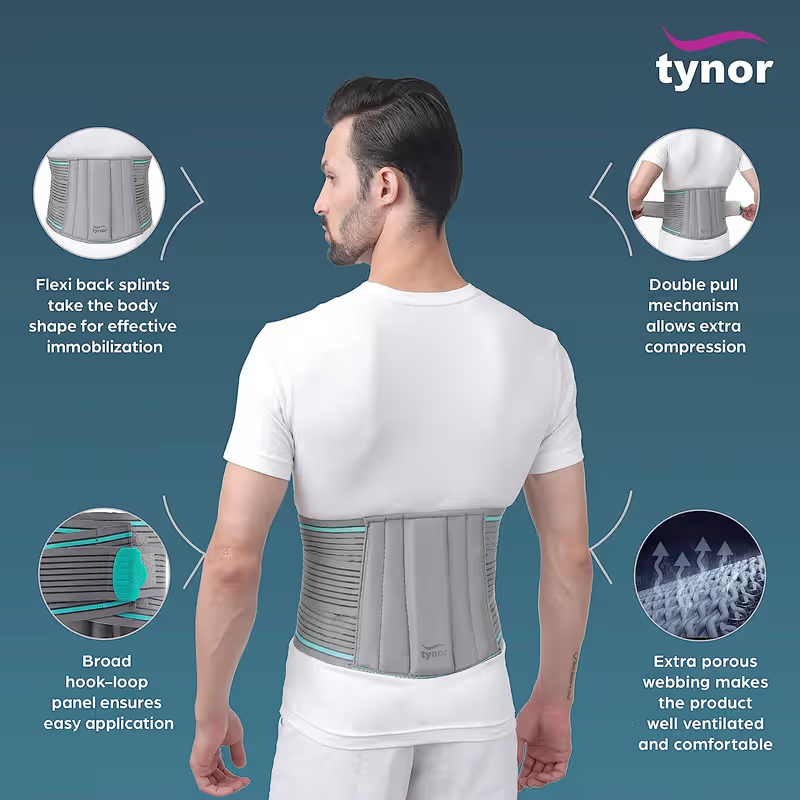
Designed with flexible back splints, it provides comfortable support to the back during long working hours as well as travel and highly porous elastic webbing improves ventilation and comfort.
Double pull elastic mechanism provides extra compression and improves splinting action. It also provides stabilization during vertebral fracture and injuries. That’s where an LS belt (Lumbo-Sacral Belt) comes in handy.
Here are some common situations where an LS belt can be especially helpful for:
- Professionals sitting for 8+ hours at a desk without any support
- Retail, teaching, or healthcare professional working long shifts standing in bad posture
- Drivers stuck in long commutes sit in incorrect posture for long traffic hours
- Gym enthusiast who does intense gym workouts or lifting weights without guidance and ortho equipment’s
- Women ignoring postpartum or post-surgery muscle weakness
- People recovering from mild back injuries
- Elderly individuals with weak back muscles
It’s a versatile back support that adapts and fits your lifestyle and comfort needs easily.
How to wear an LS Belt? A Step-by-Step Fitting Guide
- Positioning: Hold the belt by the ends and place the back panel (the part with the stiff splints) against your lower back. The bottom edge of the belt should sit 2 to 3 inches below your waistline, resting just above your tailbone
- Initial Wrap: Pull the broad elastic sides around your abdomen. Breathe out slightly and fasten the main Velcro closure firmly. It should be snug but not so tight that it restricts your breathing
- Secondary Tension: Most medical LS belts have "double-pull" elastic straps on the outside. Grasp both straps simultaneously and pull them forward to increase the compression. Fasten them onto the front of the belt
- The "Two-Finger" Check: You should be able to slide two fingers between the belt and your skin. If you can’t, it’s too tight; if it slides down when you move, it’s too loose
Accurate LS Belt Measurement and Sizing Protocols
The most effective way to determine the correct size is by directly measuring the patient.
- Preparation: Measurements should be taken while wearing the clothing that will typically be worn under the belt
- Locate Measurement Point: Measure around the hips/lower waist. The belt should be positioned with its bottom edge just above the hip bone
- Use a Flexible Tape: Measure the circumference of this area tightly, but not so tight that it is uncomfortable
- Taller/Shorter Individuals: If under 1.60m, a 21cm height belt is often suggested. Over 1.65m or for those with longer torsos, a 26cm height is generally recommended
- Weight Fluctuations: If the user is at a point of high inflammation or in a rehabilitation phase with expected body changes, consider a slightly more adjustable model
- Identify Size: Compare the measurement in inches or centimeters to the manufacturer’s sizing chart
Sourcing the Best LS Belt for Back Pain: The Tynor Advantage
Tynor LS (Lumbo Sacral) belts are widely recognized for managing lower back pain through a combination of scientific design and high-quality materials. They provide targeted support for conditions like spondylosis.
Tynor's best Lumbo Sacral Belt covers your lumbar spine and sacral area, providing comprehensive support where you need it most. The monofilament elastic breathes well and compresses easily, so you won't get sweaty and uncomfortable during use.
Tynor offers various sizes ranging from S up to XXL. Tynor’s Lumbo Sacral Belts and their broad hook loop panels ensure easy wearing and sizing flexibility.
Key Features and Benefits of TYNOR LS BELT?
- Double Pull Mechanism: Ensures a secure, snug fit and allows you to control the level of compression yourself
- Flexible Back Splints: Provide firm support while allowing enough movement for daily activities
- Anatomical Design: Many models are pre-shaped to improve posture and ensure better immobilization of the lumbosacral region
- Discreet & Lightweight: These belts are thin enough to be worn comfortably under loose clothing without feeling bulky
FAQs

