

Hospitals
Laryngoscope Guide: Types, Uses, Assembly & Connection
Complete laryngoscope guide explaining what it is, key uses in intubation and airway exams, types of blades and how to assemble and connect the device safely.


What is a laryngoscope?
Laryngoscopes are used to visualize the vocal cords and facilitate accurate placement of the endotracheal tube into the trachea under direct vision. The two commonly used blade types are the curved Macintosh blade and the straight blade, such as the Miller (with a curved tip) and the Wisconsin or Foregger (with a straight tip). Blades are available in multiple sizes to suit patients of all age groups. The most common complication associated with laryngoscope use is dental injury. If visualization of the vocal cords is inadequate, adjusting the patient’s head position can improve the view. In some instances, intubation difficulty may be due to incorrect blade size. External laryngeal maneuvers, such as BURP or OELM, can help align the vocal cords within the line of sight and assist successful intubation.
Clinical uses and benefits
Direct laryngoscopy is performed to evaluate persistent throat and voice-related symptoms, including sensation of a foreign body in the throat, acute or chronic laryngitis, difficulty in swallowing or breathing, chronic hoarseness, throat pain, and long-standing cough. It is also indicated in patients with persistent earache, unexplained bad breath, coughing up blood, or in individuals who smoke and have chronic respiratory problems. The procedure helps assess neck or head masses and voice disorders lasting more than three weeks, especially when malignancy is suspected.
In addition to diagnosis, direct laryngoscopy allows therapeutic intervention. It enables the physician to closely examine suspicious areas, obtain tissue samples for biopsy, remove abnormal growths, and extract foreign bodies obstructing the airway, thereby aiding in timely diagnosis, treatment, and improved patient outcomes.
Types of laryngoscope
There are several types of laryngoscopy procedures, each used based on the clinical requirement:
Indirect Laryngoscopy
This is the simplest form of laryngoscopy. The doctor uses a small mirror attached to a long handle, along with a light source, to view the throat. The mirror is placed at the back of the mouth to reflect the image of the larynx. The procedure is usually performed in the doctor’s office with the patient seated. A local anesthetic spray may be used to numb the throat, though mild gagging can occur.
Direct Fiber-Optic (Flexible) Laryngoscopy
Also known as flexible laryngoscopy, this is one of the most commonly used methods today. A thin, flexible fiber-optic scope is gently passed through the nose into the throat to visualize the larynx. The procedure is quick and typically performed under local anesthesia, with a numbing agent and sometimes a nasal decongestant. Some patients may experience mild discomfort or gagging.
Direct Laryngoscopy
Direct laryngoscopy is a more advanced procedure performed using a rigid laryngoscope to lift the tongue and epiglottis, allowing a clear view of the larynx. It enables the doctor to collect tissue samples, remove small growths, or insert a breathing tube during surgery or emergencies. This procedure is carried out under general anesthesia and takes longer than other laryngoscopy methods.
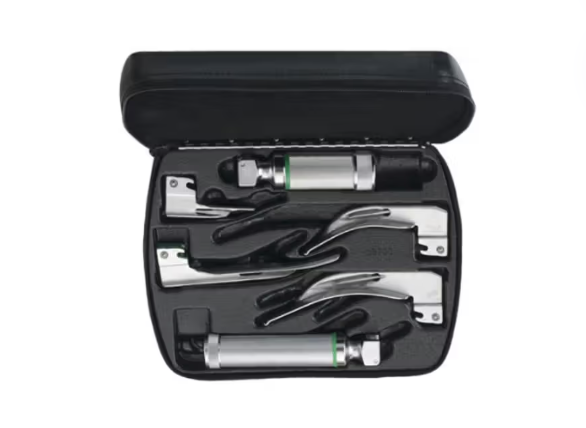
How to use a laryngoscope
- Ensure all equipment is clean, functional, and the correct blade size is selected for the patient.
- Position the patient in the sniffing position to align the oral, pharyngeal, and laryngeal axes.
- Open the patient’s mouth and gently insert the laryngoscope blade from the right side of the mouth, sweeping the tongue to the left.
- Advance the blade until the epiglottis is visualized.
- For a Macintosh blade, place the tip in the vallecula; for a Miller blade, lift the epiglottis directly.
- Lift the laryngoscope upward and forward (avoid levering on the teeth) to expose the vocal cords.
- Visualize the vocal cords clearly and insert the endotracheal tube through them into the trachea.
- Remove the laryngoscope carefully while stabilizing the tube.
- Confirm correct tube placement by chest rise, auscultation, and capnography.
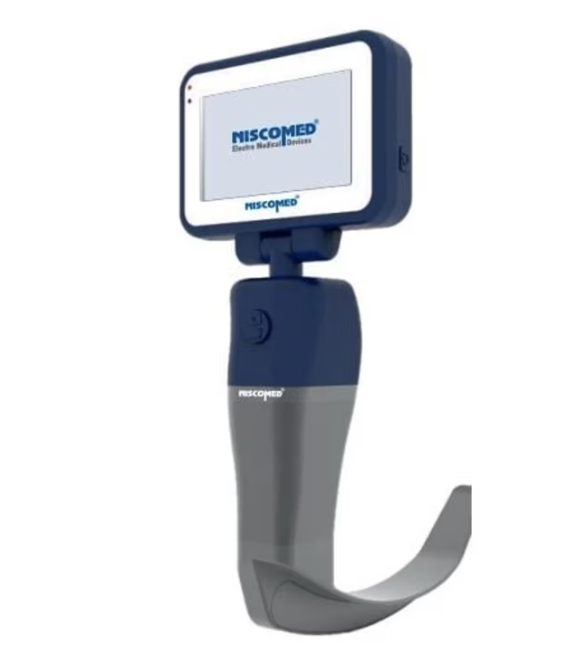
How to connect a laryngoscope
- Ensure you have a compatible handle, blade, and light source.
- Slide or click the blade onto the handle until it locks securely.
- Turn on the handle to ensure the bulb or LED illuminates properly.
- Some laryngoscopes allow minor adjustments to optimize visibility.
- Recharge or replace batteries if required.
- Shine the light on a surface to confirm consistent illumination before use on a patient.
Buying laryngoscopes on Medikabazaar
Buying laryngoscopes on Medikabazaar ensures access to a wide range of high‑quality, authenticated airway management instruments supported by reliable delivery and bulk pricing. Medikabazaar offers certified products, detailed specifications, and dependable service, making it a trusted choice for healthcare facilities, clinics, and professionals procuring laryngoscopes and related accessories.
FAQs

