
Small Clinics
A Procurement Framework for Selecting Foldable Ergonomic Walkers
A detailed guide for procurement managers on evaluating the Tynor Foldable Ergo Walker. Covers specs, comparison criteria, and common procurement pitfalls.


As procurement and operations heads, we are constantly balancing clinical efficacy with operational efficiency. When specifying patient mobility aids, the selection of a walker is no longer a simple line item. The move towards ergonomic designs reflects a deeper understanding of patient recovery dynamics and the demands on our clinical staff. This guide provides a structured framework for evaluating foldable ergonomic walkers, ensuring the equipment you select meets the rigorous demands of a modern Indian healthcare facility.
We will deconstruct the evaluation process into a series of checklists, moving from high-level needs assessment to granular technical specifications and supplier vetting. This ensures your final selection is based on a comprehensive understanding of both the product and its long-term impact on your operations.
Needs Assessment: The Pre-Procurement Checklist
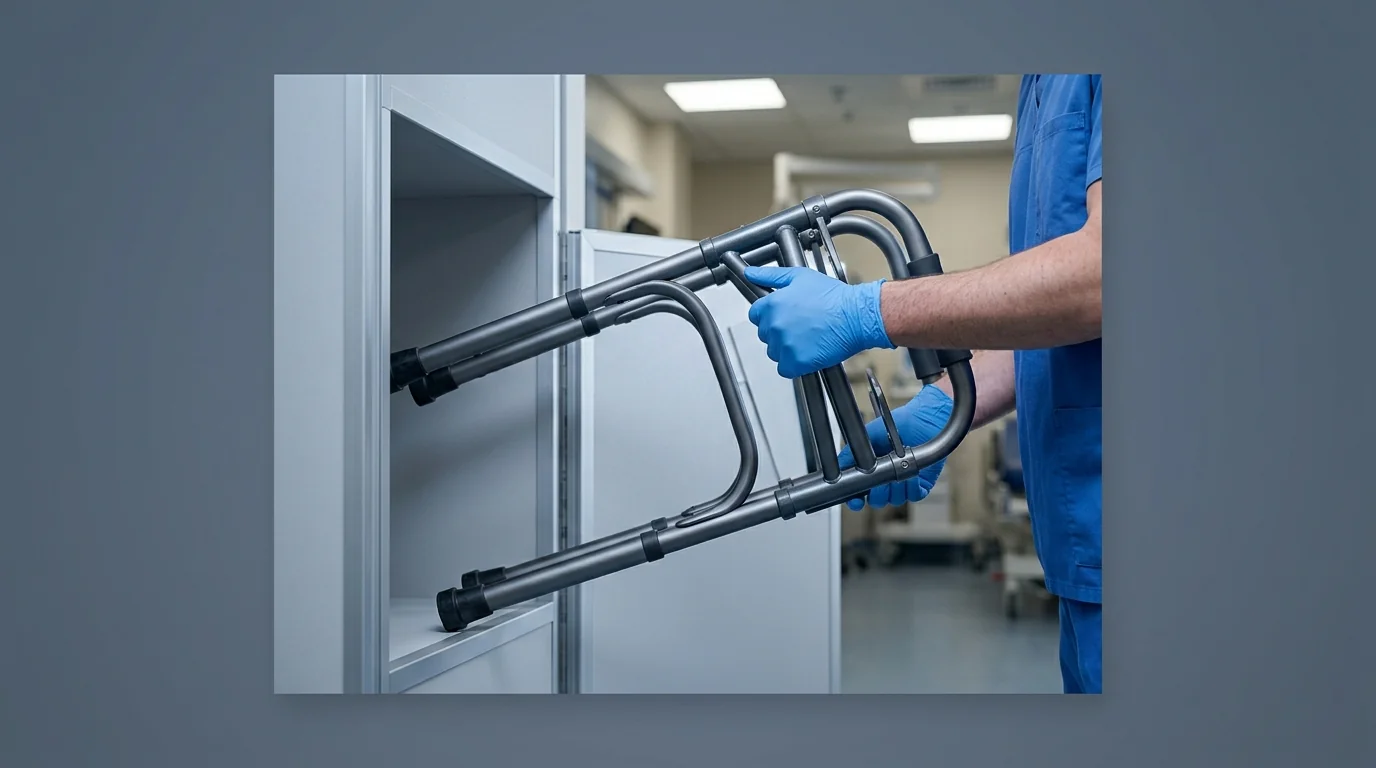 Before evaluating any specific model, a thorough internal needs assessment is critical. The right walker for a small OPD clinic is different from one required for a high-turnover orthopaedic ward.
- Define the User Population: Who are the primary users?
- Post-operative Orthopaedic Patients: Require high stability for partial or non-weight-bearing protocols.
- Geriatric Patients: Need a lightweight frame for easy manoeuvrability and intuitive adjustment mechanisms.
- Neurological Rehabilitation Patients: May require specific adaptations or a walker that provides strong gait pattern guidance.
- Assess the Clinical Environment: Where will the walker be used and stored?
- In-patient Wards: Demands high durability, ease of sanitisation between patients, and a small storage footprint. Foldability is a key operational advantage.
- Outpatient/Physiotherapy Departments: High frequency of adjustment between patients. The locking mechanism must be robust and quick to operate.
- Home-Care Rental Programs: Requires maximum durability and simplicity for patients and caregivers to manage without daily clinical supervision.
- Quantify Usage Volume:
- High-Turnover General Ward: A high volume of patient discharges and admissions means walkers are in constant use. Prioritise robust construction and material longevity.
- Specialised Rehab Unit: Usage might be less frequent but more intensive during therapy sessions. Ergonomics and fine-tuned adjustability are paramount.
Core Specifications: An Evaluation Matrix
Once your internal needs are clear, you can evaluate specific products against a technical matrix. A quality tynor foldable ergo walker is defined by its materials, engineering, and adherence to safety standards.
- Material and Construction:
- Frame: Look for high-strength, lightweight, anodized aluminum. Anodization provides a corrosion-resistant finish, crucial for withstanding repeated cleaning with hospital-grade disinfectants.
- Hand Grips: The primary point of interaction. Evaluate the material (e.g., high-grade PVC) for its ergonomic shape, texture for a secure grip, and durability. Poorly designed grips can lead to patient discomfort, calluses, and non-compliance.
- Ferrules/Tips: These must be made from non-slip, high-density rubber. Check the base for a wide footprint and effective tread pattern to ensure stability on polished hospital floors, even when wet.
- Ergonomics and Adjustability:
- Height Adjustment: A push-button, spring-loaded lock mechanism is the standard. Verify the range of height adjustment to ensure it can accommodate the anthropometric diversity of your patient population. A typical range is 75-95 cm.
- Folding Mechanism: The defining feature of a
foldable ergonomic walker for hospitals. A one-touch or simple two-button mechanism is essential for efficient storage and transport by staff. The folded dimensions determine how many units can be stored in a standard supply closet. - Weight and Load Capacity: These are two distinct, critical safety parameters. The walker's own weight (typically 2.5-3.5 kg) affects patient and staff handling. The maximum user weight capacity (often around 110 kg) is a non-negotiable safety specification that must match your patient demographics.
- Compliance and Certifications:
- ISO 13485: This certification indicates the manufacturer operates under a quality management system specific to medical devices. It is a strong indicator of consistent production quality and traceability.
- CE Marking: While a European standard, it signifies conformity with essential health and safety requirements, providing an additional layer of assurance.
Beyond the Spec Sheet: Comparing Functional Criteria
Two walkers with identical specifications can perform very differently in a clinical setting. Your evaluation must include these functional criteria.
- Stability vs. Manoeuvrability: A wider base provides superior stability but can be challenging to navigate through tight doorways, around bedside furniture, or within washrooms. The geometric design of the walker's legs should balance a stable footprint with a practical profile for your facility's layout.
- Lifecycle Management and Maintainability:
- Spare Parts Availability: How easily can you source replacement parts like ferrules, grips, or locking pins? A walker is out of commission without them. This is a key question for your
tynor universal ergonomic walker suppliers. - Ease of Disinfection: Inspect the frame for crevices or joints where bioburden can accumulate. Smooth, simple surfaces are easier and faster for housekeeping staff to clean thoroughly.
- Operational Efficiency:
- Time your staff on how quickly they can deploy, adjust height, and fold a sample unit. Seconds saved per patient interaction add up to significant labour efficiency over a year.
- Consider the walker's place within your broader
hospital furnitureand equipment ecosystem. Does its folded profile fit your existing storage solutions?
Common Procurement Pitfalls to Avoid
Steering clear of these common missteps can prevent long-term operational headaches.
- Overlooking End-User Feedback: Involve the heads of Physiotherapy and Nursing in the final evaluation. Their teams use this equipment daily and will identify practical flaws that aren't apparent on a spec sheet. The ergonomic grip on the Tynor Foldable Ergo Walker Universal L37 is a key feature that a physiotherapist would want to assess firsthand.
- Ignoring the Total Lifecycle: The initial acquisition is just the first step. If replacement ferrules are difficult to source or have long lead times, your entire fleet of walkers could be rendered unsafe or unusable. Plan your spares inventory from day one.
- Underestimating the Impact of Weight: A difference of 500 grams may seem minor, but for a frail geriatric patient or a nurse assisting multiple patients per shift, a lighter walker significantly reduces fatigue and improves safety.
- Sample Testing in a Vacuum: Don't just test the walker in a conference room. Take it to a busy ward. Navigate it into a patient bathroom. Ask a nurse to store it in the designated closet. Real-world testing reveals the true operational fit.
Equip Your Facility Today
Making the right equipment choices is fundamental to delivering superior patient care and running an efficient operation. By applying a structured evaluation framework, you ensure that the mobility aids you procure are safe, effective, and built to withstand the demands of your facility.
For a comprehensive range of physiotherapy equipment and patient mobility aids, including various walker and crutch options, explore the selection on MedikaBazaar to find solutions that align with your institution's specific clinical standards.
FAQs


