

Small Clinics
Evaluating Dr. Morepen Thermometers for Clinical and Operational Use
A detailed guide for hospital procurement managers on selecting and deploying Dr. Morepen thermometers, covering accuracy, safety, and operational workflow integration.


In any Indian healthcare facility, from a multi-speciality hospital to a local clinic, the accurate measurement of body temperature is a foundational clinical task. As a widely recognized name, the Dr. Morepen thermometer is a common sight. However, moving from simple brand recognition to a structured procurement and deployment strategy requires a deeper look into the operational and clinical realities of these devices.
This guide provides a peer-level framework for evaluating Dr. Morepen thermometers. It moves beyond the basic specifications to focus on what truly matters in a busy clinical environment: workflow integration, infection control, staff usability, and long-term reliability.
Core Technologies: Understanding the Options
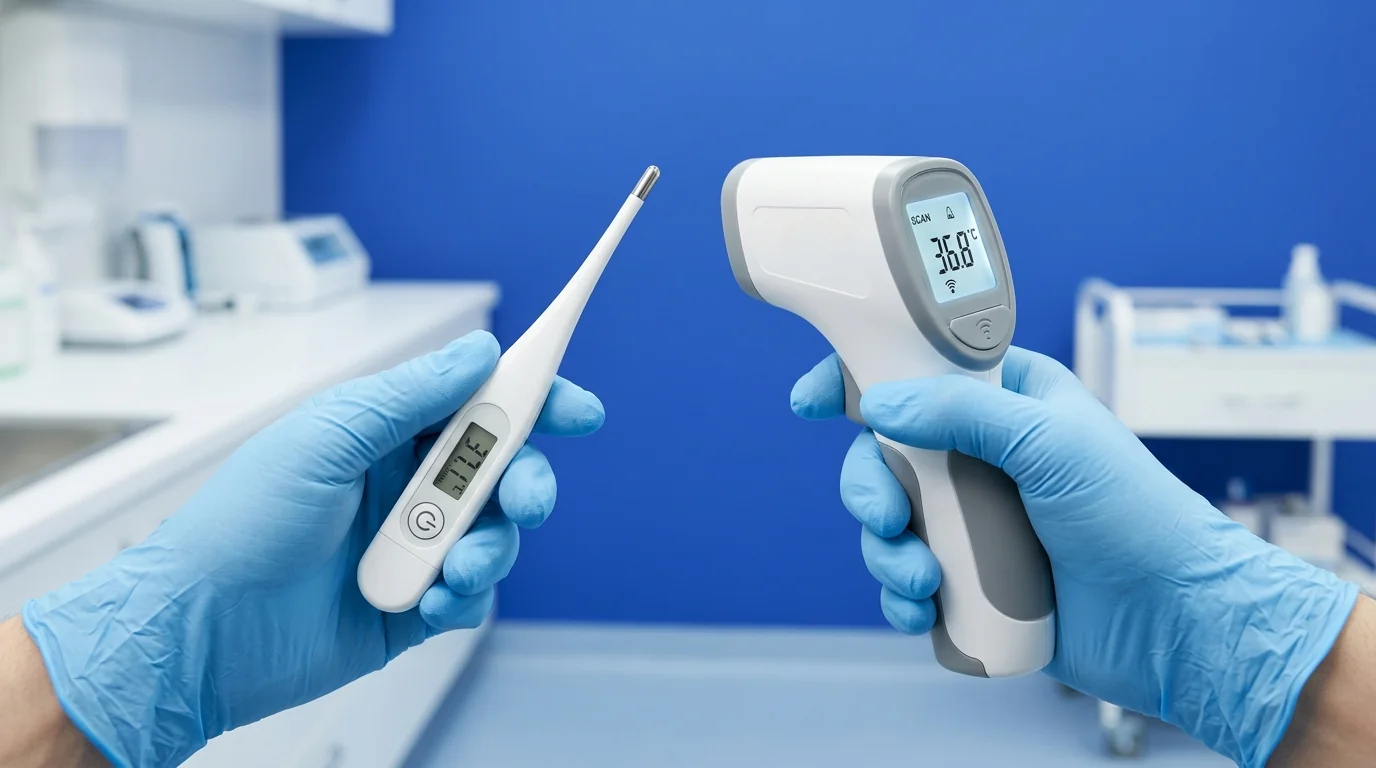 The "Dr. Morepen thermometer" category encompasses several distinct technologies, each suited for different clinical applications. Selecting the right tool for the job is the first step in effective procurement.
- Digital Stick Thermometers: These are the workhorses of patient wards, clinics, and primary care settings. Designed for oral, axillary, or rectal use, their value lies in their direct-contact accuracy and simplicity. Key operational features to evaluate include a flexible tip for patient comfort, a clear audible beep to signal completion, last-reading memory recall, and a degree of water resistance for easier cleaning. The classic Dr. Morepen digital thermometer exemplifies this straightforward and reliable design.
- Infrared (Non-Contact) Thermometers: Essential for high-throughput areas like OPD entrances, triage, and casualty. These devices measure thermal radiation from the forehead to provide a rapid, non-invasive temperature reading. When evaluating these, consider the specified measurement distance (typically 3-5 cm), the speed of the reading (usually 1-2 seconds), and the device's ability to function reliably across a range of ambient room temperatures.
A direct comparison highlights their distinct operational roles:
| Technology Type | Primary Application | Measurement Speed | Infection Control |
| Digital Stick | Wards, Clinics, Low-Volume | 10-60 seconds | Requires probe cover/disinfection |
| Non-Contact Infrared | OPD, Triage, High-Volume Screening | 1-2 seconds | Minimal contact, easy to wipe down |
A Procurement Framework: Key Evaluation Criteria
A structured evaluation ensures that the selected devices meet clinical standards and integrate smoothly into your facility’s operations.
1. Clinical Accuracy and Compliance The non-negotiable requirement for any clinical thermometer is accuracy. Look for documentation confirming compliance with relevant standards, such as ISO 80601-2-56. For digital stick thermometers, a typical accuracy specification is ±0.1°C within the normal human body temperature range. For infrared models, it is often ±0.2°C. It's crucial to differentiate between accuracy (closeness to the true value) and repeatability (consistency of measurements). Both are vital for clinical confidence.
2. Durability and Build Quality In a hospital environment, devices must withstand repeated use and cleaning.
- Materials: The housing should be made of durable materials like medical-grade ABS plastic that can resist common hospital disinfectants without degrading.
- Construction: Assess the build for robustness. Is the battery compartment secure? Does the probe on a stick thermometer feel solidly attached? For non-contact models, is the sensor lens protected from accidental scratches?
3. Operational Workflow Integration A device is only effective if it aids, not hinders, the clinical workflow.
- Speed: In a busy OPD, the 1-second reading of an IR thermometer is a significant efficiency gain. On a quiet ward, the 30-60 second reading of a digital stick is perfectly acceptable. Match the device speed to the departmental pace.
- Usability: A large, backlit display is essential for low-light conditions. Single-button operation reduces the chance of user error and minimizes staff training time. Clear, unambiguous audible alerts for fever or measurement completion are also critical.
- Power Management: Look for an automatic shut-off feature to conserve battery life. Check the battery type required; models using standard, easily sourced button cells (e.g., LR41, CR2032) simplify inventory management for the biomedical or operations team.
4. Infection Control and Disinfection This is a primary consideration for any shared patient device.
- Disposables: For digital stick thermometers, the protocol must include single-use disposable probe covers. Ensure a reliable supply chain for these consumables.
- Disinfection: The device surface must be non-porous and compatible with your facility’s standard disinfectants, typically 70% isopropyl alcohol wipes.
- Non-Contact Advantage: The inherent design of infrared thermometers minimizes cross-contamination risk, making them indispensable for screening protocols.
Best Practices for Deployment and Maintenance
Proper management post-procurement is key to maximizing the lifespan and reliability of your thermometers.
User Training Standardize usage protocols across all clinical staff. This includes:
- Technique: Correct anatomical placement for oral and axillary readings. Maintaining the correct distance and angle for infrared measurements.
- Interpretation: Understanding the difference between core, oral, and axillary temperature readings.
- Troubleshooting: Training staff to recognize and act on low battery indicators or common error codes.
Cleaning and Disinfection Protocols Implement and enforce a clear protocol. For digital stick models, this is typically a "wipe-twice" method with an approved disinfectant after disposing of the probe cover. For IR models, pay special attention to keeping the sensor lens free of debris, as smudges can affect accuracy.
Calibration and Accuracy Checks Most modern digital thermometers are calibrated at the factory and are designed to hold their accuracy over their lifespan. However, for quality assurance, particularly in critical care areas or for high-use IR devices, periodic verification is a good practice. This can be done by checking the device against a known, certified reference thermometer. This process should be part of your facility's routine equipment audit schedule. For facilities looking to standardize their entire temperature monitoring toolkit, from basic units to more advanced systems, exploring a comprehensive catalogue of digital thermometers can provide options for every clinical need.
The Role of the Thermometer in Different Clinical Settings
The choice of thermometer should be tailored to the specific clinical environment.
- Outpatient Department (OPD) and Triage: Speed and infection control are the priorities. Non-contact infrared thermometers are the standard for rapid screening of every incoming patient.
- General Wards: Digital stick thermometers are the reliable standard for routine vitals monitoring. Their accuracy and low consumable requirement (probe covers only) make them operationally efficient.
- Intensive Care Units (ICU): While core temperature may be monitored invasively, intermittent checks with a high-accuracy digital stick thermometer are common. Reliability here is paramount.
- Dental Clinics & Diagnostic Labs: Non-contact models are highly effective for pre-procedure screening of patients to identify potential febrile illness and ensure a safe environment.
Equip Your Facility
Ensuring every department is equipped with accurate, reliable, and appropriate thermometry devices is fundamental to patient safety and clinical efficiency. For a complete selection of Dr. Morepen thermometers and other essential diagnostic equipment, explore the curated range on MedikaBazaar to meet your facility's specific clinical and operational needs.
FAQs

