

Small Clinics
The Clinical Guide to Crepe Bandages: Uses, Applications, and Wholesale Sourcing
Equip your facility with premium cotton crepe bandages. Explore our B2B guide on using 4-inch crepe bandages for leg, foot, and ankle sprains.


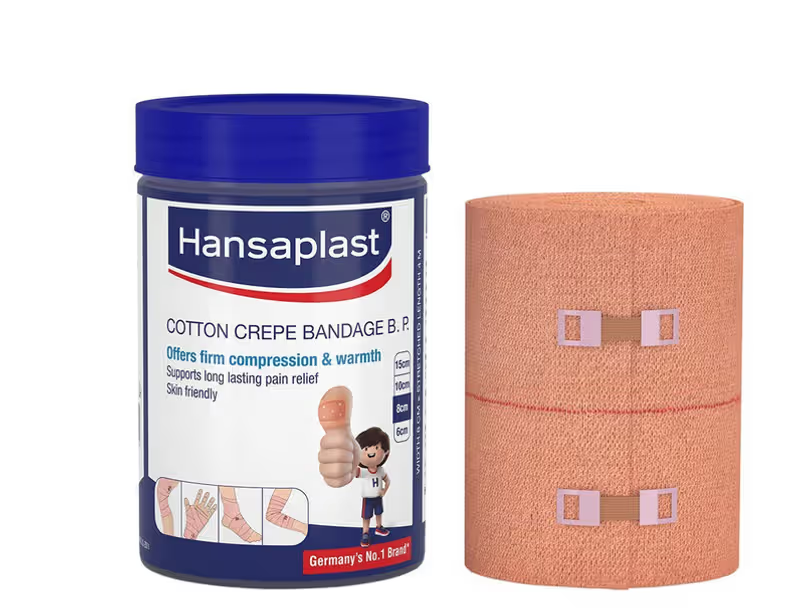
Crepe bandages are woven cotton materials that are stretchy and are used to cover limbs and joints. They give support and compression to injuries without limiting the movement of the limbs. The crinkled cotton weave is breathable and washable, so it can be cleaned and reused.
They are normally used to keep pads firmly pressed on wounds due to their ability to cling firmly. They are soft, stretchable medical bandages used to provide compression, support, and stability to injured body parts. It is commonly recommended for sprains, muscle strains, joint pain, swelling, and post-surgical care.
Its distinctive "crinkled" or rough texture is achieved through a special weave of twisted yarns, providing natural elasticity without always needing rubber threads. Crepe Bandages are usually made from cotton fibers for breathability and comfort and elastic threads to provide stretch and compression.
Primary Clinical Applications and Uses of Crepe Bandage:
In a medical setting, these bandages are essential for their ability to provide controlled compression and flexible support. Their primary clinical roles include:
- Injury Management: They provide the critical "Compression" component to treat sprains and strains, reducing internal bleeding and preventing excessive fluid buildup (oedema) in tissues
- Post-Surgical Recovery: Surgeons use them to minimize post-operative swelling and stabilize surgical sites, which helps accelerate the healing of soft tissues and ligaments
- Wound Care & Dressing Retention: While not applied directly to open wounds, they are used to keep sterile dressings firmly in place, protecting the area from bacteria and dirt while remaining breathable
- Orthopedic Support: They help immobilize injured limbs temporarily and can be used under plaster casts for added padding and protection
- Venous Condition Treatment: They assist in managing varicose veins and chronic venous insufficiency by promoting healthy blood flow back to the heart through graduated pressure
- Heat Retention: The snug wrap helps retain body warmth at the injury site, which can improve blood circulation and soothe localized pain
Lower Extremity Trauma: Crepe Bandage for Leg, Foot, and Ankle
Crepe bandages are highly effective for managing lower extremity trauma—such as ankle sprains, foot strains, or calf injuries—by providing compression to reduce swelling, offering support, and limiting movement to protect damaged soft tissues. The proper technique requires starting from the furthest point (distal) and moving towards the heart (proximal) to ensure proper blood flow.
How It Helps?
- Reduces Swelling (Oedema): The gentle pressure exerted by the bandage pushes accumulated fluid out of soft tissues and back into the circulatory system
- Provides Joint Stability: By snugly wrapping around joints like the ankle or knee, it limits unnecessary movement that could worsen an injury, effectively immobilizing the area during early recovery
- Pain Relief: Compression helps stabilize injured tissues and reduces muscle vibration, which can significantly alleviate discomfort during physical activity
- Improves Circulation: Properly applied compression overcomes gravity's effects in the legs, promoting healthy blood flow back to the heart and accelerating the natural healing process
- Retains Warmth: The woven cotton material helps keep the injured area warm, which improves localized blood flow and can speed up tissue repair
Upper Extremity Care: Crepe Bandage for Hand, Wrist, and Finger
In upper extremity care, a crepe bandage is an essential tool for managing injuries like wrist sprains, hand swelling, or minor finger fractures. It provides controlled compression and stability while remaining breathable and flexible enough for the frequent movements of the hands and wrists.
How It Helps?
- Reduces Swelling (Oedema): Applying gentle, consistent pressure helps limit fluid accumulation in soft tissues and encourages the absorption of existing fluid back into the circulatory system
- Stabilizes Joints: For wrist or thumb injuries, the bandage immobilizes the joint to prevent further twisting or damage during the healing process
- Relieves Pain: By reducing inflammation and minimizing muscle vibration, a crepe bandage can significantly alleviate discomfort associated with soft tissue trauma
- Retains Warmth: The woven cotton fabric helps retain therapeutic heat, which improves blood circulation and promotes faster tissue repair
- Secures Dressings: Its unique textured surface allows it to cling firmly over sterile pads or gauze, protecting wounds from dirt and bacteria without slipping.
Sizing Matters: When to Use a 4 Inch Crepe Bandage vs. Other Sizes
A 4-inch (10 cm) crepe bandage is generally considered the most versatile size for adults because it fits medium-to-large joints and limbs effectively. Choosing the correct width is critical; a bandage that is too narrow for a large body part can become too tight, restricting blood flow and range of motion, while one that is too wide can be bulky and difficult to wrap securely.
When to Use a 4 Inch (10 cm) Crepe Bandage?
The 4-inch bandage provides an ideal balance of width and compression for larger, contoured areas where a 3-inch bandage is too narrow, and a 6-inch is too bulky.
- Joints: Knees and elbows
- Limbs: Calves and upper arms
- Injuries: Moderate knee swelling, ankle sprains (if more coverage is needed than 3-inch), and stabilizing joints after minor sports injuries
- Application: Suitable for adult, medium-sized limbs
When to Use Other Sizes?
- 2-inch (5 cm): Ideal for smaller areas like fingers, hands, and wrists. Also suitable for pediatric applications
- 3-inch (7.5 cm): The standard choice for adult wrists, ankles, and forearms
- 6-inch (15 cm): Used for large areas such as thighs, shoulders, and the torso (chest/abdomen)
Bulk Procurement: Sourcing Reliable Crepe Bandages for Your Facility
For healthcare facilities, bulk procurement of crepe bandages requires balancing clinical efficacy with regulatory compliance. Reliable sourcing focuses on verifying Indian Standards (IS 4605:2020) and selecting established vendors with a proven track record in the medical sector.
Sourcing reliable, high-quality crepe bandages in bulk requires partnering with manufacturers or distributors that provide sterilized, 100% cotton, or high-elasticity options that adhere to BP (British Pharmacopoeia) or USP standards.
Sourcing crepe bandages from Medikabazaar allows for a streamlined B2B procurement process tailored for hospitals and clinics. As India's largest medical supply marketplace, we offer a wide variety of brands and competitive bulk pricing. From Hansaplast to Lifex to Medigrip, Medikabazaar offers a wide range of brands and sizes with exclusive offers and discounts available via PAN India delivery.
FAQs

