

Small Clinics
A Clinical & Operational Review of the Daynacare Lumbo Sacral Support XL
An expert guide for procurement managers and clinicians on the Daynacare Lumbo Sacral Support XL, covering specs, clinical applications, and selection criteria.


For any physiotherapy department, orthopaedic ward, or post-operative care unit, the selection of appropriate patient supports is a critical procurement decision. A well-designed lumbo-sacral support is not just an ancillary item; it's an essential tool for patient recovery, pain management, and mobility. Evaluating options like the daynacare lumbo sacral support xl requires a focus on clinical efficacy, material durability, and patient compliance—factors that directly impact outcomes and operational efficiency.
This guide provides an in-depth operational review of this specific category of support, intended for clinicians and procurement heads responsible for equipping their facilities. We will break down its construction, clinical applications, and the key criteria to consider when sourcing for institutional use.
Understanding the Mechanism: How a Lumbar Sacro Belt Functions
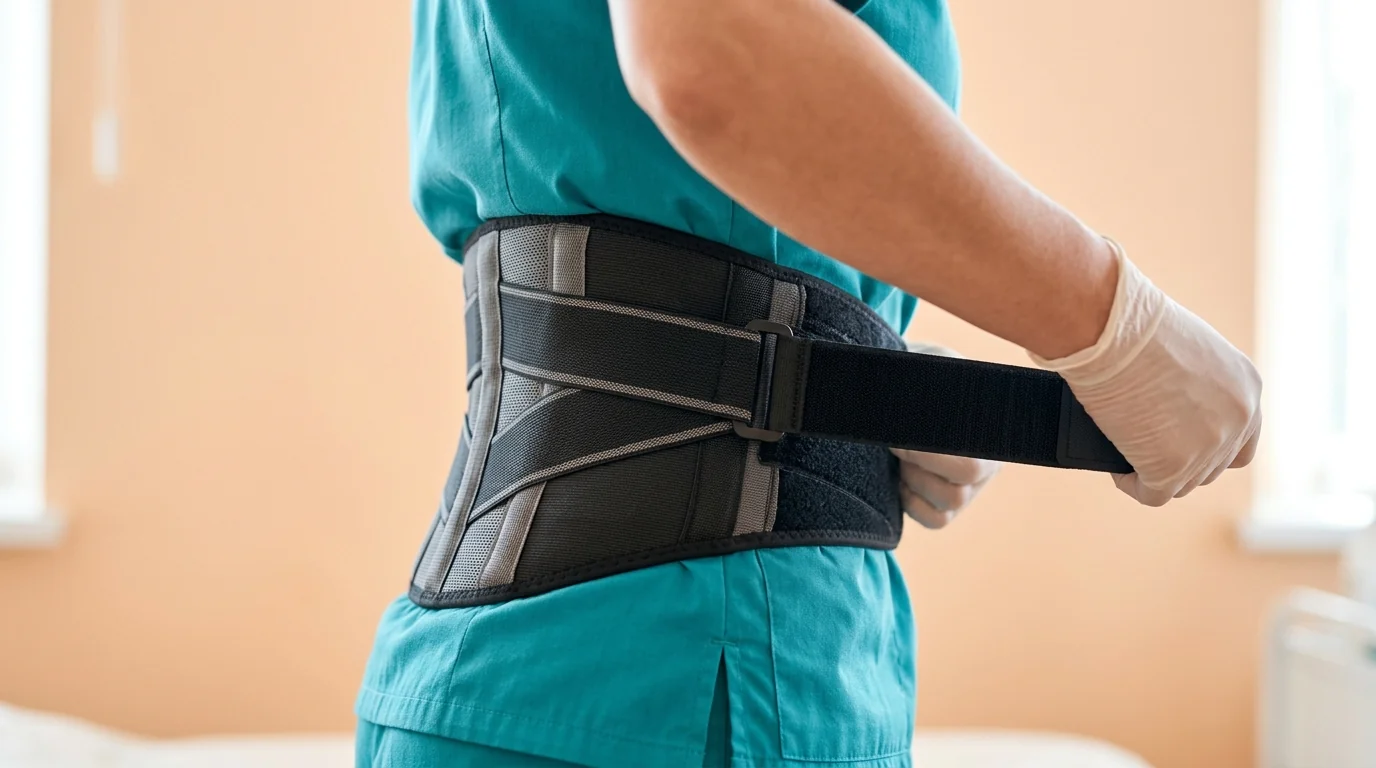 Before assessing a specific product, it’s essential to be precise about its mechanical and physiological function. A lumbo-sacral support is designed to achieve three primary objectives:
- Kinesthetic Reminder: The belt provides proprioceptive feedback, making the patient more aware of their posture. This discourages injurious movements and encourages the use of correct body mechanics during recovery.
- Increased Intra-abdominal Pressure: By applying circumferential compression, the support slightly increases intra-abdominal pressure. This acts like a natural corset, helping to unload the vertical pressure on the lumbar vertebrae and intervertebral discs.
- Spinal Stabilization: Flexible or semi-rigid posterior stays provide external support to the paraspinal muscles, limiting excessive spinal motion (particularly flexion and extension) and stabilising the lumbo-sacral junction.
This is distinct from a more rigid lumbar corset belt, which aims for significant immobilisation and is typically reserved for more severe conditions like stable vertebral fractures. The lumbo-sacral belt offers stabilisation without complete restriction, making it suitable for a wider range of sub-acute and chronic conditions.
Detailed Analysis: The Daynacare Lumbo Sacral Support
The specific design of a support determines its effectiveness. When evaluating the Daynacare Lumbo Sacral Support - XL, we need to look at its core components from a clinical and operational perspective.
Material and Construction A daynacare back support xl hospital grade device is expected to withstand repeated use and cleaning while remaining comfortable for the patient.
- Body Fabric: The main body is typically constructed from high-quality, breathable elasticated material. Monofilament-stripped elastic is often preferred as it allows for excellent air circulation, reducing skin maceration and improving patient compliance, especially in India’s varied climates.
- Posterior Stays: The device incorporates anatomically contoured, semi-rigid splints in the back panel. These are crucial for conforming to the natural lordotic curve of the lumbar spine, ensuring pressure is distributed evenly and support is targeted where it's needed most.
- Fastening System: The primary closure is a broad hook-and-loop panel. More importantly, a double-pull elastic mechanism is a key feature. This secondary strapping allows the patient or clinician to apply an additional layer of targeted compression, significantly enhancing the overall stability of the support.
Sizing and Fit (XL) The "XL" designation is particularly relevant for hospital inventory, which must cater to a diverse patient demographic. An improperly sized belt is clinically ineffective and can cause patient discomfort. The XL size is designed for waist circumferences typically in the 100-115 cm range. Accurate measurement at the level of the navel is non-negotiable for proper fitting.
Key Evaluation Criteria for Institutional Procurement
When selecting a lumbo-sacral support for your facility, move beyond the spec sheet and consider these operational factors.
- Material Durability and Washability: The support must be durable. Assess the grade of the elastic; it should not lose its modulus of elasticity after a few weeks of use. The hook-and-loop fasteners must be high-quality to withstand thousands of fastening cycles without losing their grip. Check for care instructions—is it hand-washable? This is critical for hygiene protocols.
- Patient Compliance and Comfort: A support is only effective if the patient wears it. The inner lining should be soft and non-abrasive. The overall construction should be lightweight and low-profile enough to be worn discreetly under clothing, which encourages adherence to the prescribed wearing schedule.
- Ease of Application: Can a patient apply and adjust the support themselves, or does it require assistance? A design with a clear double-pull mechanism is generally more intuitive for patients to adjust for optimal compression throughout the day.
- Sizing Chart Reliability: Ensure the manufacturer provides a clear and accurate sizing chart. Inconsistent sizing across a batch can lead to wasted inventory and clinical delays. Procuring a small test batch to verify fit against the provided chart is a prudent step.
Clinical Applications and Prescribing Guidelines
This type of support is a versatile component of the physiotherapy tools arsenal, indicated for a range of common conditions seen in OPD and in-patient settings.
- Chronic Low Back Pain (LBP): For patients with mechanical LBP, degenerative disc disease, or facet syndrome, the belt provides symptomatic relief and postural correction during daily activities.
- Post-Operative Support: Following procedures like discectomy or laminectomy, it offers stabilisation during the initial healing phase, giving the patient confidence to mobilise.
- Spondylolisthesis (Low-Grade): In cases of stable, low-grade spondylolisthesis, the support can help control symptoms by limiting excessive lumbar extension.
- Postural Fatigue: For individuals in physically demanding roles or those with deconditioned core musculature, the belt can serve as a temporary aid to reduce muscular strain.
It is crucial to educate patients that the belt is not a cure but a supportive tool. It should be used in conjunction with a prescribed physiotherapy program focusing on core strengthening and flexibility. Over-reliance without active rehabilitation can lead to muscle atrophy.
Proper Application and Patient Education
Correct application is fundamental to the device's efficacy. Instructing staff and patients should follow a clear protocol:
- Positioning: Centre the back panel of the support on the patient's lower back, ensuring the bottom edge sits just above the coccyx (tailbone).
- Primary Fastening: Wrap the main straps around the waist and secure them snugly at the front. The fit should be firm but not restrictive to breathing.
- Applying Compression: Grasp the outer double-pull straps. Pull them forward and secure them onto the front of the belt. This action cinches the back splints closer to the spine and significantly increases the support. The patient should feel a noticeable increase in compression and stability.
Common errors include wearing the belt too high (becoming a rib belt) or too low, or not engaging the double-pull straps, which negates a key design feature.
Equip Your Facility Today
Ensuring your physiotherapy and orthopaedic departments are equipped with effective, durable, and patient-friendly supports is a key part of delivering excellent care. A well-chosen lumbar sacro belt can improve outcomes, reduce pain, and facilitate faster recovery. For a comprehensive review of clinically-vetted physiotherapy and orthopaedic supplies, explore the full range of solutions available on MedikaBazaar to meet your institution's specific requirements.
FAQs

