

Hospitals
Understanding Traction Kits: Principles, Types, and Best Practices
A detailed clinical and operational guide for healthcare professionals on selecting and applying traction kits for orthopaedic and physiotherapy needs.

As a procurement manager or head of a clinical department, your decisions directly impact both patient outcomes and operational efficiency. When it comes to orthopaedic and physiotherapy interventions, the humble traction kit is a foundational tool. Yet, sourcing the right type and ensuring its correct application requires a clear understanding of the underlying principles and available options. This is not about simply adding an item to a purchase order; it's about equipping your clinicians with the precise tools they need for effective patient care.
This guide provides a direct, operational breakdown of traction kits, moving beyond supplier catalogues to focus on clinical applications, selection criteria, and the best practices that ensure patient safety and therapeutic effectiveness.
The Core Principle: How Traction Works
 At its core, traction is a biomechanical intervention. It involves applying a controlled pulling force to a specific part of the body—a limb, the pelvis, or the cervical spine—to achieve a therapeutic objective. This force is transmitted either through the skin (skin traction) or directly to the bone (skeletal traction).
The primary goals of applying traction include:
- Fracture Management: To reduce (realign) a fracture or dislocation and maintain its alignment while it heals.
- Pain and Spasm Reduction: To alleviate pressure on nerves and reduce painful muscle spasms, often associated with spinal or joint conditions.
- Deformity Correction: To gradually correct or prevent musculoskeletal deformities.
- Immobilisation: To provide temporary immobilisation of an injured area before definitive surgical intervention.
Traction can be applied continuously, where the force is maintained 24/7, or intermittently, typically for shorter durations as part of a physiotherapy regimen.
Types of Traction Kits: A Clinical Breakdown
Selecting the appropriate kit starts with understanding the fundamental distinction between skin and skeletal traction, as well as specialised kits for cervical and pelvic applications.
Skin Traction
Skin traction is a non-invasive method where the pulling force is applied to a fabric or foam stirrup that is secured to the skin with adhesive straps or elastic bandages. Because the force is distributed over a large surface area of skin, the amount of weight that can be applied is limited, typically to a maximum of 5-7 kg, depending on the patient's size and skin condition.
Key Components: A typical pre-packaged kit, such as a standard Tynor skin traction kit, will contain the essential components needed for application:
- Foam-Lined Stirrup: This is the primary interface with the patient's limb. High-density foam prevents slippage and ensures even pressure distribution.
- Adhesive or Non-Adhesive Straps/Bandages: These secure the stirrup to the limb. Adhesive versions offer a firmer grip, while non-adhesive options are preferred for patients with fragile skin or known allergies.
- Spreader Plate: A plastic or wooden bar that keeps the stirrup from pressing on the sides of the ankle (malleoli), preventing pressure sores.
- Traction Cord: A durable, non-stretch rope that connects the spreader plate to the weights.
- Weight Carrier/Bag: A simple carrier designed to hold the prescribed weights.
Common Clinical Applications:
- Buck's Traction: Used for temporary immobilisation of femoral neck fractures or certain knee injuries.
- Russell's Traction: A modification used for femoral shaft fractures, particularly in paediatric patients.
- Pelvic Traction: A belt-based system for managing low back pain and muscle spasms.
Skeletal Traction
Skeletal traction is an invasive procedure where the force is applied directly to the bone. This is accomplished by surgically inserting a metal pin (like a Steinmann pin) or a wire (like a Kirschner wire) through the bone. This method allows for significantly greater weights to be applied and provides more direct and powerful control over bone fragments.
Key Components (Sourced Separately):
- Pins and Wires: Sterile, surgical-grade stainless steel pins or wires of varying diameters.
- Stirrup or Bow: A metal frame (e.g., a Böhler-Braun frame or Thomas splint) that attaches to the pin and connects to the traction cord, holding the pin away from the skin.
- Rope, Pulleys, and Weights: A more extensive system to create the desired line of pull and counter-traction.
Common Clinical Applications:
- Definitive management of complex femoral, tibial, or humeral shaft fractures.
- Management of unstable cervical spine fractures (e.g., using Gardner-Wells tongs).
Specialised Kits
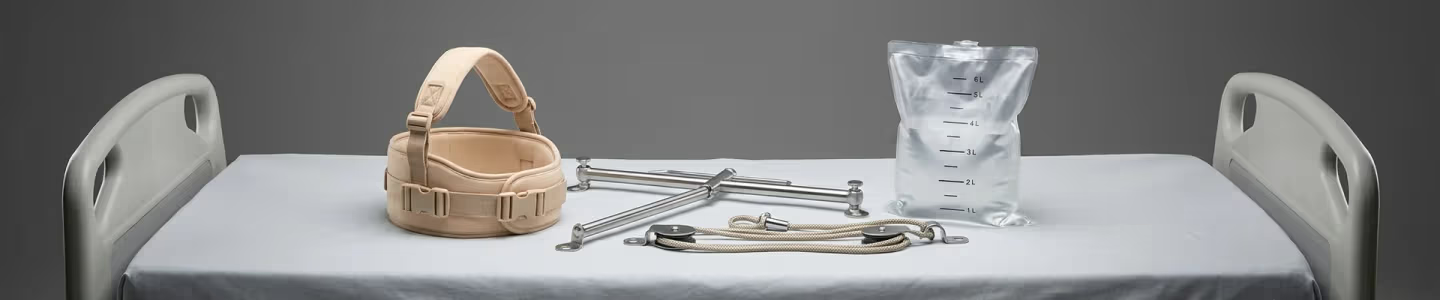
- Cervical Traction Kit: Typically designed for outpatient or home use for conditions like cervical spondylosis or nerve root compression. These often consist of a head halter, a spreader bar, and an over-the-door pulley system with a weight bag.
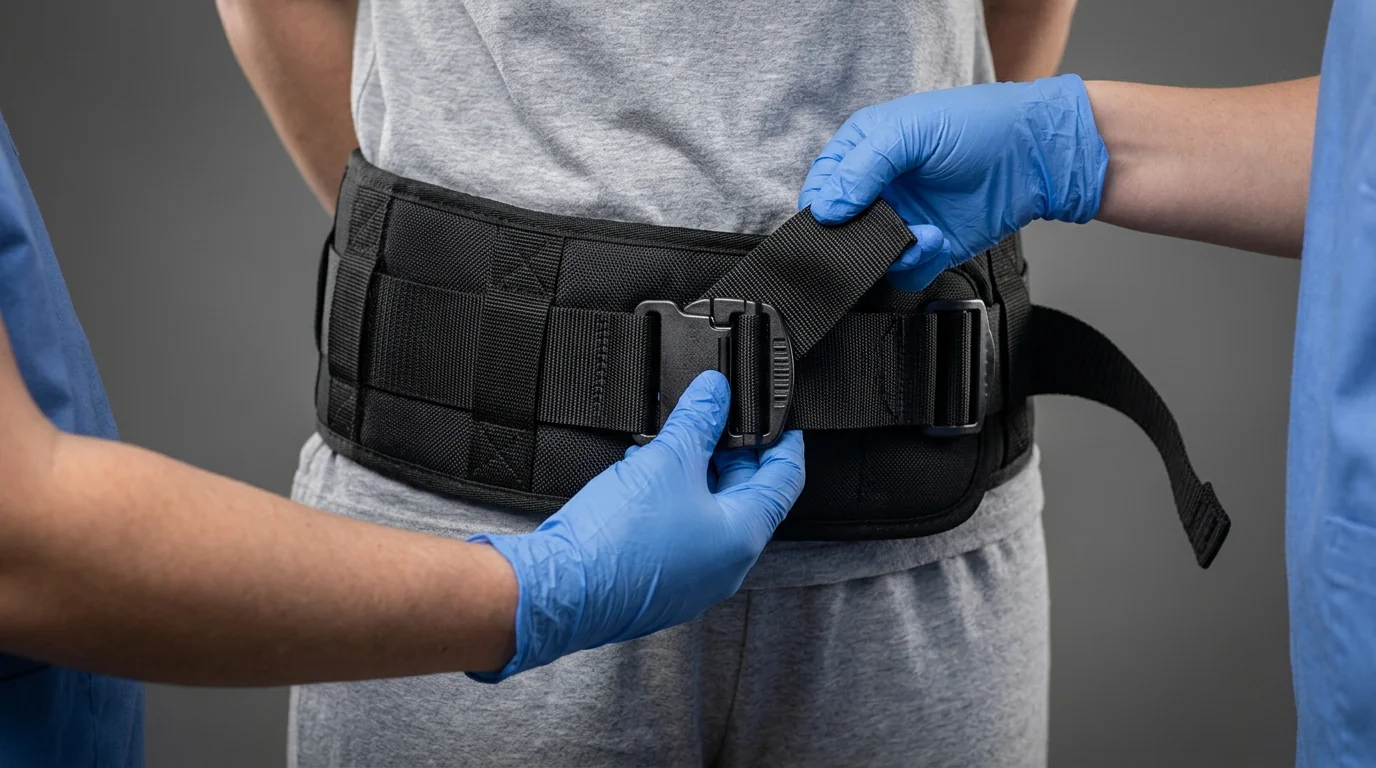
- Pelvic Traction Kit: Consists of a padded pelvic belt or harness that wraps around the patient's iliac crests, connected via straps to a spreader bar and the weight system. Used for lumbar spine issues.
Evaluating and Selecting a Traction Kit: An Operational Checklist
As you evaluate options for your facility, move beyond the item description and consider the practical, clinical realities of their use.
-
Material and Biocompatibility: For skin traction, the quality of the foam and adhesive is critical. Look for hypoallergenic, breathable materials that minimise the risk of skin irritation, maceration, and pressure sores during prolonged use. The adhesive must be strong enough to prevent slippage but not so aggressive that it causes skin stripping on removal.
-
Application-Specific Design: Does your orthopaedic department primarily handle adult trauma or does it have a significant paediatric caseload? Ensure you stock appropriately sized kits. A one-size-fits-all approach is inadequate and unsafe. The design of spreader plates and belts should be ergonomic to maximise patient comfort.
-
System Integrity: The traction cord must have high tensile strength and minimal stretch to ensure consistent force application. Pulleys should be robust and run smoothly. For weight bags, check for clear markings and durable construction to prevent leaks or ruptures.
-
Ease of Use: A well-designed kit is intuitive for clinical staff to apply. Clear instructions, logical component layout, and secure fastening mechanisms reduce the margin for error during application, which is often done in a high-pressure environment like an emergency department.
-
Packaging: Kits should be packaged to ensure all components are present and clean. While most skin traction kits are not supplied sterile, they must be hygienically packaged. Having complete, all-in-one kits simplifies inventory management and ensures a nurse or physiotherapist has everything they need at the bedside.
Best Practices for Application and Patient Management
Proper procurement is only half the battle. The safe and effective use of traction relies on stringent clinical protocols.
Skin Integrity is Paramount For any patient in skin traction, the skin is the weak link.
- Pre-Application Assessment: The limb must be inspected for any cuts, abrasions, or signs of compromised circulation. Traction should not be applied over broken skin.
- Wrinkle-Free Application: Any wrinkles in the adhesive straps can create pressure points, leading to blistering or sores. The application must be smooth.
- Routine Monitoring: Nursing and physiotherapy staff must perform and document skin and neurovascular checks every 2-4 hours initially, and at least once per shift thereafter. This includes checking for pallor, coolness, numbness, tingling, or an inability to move the toes/fingers.
Maintaining the Line of Pull Traction is only effective if the force vector is correct and constant.
- Patient Positioning: The patient must be positioned correctly in bed to maintain counter-traction (often the weight of their own body). They should not be allowed to slip down the bed.
- Free-Hanging Weights: The weights must hang freely at all times. They must never rest on the floor, the bed frame, or any other object.
- Unobstructed Ropes: Ensure the traction cords are in the pulley grooves and are not frayed or rubbing against bed linens or equipment.
Pin Site Care for Skeletal Traction This is a critical nursing responsibility to prevent osteomyelitis. Strict aseptic technique must be followed for cleaning pin sites as per facility protocol, typically using a chlorhexidine or saline solution. Any signs of infection—redness, swelling, purulent discharge, or increased pain—must be reported immediately.
Sourcing and Inventory Maintaining a consistent supply of the right traction kits is an operational challenge. Your orthopaedic, emergency, and physiotherapy departments will have different, often urgent, needs. Centralising procurement and maintaining a par level of adult, paediatric, adhesive, and non-adhesive kits prevents delays in patient care. When evaluating suppliers, consider their ability to provide a complete range of traction kits and related equipment to simplify your supply chain. This is a critical area where effective inventory management, supported by a reliable supplier, directly impacts the hospital's ability to deliver timely orthopaedic care.
Equip Your Facility Today
Ensuring your clinical teams have access to reliable, well-designed traction kits is fundamental to providing quality orthopaedic and rehabilitative care. A thorough evaluation of materials, design, and application-specific features will enable you to make procurement decisions that support both your clinicians and their patients.
For a comprehensive selection of equipment to meet your department's needs, explore the full range of physiotherapy and orthopaedic supplies available on MedikaBazaar.
FAQs

