
Hospitals
Understanding the Schirmer Strip: A Clinical and Operational Guide
A practical guide for clinicians and procurement heads on the Schirmer strip. Covers test procedure, result interpretation, and sourcing criteria for ophthalmology.


As a fundamental diagnostic tool in ophthalmology and optometry, the Schirmer strip provides a simple, quantitative measure of tear production. For any practice diagnosing or managing dry eye conditions, a reliable supply of high-quality strips is essential. However, not all strips are created equal. This guide details the clinical application, procedural nuances, and critical operational criteria for selecting and using Schirmer strips effectively in your facility.
The test's primary function is to assess tear secretion, which is critical for diagnosing conditions like keratoconjunctivitis sicca (KCS), evaluating tear film insufficiency, and monitoring patients with Sjögren's syndrome. Its simplicity belies the need for precision in both the product itself and the technique used.
The Clinical Significance of Tear Film Assessment
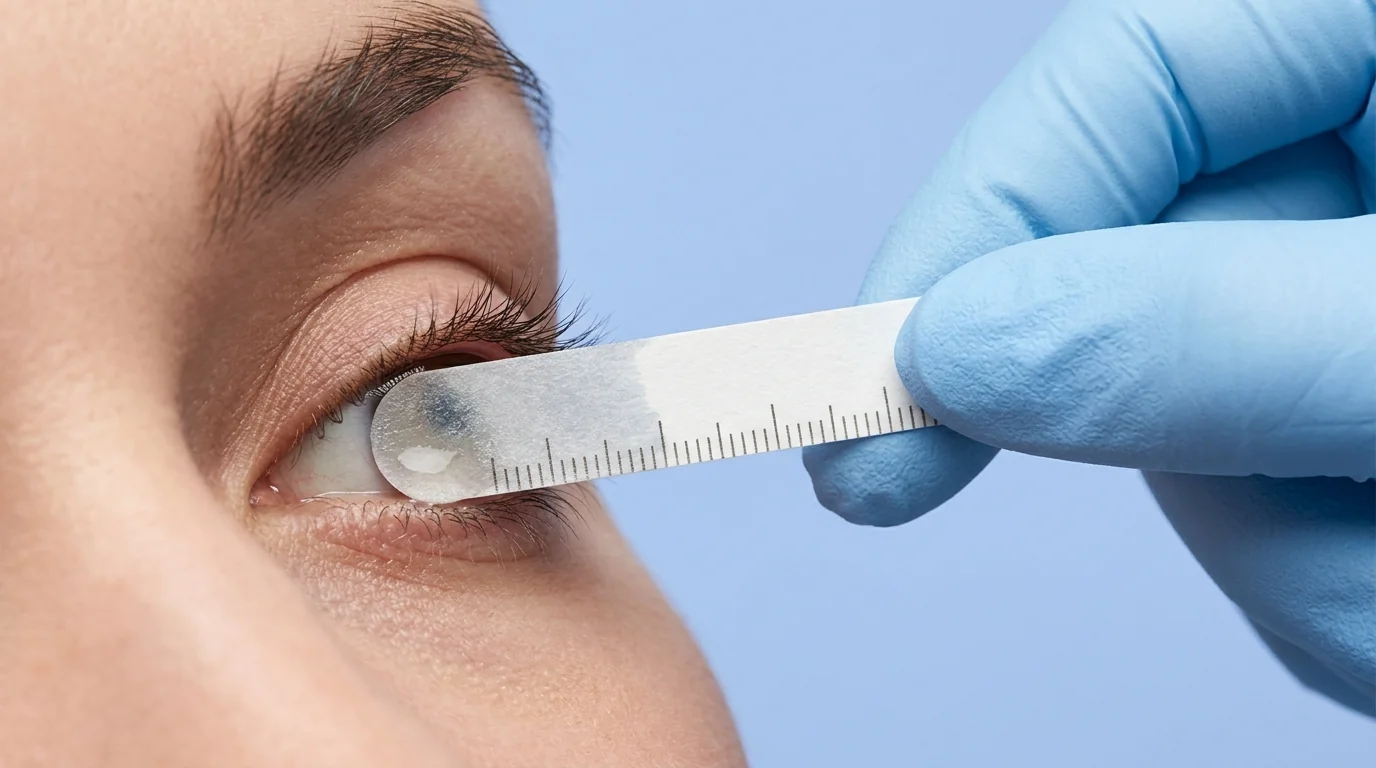 A healthy tear film is essential for ocular surface protection, lubrication, and clear vision. Deficient tear production can lead to patient discomfort, corneal damage, and an increased risk of infection. The Schirmer test is a frontline investigation to quantify this deficiency.
It helps differentiate between aqueous-deficient dry eye and other forms, guiding subsequent treatment strategies. The test distinguishes between two primary types of tear secretion:
- Basal Secretion: The continuous, low-level tear production that keeps the eye moist under normal conditions.
- Reflex Secretion: The surge in tear production in response to irritation, emotion, or other stimuli.
Accurate measurement allows clinicians to pinpoint the nature of the patient's condition, from post-operative dryness following procedures like LASIK to systemic autoimmune diseases.
The Schirmer Test: Procedure and Variations
Proper administration of the Schirmer test is paramount for obtaining a clinically valid result. The most common variation is the Schirmer I test, which measures total tear secretion (basal and reflex).
Standard Schirmer I Procedure:
- Preparation: No topical anaesthetic is used. Ensure the patient is seated comfortably in a room with normal lighting and no significant air drafts.
- Strip Handling: Open the sterile pouch without touching the rounded, notched end of the Schirmer strip. Fold the strip at the notch.
- Placement: Gently pull down the patient's lower eyelid. Place the folded, rounded end of the strip in the conjunctival sac at the junction of the lateral and middle third of the lower eyelid. Avoid touching the cornea, as this will trigger excessive reflex tearing and invalidate the test.
- Instruction: The patient should be instructed to close their eyes gently or to blink normally but avoid squeezing the eyes shut.
- Timing: The strip is left in place for exactly five minutes.
- Reading: After five minutes, the strip is removed, and the length of the wetted area is measured in millimeters from the notch.
The test can be modified to isolate specific types of tear secretion, which is often necessary for a more detailed diagnosis.
Schirmer Test Variations
| Test Type | Purpose | Procedure Details |
| Schirmer I | Measures total tear secretion (basal + reflex). | Standard procedure with no anaesthetic. This is the most common screening test. |
| Schirmer I with Anaesthetic | Measures basal secretion only. | A drop of topical anaesthetic is instilled. The conjunctival sac is gently dried with a cotton swab before placing the strip. |
| Schirmer II | Measures reflex secretion. | This is less common. An anaesthetic is applied, and then the nasal mucosa is irritated with a cotton-tipped applicator to stimulate reflex tearing. |
Interpreting Schirmer Test Results
The length of the wetted portion of the Schirmer strip after five minutes provides a quantitative measure of tear production. While interpretation must always be done in the context of the patient's symptoms and other clinical findings, the general guidelines are as follows:
- Normal: Greater than 15 mm of wetting.
- Mild Dryness: 10–15 mm of wetting.
- Moderate Dryness: 5–10 mm of wetting.
- Severe Dryness: Less than 5 mm of wetting.
A result from the anaesthetised test (measuring basal secretion) of less than 5 mm is a strong indicator of aqueous tear deficiency. It is crucial to document which test was performed (with or without anaesthetic) as the interpretation differs significantly.
Operational and Procurement Criteria for Schirmer Strips
From a procurement and operational standpoint, consistency and quality are the primary concerns. Sourcing the right Schirmer strip involves evaluating more than just the item itself; it involves ensuring predictable clinical outcomes.
Key Evaluation Checklist:
- Sterility and Packaging: This is non-negotiable. Each Schirmer strip must be individually packaged in a sterile, easy-to-open peel pouch. This prevents cross-contamination and nosocomial infections. Check that packaging clearly indicates the method of sterilization, typically Ethylene Oxide (EtO) or Gamma irradiation.
- Material and Construction: The strip should be made from a high-quality, absorbent filter paper, such as Whatman No. 41 or a certified equivalent. This ensures a consistent and predictable rate of absorption (wicking). The material must be lint-free to avoid introducing foreign bodies into the eye. The patient-contact tip should be smooth and rounded to prevent iatrogenic trauma to the conjunctiva or cornea.
- Clarity and Durability of Markings: The millimeter scale printed on the strip must be sharp, clear, and easy to read. The ink must be indelible and non-migrating, ensuring it does not smudge when wet or leach any substances into the tear film.
- Lot-to-Lot Consistency: A critical factor for any diagnostic consumable. The performance of strips from different manufacturing batches must be identical. Sourcing from manufacturers with robust quality management systems, such as ISO 13485 certification, provides a higher degree of assurance against variability that could skew clinical results.
- Shelf Life and Storage Conditions: Always check the expiry date upon receipt of a new consignment. Schirmer strips should be stored in a cool, dry environment, away from direct sunlight and chemical fumes that could degrade the paper's absorptive properties.
Best Practices for Accurate and Reliable Testing
Beyond the basic procedure, several factors can influence the accuracy of the Schirmer test. Adhering to these best practices ensures that the results are reliable and clinically useful.
- Patient Communication: Clearly explain the procedure to the patient. Instruct them not to rub or squeeze their eyes during the test. Reassure them that mild discomfort is normal but to report any significant pain.
- Environmental Control: Perform the test in a setting free from strong air currents (e.g., from fans or air conditioners), as this can increase evaporation from the strip and falsely lower the reading.
- Meticulous Handling: Use a "no-touch" technique, handling the strip only by the end opposite the measurement scale. Oils from fingertips can contaminate the absorbent paper and impede proper wicking.
- Correct Placement: This is the most common source of error. Ensure the strip is in the lower fornix and not touching the cornea. Corneal touch will cause a flood of reflex tears, leading to a falsely high reading in a non-anaesthetised test.
- Precise Timing: Use a timer. Removing the strip too early or too late will render the result invalid. The 5-minute duration is a standardized parameter.
By standardizing the procedure and paying attention to these details, your clinical team can generate highly repeatable and dependable diagnostic data.
Equip Your Facility
Ensuring your ophthalmology or optometry department has a consistent supply of high-quality diagnostic consumables is essential for accurate patient care.
For a comprehensive selection of sterile, individually-packaged Schirmer strips and other essential ophthalmology supplies, explore the diagnostic range available on MedikaBazaar.
FAQs


