

Hospitals
Understanding Diathermy Machines: A Clinical and Operational Overview
An essential guide for hospital procurement heads on diathermy machines. Explore the principles of monopolar and bipolar modes, key selection criteria, and safety protocols.


As a procurement manager or clinical head, you're tasked with equipping your facility with tools that are not only effective but also safe and operationally sound. The diathermy machine, a cornerstone of both surgical theatres and physiotherapy departments, is a perfect example. More than just a "cautery" device, it's a sophisticated instrument that uses high-frequency electrical currents to generate therapeutic or surgical heat deep within tissues.
Understanding the nuances of this technology is critical for making an informed decision. Whether it's for precise coagulation in neurosurgery, broad haemostasis in general surgery, or pain management in rehabilitation, the right diathermy unit directly impacts patient outcomes and operational efficiency. This guide breaks down the core principles, key evaluation criteria, and essential safety protocols from a peer's perspective.
Core Principles: How Diathermy Works in Practice
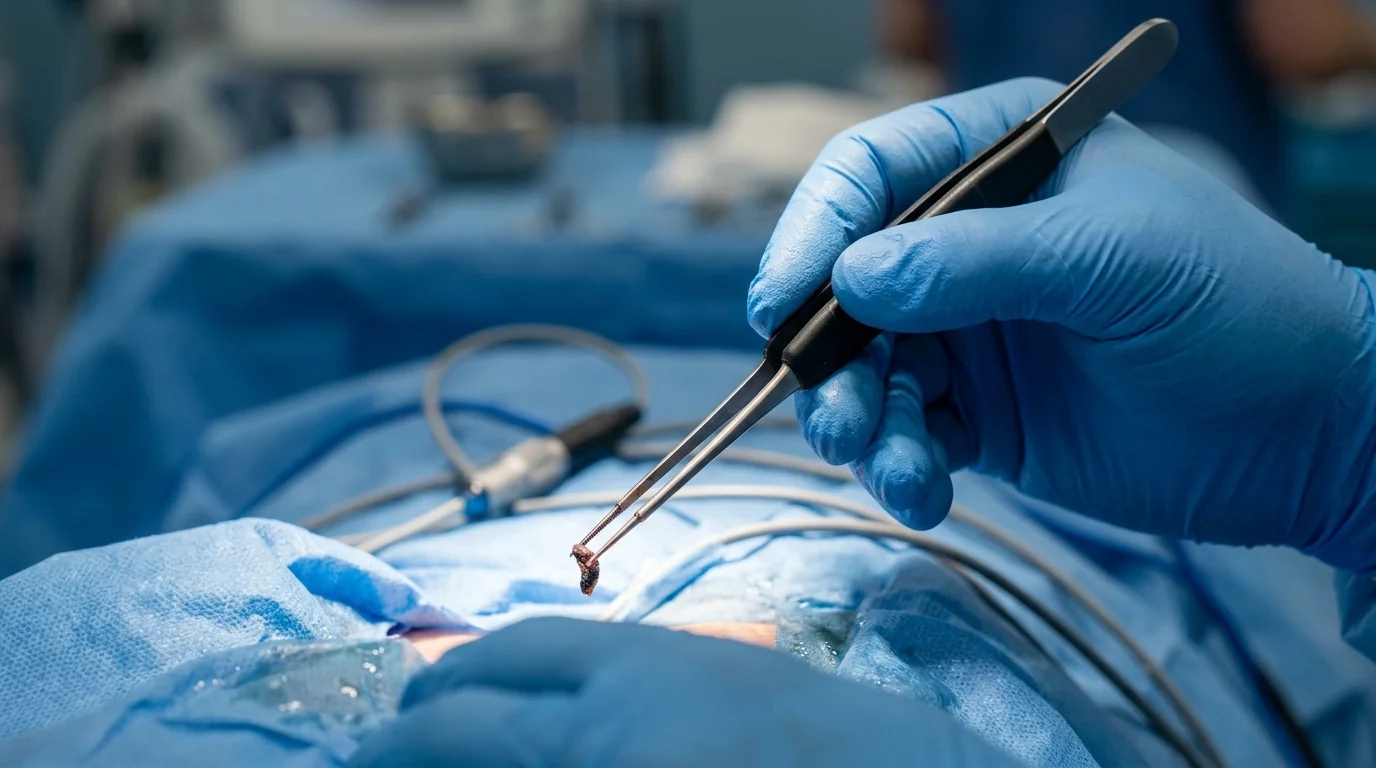 At its heart, a diathermy machine functions by passing a high-frequency alternating current through body tissues. The natural resistance (impedance) of these tissues to the current flow generates heat, a principle known as Joule heating. The manner in which this heat is controlled and applied defines its two primary applications: surgical and therapeutic.
- Surgical Diathermy (Electrosurgery): This involves using intense, focused heat to achieve a surgical effect—cutting tissue, coagulating blood vessels to control bleeding (haemostasis), or destroying abnormal growths (ablation). The temperatures generated are high enough to cause cellular vaporisation or protein denaturation.
- Therapeutic Diathermy: Here, the goal is not tissue destruction but to induce physiological effects through mild, controlled heating. By raising the temperature of deep tissues, therapeutic diathermy can increase blood flow, relax muscles, and decrease pain. It is a staple in physiotherapy and sports medicine.
Differentiating Surgical Diathermy Modes: Monopolar vs. Bipolar
For any surgical application, the most fundamental distinction is between monopolar and bipolar modes. This choice is dictated by the procedure and has significant implications for patient safety.
Monopolar Diathermy In this mode, the active electrode is a small, pen-like instrument or blade held by the surgeon. The current flows from this electrode, through the patient's body to a large "patient return electrode" or grounding pad placed elsewhere on the body, and then back to the generator to complete the circuit.
- Best For: Procedures requiring cutting or coagulation over a large surface area, such as in open abdominal or orthopaedic surgery. It is versatile, offering various effects like pure cut, blended cut (cutting with some haemostasis), and coagulation.
- Operational Imperative: Correct placement of the patient return electrode is non-negotiable. Improper contact can cause the current to seek an alternative path to the ground, potentially resulting in severe burns at an unintended site (e.g., where the patient is touching a metal part of the operating table).
Bipolar Diathermy Bipolar diathermy uses a forceps-like instrument where both the active and return electrodes are located on the tips. The electrical current is confined to the small volume of tissue held between the tips of the forceps.
- Best For: Procedures requiring extremely precise coagulation in delicate or fluid-filled environments. It is the standard for neurosurgery, ophthalmology, ENT, and many laparoscopic procedures.
- Operational Imperative: Since the current does not travel through the patient's body, a separate return pad is not needed. This makes it inherently safer, significantly reducing the risk of alternate site burns and making it the preferred choice for patients with pacemakers or other electronic implants.
Here is a direct comparison of their operational characteristics:
| Feature | Monopolar Diathermy | Bipolar Diathermy |
| Current Path | Through the patient's body to a return pad | Confined between the electrode tips |
| Return Electrode | Required (Patient Return Pad) | Not required (integrated into the forceps) |
| Clinical Application | Cutting, wide area coagulation (e.g., open surgery) | Precise, localised coagulation (e.g., neurosurgery, laparoscopy) |
| Tissue Damage Risk | Higher risk of adjacent tissue burns if not used correctly | Lower risk, more focused energy delivery |
| Versatility | Can perform cutting, coagulation, and blended modes | Primarily used for coagulation and dessication |
Understanding Therapeutic Diathermy: Shortwave and Longwave
In the therapeutic domain, the goal is controlled, non-destructive heating. The two primary modalities are Shortwave Diathermy (SWD) and Longwave Diathermy (LWD).
Shortwave Diathermy (SWD) SWD typically uses a frequency of 27.12 MHz to generate heat in deep tissues. It can be applied using capacitor plates or induction coils and is effective for treating conditions like muscle spasms, joint stiffness, and chronic inflammation.
Longwave Diathermy (LWD) LWD operates at a lower frequency, typically around 1 MHz. It provides more superficial but highly controlled heating compared to SWD. This modality is particularly useful in physiotherapy and rehabilitation for targeted pain relief, improving circulation, and enhancing the extensibility of collagen tissues before stretching exercises. For instance, units like the Medansh Longwave Diathermy Machine are specifically engineered for these physiotherapy applications, delivering controlled thermal energy for effective pain and mobility management.
Key Evaluation Criteria for Procuring a Diathermy Machine
When selecting a diathermy machine, move beyond the spec sheet and consider these operational and clinical factors:
- Required Clinical Applications: Define your primary use case. A multidisciplinary OT requires a versatile electrosurgical unit with a full suite of monopolar and bipolar modes. A dedicated physiotherapy clinic needs a reliable therapeutic unit (SWD or LWD). A small dermatology clinic might only need a low-power unit for dessication.
- Safety System Integration: For any surgical unit, a Patient Return Electrode Monitoring (PREM) system is essential. This technology continuously monitors the quality of the grounding pad's contact with the patient's skin and automatically cuts power if the connection becomes unsafe, preventing burns. Do not consider a monopolar-capable unit without this feature.
- Power Output and Control: The required wattage varies by specialty. A urology department performing Transurethral Resection of the Prostate (TURP) needs a high-power output, whereas a plastic surgeon needs fine, low-power control. A digital interface that allows for precise, repeatable power adjustments in small increments is preferable to less accurate analog dials.
- Waveform and Mode Versatility: Assess the range of waveforms. A good surgical unit should offer a "pure cut" for a clean incision with minimal thermal damage, a "blended cut" for cutting with simultaneous coagulation, and multiple coagulation modes (e.g., spray/fulgurate for broad surfaces, forced/pinpoint for specific vessels, and soft/dessication for contact coagulation).
- User Interface and Ergonomics: The controls should be intuitive and the display easy to read in a brightly lit OT. Alarms for activation and faults must be clear and distinct. Consider the unit's form factor—is a trolley-mounted system or a compact tabletop unit more appropriate for your space?
- Compliance and Certifications: Verify that the device has the necessary certifications. CE marking and ISO 13485 manufacturing standards are global benchmarks. For the Indian market, BIS certification provides an additional layer of assurance regarding safety and quality.
Operational Best Practices and Maintenance Protocols
A diathermy machine is only as safe as the protocols surrounding its use.
- Pre-Procedure Checks: Before every single case, the nursing and technical staff must inspect all cables, connections, and accessories for any signs of damage or wear. The machine's self-test sequence, if it has one, should be run.
- Patient Return Electrode Management (Monopolar): Staff training on proper pad placement is paramount. It must be applied to a clean, dry, well-vascularised muscle mass, avoiding bony areas, scar tissue, metal implants, and excessive body hair. The pad's orientation relative to the surgical site should direct the current path away from the heart or other sensitive organs.
- Cleaning and Sterilisation: Adhere strictly to the manufacturer's instructions. Reusable electrodes and handpieces must be cleaned and sterilised according to validated protocols to prevent cross-contamination. Many facilities now favour single-use, disposable accessories to simplify infection control.
- Biomedical Maintenance: Schedule an annual preventive maintenance and calibration check with a qualified biomedical engineer. They will verify that the power output is accurate across all settings and test the functionality of all safety systems, including the PREM circuit. Maintaining a detailed log of these services is critical for hospital accreditation (e.g., NABH). Maintaining a comprehensive inventory of compatible accessories and scheduling regular maintenance are key operational responsibilities. For a broader view of surgical and therapeutic devices, you can explore our full range of Medicalequipments to ensure your facility is well-stocked.
Choosing the right system involves a clear understanding of your procedural needs, whether it's a high-power unit for complex surgeries or a dedicated therapeutic device for rehabilitation. Evaluating the full spectrum of available cautery machine options allows for a more informed decision that aligns with both clinical requirements and safety standards.
Equip Your Facility Today
For a detailed evaluation of diathermy machines suited to your surgical or therapeutic needs, explore the curated selection available on MedikaBazaar. Our range covers devices for diverse clinical applications, ensuring you can find the right fit for your operational requirements.
FAQs

