

Small Clinics
What is suction catheter?
What is suction catheter? Uses for airway clearance, how to use closed/open types, ETT sizing formula. Shop Romsons/PVC catheters on Medikabazaar.


Suction Catheter Basics
Suctioning is not routinely required for healthy individuals and is used only when a person is unable to clear airway secretions effectively. Suction catheters assist patients who cannot remove mucus on their own, helping reduce the work of breathing and keep the airway clear. By removing accumulated secretions, suctioning prevents mucus plugs that may lead to complications such as atelectasis, lung collapse, or pneumonia. Clearing the airway also improves oxygen delivery to lung tissue. In clinical settings, suction catheters are commonly used for patients on mechanical ventilation or those with respiratory infections, supporting effective breathing and maintaining pulmonary hygiene.
Types: Open vs Closed Systems
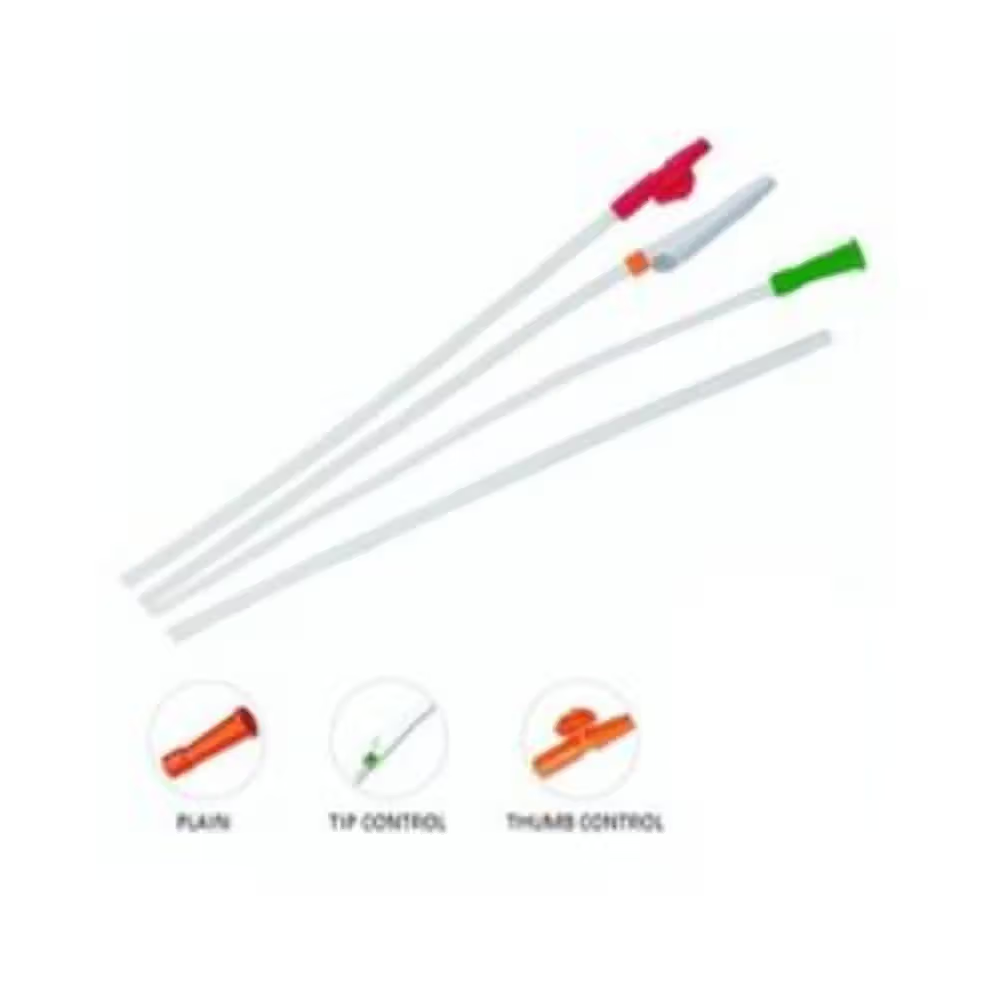
Open suction catheters are commonly used in hospital settings and are inserted into the airway as needed to remove secretions. Suction is applied intermittently, making them suitable for patients who require frequent airway clearance. These catheters are simple to use and widely preferred in non-ventilated or short-term suctioning situations.
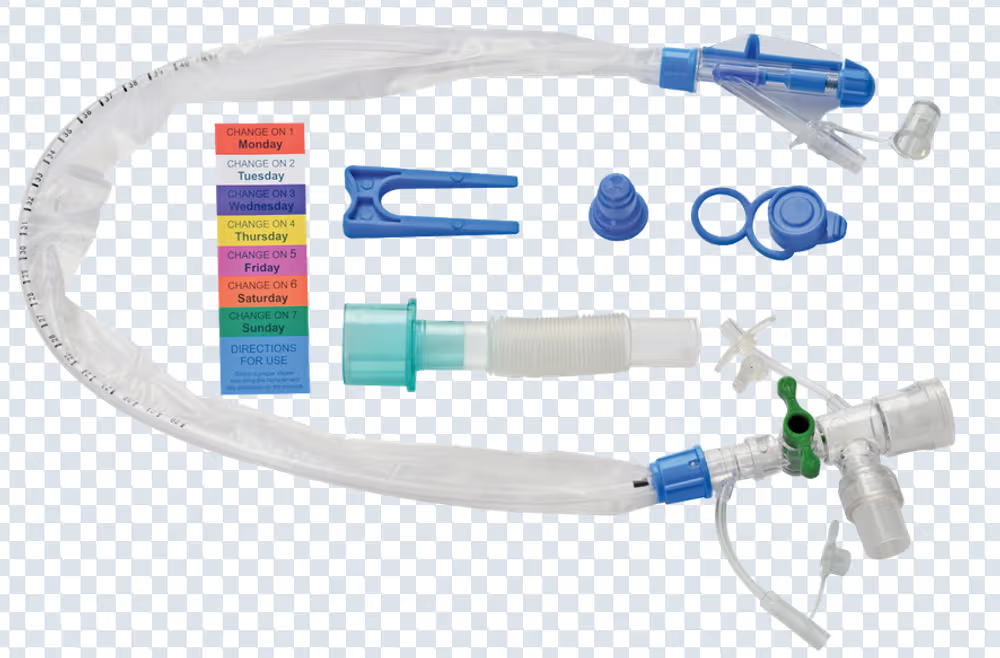
Closed suction catheters, on the other hand, are primarily used in critical care environments, especially for patients on mechanical ventilation. As part of a closed system, they allow suctioning without disconnecting the ventilator circuit, thereby reducing the risk of infection and maintaining oxygenation during the procedure.
Sizing for Endotracheal Tubes
Endotracheal suctioning should be performed only when clinically indicated, not on a routine schedule, to reduce the risk of hypoxia, atelectasis, and airway injury. Preoxygenation is commonly used, especially in adults, but excessive oxygen should be avoided due to the risk of hyperoxia-related complications; in neonates, oxygen is typically increased by 10–20% rather than using 100%.
The recommended vacuum pressure is generally 70–150 mm Hg, using the lowest effective pressure to minimize mucosal damage and lung volume loss. Suction catheter size should be carefully selected ideally occluding less than 50% of the endotracheal tube’s inner diameter to prevent atelectasis while allowing effective secretion removal.
Regarding technique, shallow suctioning is generally preferred to reduce airway trauma, with deep suction reserved for cases with significant lower airway secretions. Continuous suction is favoured over intermittent suction to limit tracheal injury. Suction duration should be brief—10–15 seconds in adults and ≤5 seconds in children and neonates.
Adult patients typically require 14–16 Fr catheters, while 5–8 Fr sizes are used for infants and young children. Size can be easily confirmed using the color-coded connector. Most catheters are made from soft, DEHP-free PVC to reduce kinking and exposure to harmful chemicals.
Sterile Packaging Standards
Sterile Packaging Standards for Suction Catheters are critical to prevent contamination and reduce the risk of infection during airway management. Suction catheters are individually packed in medical-grade, sterile barrier packaging that maintains sterility until the moment of use. The packaging is designed to be tamper-evident, moisture-resistant, and easy to open aseptically, ensuring safe handling in clinical and homecare environments. Compliance with recognized quality and sterilization standards helps ensure consistent performance and patient safety.
Bulk Procurement Benefits
Bulk Procurement Benefits include lower per-unit costs, consistent product availability, and simplified inventory management. Purchasing in volume helps reduce frequent reordering, ensures standardization of supplies, and improves operational efficiency. It also strengthens supplier relationships, often leading to better service and long-term savings.
Maintenance and Storage
Maintenance and Storage for Suction Catheters are important to ensure safety and effectiveness. Sterile suction catheters should be stored in a clean, dry area away from direct sunlight and moisture, with packaging kept intact until use. Expiry dates should be checked regularly, and opened or used catheters must be discarded according to infection control protocols.
Common Clinical Scenarios
Common Clinical Scenarios for Suction Catheter Use include airway secretion management in patients who are unable to clear mucus independently. Suction catheters are frequently used in mechanically ventilated patients, individuals with tracheostomy or endotracheal tubes, and patients with respiratory infections producing excessive secretions. They are also essential in cases of neurological impairment, reduced consciousness, or weak cough reflex, as well as during emergency airway management to prevent obstruction and maintain adequate oxygenation.
FAQs

