

Dentist
From Septo to Seal: A Clinician’s Guide to Dental Etching Protocols
An authoritative guide for clinicians on the role, types, and application protocols of dental etching agents in restorative dentistry.


In any busy Indian dental practice, certain terms become clinical shorthand. "Septo" is often one of them, typically referring to the wide range of trusted consumables from Septodont that form the backbone of daily procedures. While the name is associated with everything from anaesthetics to endodontic materials, this guide focuses on one of its most critical applications: the process of dental etching. Mastering the nuances of etching is fundamental to the success of adhesive dentistry, directly impacting the longevity and integrity of every composite restoration, sealant, and bonded restoration you place.
This is not a theoretical overview. It is a practical, operational guide for clinicians and procurement heads who need to understand the 'what', 'why', and 'how' of selecting and using dental etchants to ensure predictable, high-quality clinical outcomes.
The Role of Etching in Modern Dentistry
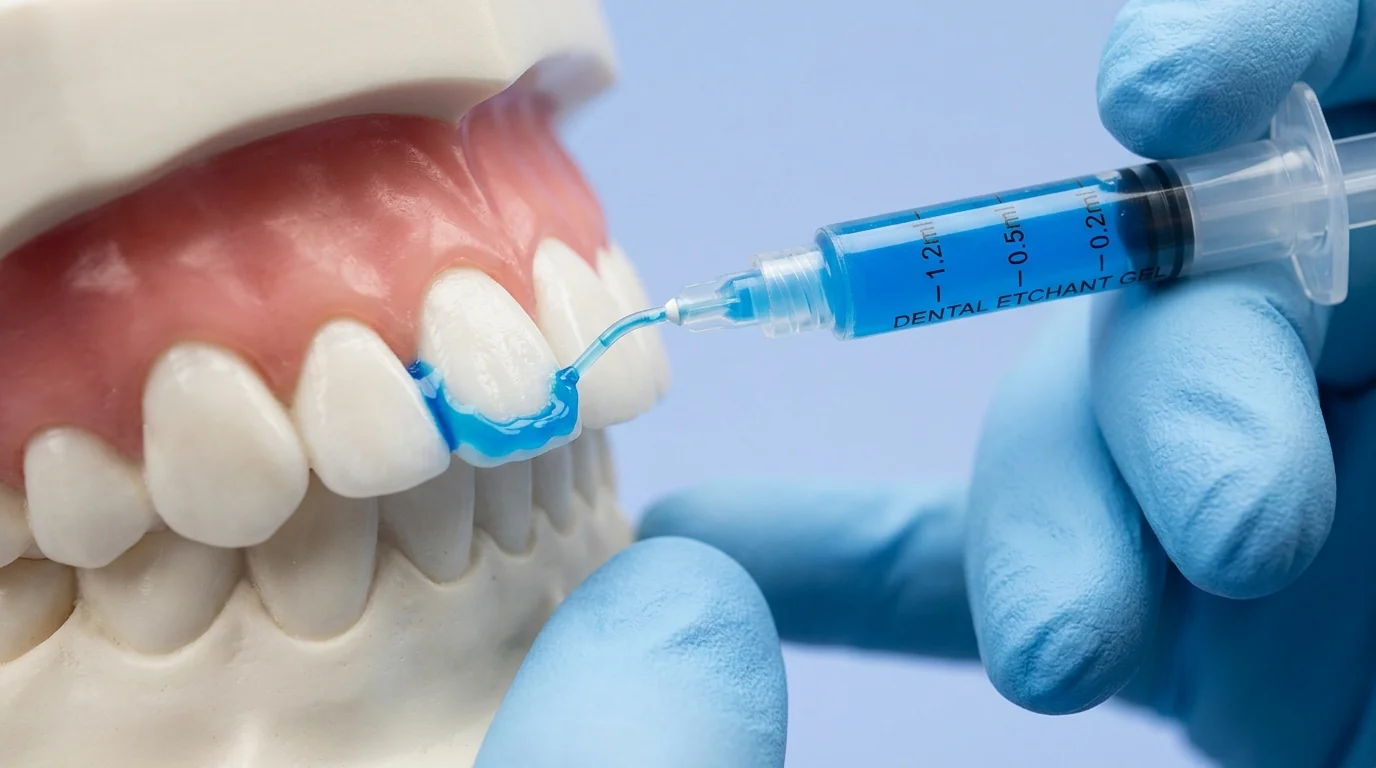 Adhesive dentistry hinges on a simple principle: creating a strong, durable bond between a restorative material and the tooth structure. Etching is the critical preparatory step that makes this bond possible. Its primary function is to microscopically alter the tooth surface—both enamel and dentin—to facilitate micromechanical retention.
On Enamel: The application of an acid etchant, typically phosphoric acid, selectively dissolves the hydroxyapatite crystals in the enamel rods. This process creates a rough, microporous surface with significantly increased surface area. When a low-viscosity bonding resin is applied, it flows into these microscopic irregularities and, upon polymerisation, creates thousands of resin "tags" that lock into the enamel. This is the foundation of a powerful micromechanical bond.
On Dentin: Dentin etching is a more delicate procedure. The etchant removes the "smear layer"—a layer of debris created during cavity preparation—and demineralises the superficial dentin, exposing the network of collagen fibrils within the dentinal tubules. This prepared surface is then ready for the primer and bonding agent to infiltrate and create the "hybrid layer," a crucial interface of resin and tooth structure that seals and bonds the restoration.
Understanding Etching Agents: Composition and Mechanism
The vast majority of etching procedures in restorative dentistry rely on phosphoric acid (H₃PO₄). The concentration and formulation of the etchant, however, are key factors in its clinical performance.
- Concentration: Phosphoric acid concentrations typically range from 30% to 40%. A concentration of 37% is widely considered the industry standard, providing an optimal balance between effective etching and minimising the risk of over-etching, particularly on sensitive dentin.
- Formulation: Etchants are available as liquids or, more commonly, as gels. Gels are heavily favoured in clinical practice due to their thixotropic properties. A thixotropic gel flows when under pressure (e.g., when extruded from a syringe) but holds its shape once placed on the tooth. This is operationally critical for precise application, preventing the etchant from running onto unintended areas.
- Additives: Most commercial etchant gels contain silica as a thickening agent and a colouring dye (typically blue or green). The colour provides essential visual contrast against the tooth structure, ensuring the clinician can verify complete coverage during application and, just as importantly, confirm complete removal during the rinsing phase. For a predictable outcome, a thixotropic gel formulation, such as a 37% phosphoric acid etchant like Septo-Etch, is often preferred for its handling characteristics and clear visibility.
Clinical Protocols for Etching: A Step-by-Step Breakdown
The success of a bonded restoration is often decided in the 30-60 seconds of the etching and rinsing phase. Precision is non-negotiable. The most common technique, the "Total-Etch" or "Etch-and-Rinse" method, requires a meticulous approach.
Step 1: Isolation Ensure the operating field is properly isolated using a rubber dam or cotton rolls and suction. Salivary contamination is a primary cause of bond failure.
Step 2: Application on Enamel Apply the etchant gel first to the enamel margins of the preparation. Allow it to remain on the enamel for a minimum of 15 seconds, but no more than 30 seconds. Enamel is highly mineralised and requires this time for an adequate etch pattern to form.
Step 3: Application on Dentin Next, apply the etchant to the dentin surfaces. The timing here is critical. Dentin should be etched for a maximum of 15 seconds. Over-etching dentin can lead to an excessive depth of demineralisation, which the bonding agent may not be able to fully penetrate, leading to post-operative sensitivity and a weaker bond.
Step 4: Rinsing Thoroughly rinse the etchant from the tooth surface with a water/air spray for at least 15-20 seconds. Inadequate rinsing will leave residual phosphoric acid and silica, which will interfere with the bond. The distinct colour of the gel aids in visually confirming its complete removal.
Step 5: Drying This is arguably the most technique-sensitive step.
- Enamel: Can be dried thoroughly to a frosty white appearance.
- Dentin: Must NOT be desiccated. Over-drying with a strong air blast causes the exposed collagen fibril network to collapse, preventing resin infiltration and the formation of a proper hybrid layer. The ideal state is a "moist" but not "wet" surface—often described as having a gentle, satin sheen. This can be achieved by blotting gently with a cotton pellet or using a gentle, diffused air stream from a distance.
Evaluating and Selecting an Etchant for Your Practice
For a procurement manager or senior clinician, selecting the right etchant involves looking beyond the basic chemical composition.
- Viscosity and Handling: Does the gel stay where you place it? A good etchant is thixotropic, meaning it won't slump or run down vertical surfaces. This control is essential for selective etching techniques and for protecting adjacent tissues.
- Colour and Contrast: Is the gel easily visible on the tooth surface? A deep, contrasting colour (like blue) is a simple but vital feature that prevents clinical errors during application and rinsing.
- Delivery System: Syringe-based delivery with fine, disposable applicator tips offers the most precise and hygienic method of application, minimising waste and allowing direct placement even in hard-to-reach areas of a preparation.
- Rinsability: The gel should rinse away cleanly and quickly without leaving a chalky residue. This is a function of the thickener and other components in the formulation.
Beyond Etching: The Broader Context of Clinical Consumables
Etchants and bonding agents are a critical component, but they are just one part of the wider ecosystem of restorative and operative Dental supplies essential for daily practice. The principles of careful evaluation, adherence to protocols, and understanding the material science apply equally to composites, cements, impression materials, and anaesthetics. A well-stocked and logically sourced inventory ensures that clinicians have the reliable materials they need to perform procedures efficiently and effectively.
Safety and Storage Protocols in Your Clinic
Phosphoric acid, even in a gel form, is a caustic substance that requires proper handling protocols.
- Personal Protective Equipment (PPE): Clinicians and assistants must wear gloves, masks, and protective eyewear during the application and rinsing of etchants.
- Patient Protection: Ensure the patient's soft tissues (gingiva, cheeks, lips) are protected. Use of a rubber dam is the gold standard. If not feasible, ensure careful retraction and placement. Accidental contact should be rinsed immediately and copiously with water.
- Storage: Store etchant syringes at room temperature, away from direct sunlight, as specified by the manufacturer. Ensure the cap is replaced securely to prevent the material from drying out.
- Expiry Management: Like all clinical materials, etchants have a limited shelf life. Implement a first-in, first-out (FIFO) inventory system and regularly check expiry dates. Expired material can have altered viscosity and reduced efficacy.
- Disposal: Dispose of used syringes, tips, and packaging in accordance with your facility's biomedical waste management protocols.
Equip Your Facility Today
Ensuring your clinical team has access to high-quality, reliable dental consumables is fundamental to delivering excellent patient care. The right materials, handled with the correct protocol, form the foundation of durable and successful restorative work. Explore the necessary range of restorative and preventive materials on MedikaBazaar to keep your practice equipped for excellence.
FAQs

