

Hospitals
Selecting the Right Medical Bed: A Clinical and Operational Framework
An operational guide for hospital procurement managers on selecting the right medical bed. Covers types, features, clinical applications, and safety standards.


A medical bed is not merely hospital furniture; it is a critical medical device integral to patient recovery, safety, and caregiver efficiency. From the general ward to the intensive care unit, the choice of bed directly influences clinical outcomes, reduces the risk of caregiver injury, and impacts the operational flow of a patient care area. For procurement and clinical heads, specifying the right medical bed requires a detailed understanding of its functional capabilities, the clinical needs of the patient population, and the operational demands of the facility.
This guide provides a clinical and operational framework for evaluating and selecting medical beds, moving beyond basic specifications to focus on the factors that truly matter in a demanding healthcare environment.
Core Types of Medical Beds: A Functional Breakdown
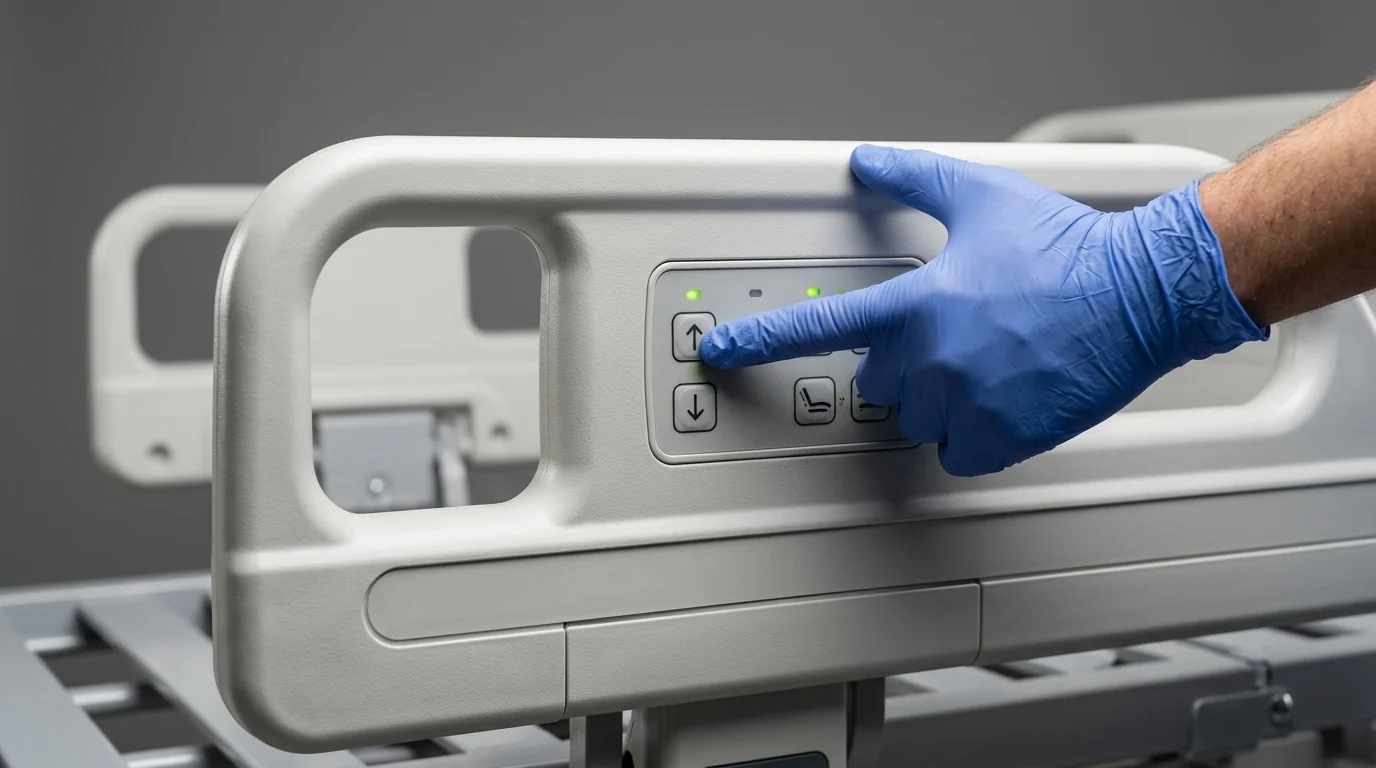 The primary classification of a medical bed relates to its method of adjustment. The choice between manual and electric actuation is a foundational decision driven by patient acuity, staff workload, and the specific care setting.
Manual Beds These beds rely on hand cranks to adjust the bed's height and articulate the head and foot sections.
- Operational Context: Best suited for low-acuity wards, rural health centres, or settings where reliable electricity is a concern. They are also considered for patient transport or as backup units.
- Clinical Considerations: While functionally reliable, manual adjustments are labour-intensive and can pose an ergonomic risk to nursing staff, especially with frequent repositioning or with heavier patients.
Semi-Electric Beds A hybrid model, semi-electric beds typically feature electric control for head and foot adjustments, while height adjustment remains manual (often via a crank or hydraulic foot pedal).
- Operational Context: These offer a balance between patient comfort and capital investment. They are a common sight in general wards and long-term care facilities.
- Clinical Considerations: They empower patients with some control over their own positioning, which can improve comfort and reduce the need for nursing assistance for minor adjustments. The manual height adjustment still requires physical effort from staff.
Full-Electric Beds All adjustments—height, head, and foot articulation—are controlled electronically via a handset for the patient and a supervisor panel for the caregiver.
- Operational Context: The standard for most modern hospitals, including acute care wards, specialty units, and private rooms.
- Clinical Considerations: Full-electric beds significantly enhance patient autonomy and drastically reduce the physical strain on caregivers. They enable smooth, precise, and rapid repositioning, which is crucial for patient comfort and for performing certain clinical procedures.
Specialised ICU/Critical Care Beds These are advanced platforms designed for the most vulnerable patients, integrating features that facilitate intensive monitoring and treatment.
- Key Features:
- Integrated Weighing Scale: Allows for accurate, regular weight monitoring without moving the patient.
- Radiolucent Backrest: Enables chest X-rays to be taken without transferring the patient from the bed.
- Lateral Tilt Function: Assists with turning patients to offload pressure and can aid in managing pulmonary secretions.
- In-Bed CPR Function: A quick-release lever that instantly flattens the bed for emergency resuscitation.
- Advanced Positioning: Includes options like the Cardiac Chair position and one-touch Trendelenburg/Reverse Trendelenburg.
Key Articulation and Positioning Capabilities
The ability to articulate the bed frame is not just for comfort; it is a clinical necessity. Understanding these positions is key to selecting a bed that meets your facility's case mix.
-
Fowler's Position: This semi-sitting position (head of the bed raised) is fundamental for patient care. It is adjusted to High-Fowler's (60-90 degrees), Standard/Semi-Fowler's (30-45 degrees), and Low-Fowler's (15-30 degrees). Its clinical indications include improving oxygenation, reducing the risk of aspiration during feeding, and relieving tension on abdominal muscles. The ability to achieve a Fowler's position is a core feature of any modern fowler bed.
-
Trendelenburg and Reverse Trendelenburg: These are critical tilting functions. The Trendelenburg position (patient's head down, feet up) is used to manage hypotension or during certain surgical procedures. The Reverse Trendelenburg position (head up, feet down) is used to help reduce intracranial pressure or facilitate certain respiratory procedures.
-
Cardiac Chair Position: This position mimics a standard armchair, with the patient sitting upright. It is highly beneficial for patients with cardiac or respiratory ailments, as it can maximise lung expansion, improve comfort, and make it easier for the patient to eat or interact with visitors.
Evaluating a Medical Bed: An Operational Checklist
When evaluating options, move past the brochure and consider the components that determine a bed's long-term performance and safety.
-
Load Capacity & Dimensions: The safe working load must accommodate not only the patient's weight but also the mattress and any accessories. A minimum of 180-220 kg is standard, with bariatric models offering capacities of 300 kg or more. Check the overall width and length to ensure it fits within your room layout and through doorways.
-
Actuator System (Motors): For electric beds, the quality of the motors is paramount. Look for systems from reputable manufacturers known for quiet, smooth, and reliable operation. Ingress Protection (IP) ratings (e.g., IPX4 or higher) indicate resistance to fluid splashes, a crucial factor for infection control. When evaluating the actuator system, it's also worth considering the broader ecosystem of available Medicalequipments that may need to interface with the bed, such as patient monitors or IV poles.
-
Side Rails and Safety: Side rails are essential for preventing falls but also pose a risk of patient entrapment if poorly designed. Look for split side rails, which offer protection without confining the entire length of the patient, and ensure they comply with international safety standards like IEC 60601-2-52. They should be easy for staff to operate with one hand but secure against accidental lowering.
-
Castors and Braking System: The bed must be easily transportable. Look for large-diameter (125mm or 150mm) castors that roll smoothly. A central braking system, operated by a single foot pedal, is non-negotiable for stability and safety. It should lock the castors from both swivelling and rolling.
-
Headboard and Footboard: These should be made of a durable, non-porous material like ABS plastic for easy disinfection. Critically, they must be easily removable by clinical staff to allow 360-degree access to the patient, especially the head, during emergencies like intubation or CPR.
-
Regulatory Compliance: Ensure the bed and its electrical components meet relevant safety and quality standards. Look for certifications like ISO 13485 (quality management for medical devices) and relevant Bureau of Indian Standards (BIS) marks where applicable.
The Mattress: The Unsung Hero of Patient Care
The bed frame provides the structure, but the mattress surface is where patient safety and comfort are truly determined. An inappropriate mattress can negate the benefits of an advanced bed frame.
-
Basic Foam Mattresses: High-density medical-grade foam mattresses are suitable for short-stay patients with good mobility in general wards. Look for features like a waterproof, breathable, and anti-microbial cover.
-
Pressure Redistribution Surfaces: For immobile or high-risk patients, a static foam mattress is insufficient for preventing pressure ulcers (bedsores). A pressure redistribution surface is the standard of care. These come in two main types:
- Alternating Pressure Air Mattresses (APAM): These systems consist of a series of air cells that cyclically inflate and deflate under a central pump's control, constantly changing the points of pressure on the patient's body. For patients at high risk of developing pressure ulcers, an alternating pressure system, such as an Alpha Air Bed Medical Mattress, is the standard of care to actively manage pressure points and promote tissue perfusion.
- Low Air Loss Mattresses: These surfaces provide a flow of air through micro-vents in the mattress top, which helps to manage the heat and humidity of the skin (the microclimate), reducing moisture-related skin breakdown.
Maintenance and Infection Control Protocols
A medical bed is a significant asset that requires proper care to ensure its longevity and safety.
-
Cleaning and Disinfection: The bed's design should facilitate easy and thorough cleaning. Smooth surfaces without hard-to-reach crevices are ideal. Ensure the bed frame and mattress cover are compatible with your facility’s standard list of hospital-grade disinfectants.
-
Preventive Maintenance: Your biomedical engineering department should implement a preventive maintenance schedule as per the manufacturer's recommendations. This should include regular inspection of the electrical wiring, plugs, hand controls, motor function, locking mechanisms of side rails, and the integrity of the braking system.
-
Staff Training: Proper training is crucial. Nursing staff must be proficient in operating all bed functions, including safety features like the nurse control panel lock-out and emergency CPR release. They should also be trained to spot early signs of malfunction.
Equip Your Facility Today
Selecting the right medical beds is a foundational decision impacting patient outcomes and staff efficiency. By focusing on clinical needs, operational durability, and safety compliance, you can equip your facility with assets that support high-quality care for years to come. Explore the range of specialised beds and mattresses on MedikaBazaar to find the appropriate solutions for your clinical environment.
FAQs

