

Hospitals
Selecting the Right Haemostat: A Clinical and Operational Overview
An essential guide for clinicians and procurement managers on understanding haemostat types, mechanisms of action, and selection criteria for optimal surgical outcomes.


Achieving rapid and effective haemostasis is a fundamental pillar of nearly every surgical and interventional procedure. While the term haemostat is often associated with the classic locking forceps, its modern clinical definition encompasses a broad and sophisticated category of topical agents and devices designed to control bleeding when conventional methods like pressure, ligation, or cautery are insufficient or impractical.
For procurement managers and clinical department heads, navigating the options requires a clear understanding of the underlying mechanisms, application-specific requirements, and operational considerations. This is not simply a matter of stocking a single product; it's about equipping your clinical teams with a portfolio of solutions to manage bleeding across a spectrum of severities and tissue types—from capillary oozing on a solid organ surface to cancellous bone bleeding in an orthopaedic procedure. This overview provides a structured, peer-to-peer framework for evaluating and selecting the appropriate haemostatic agents for your facility.
Understanding the Mechanisms of Action
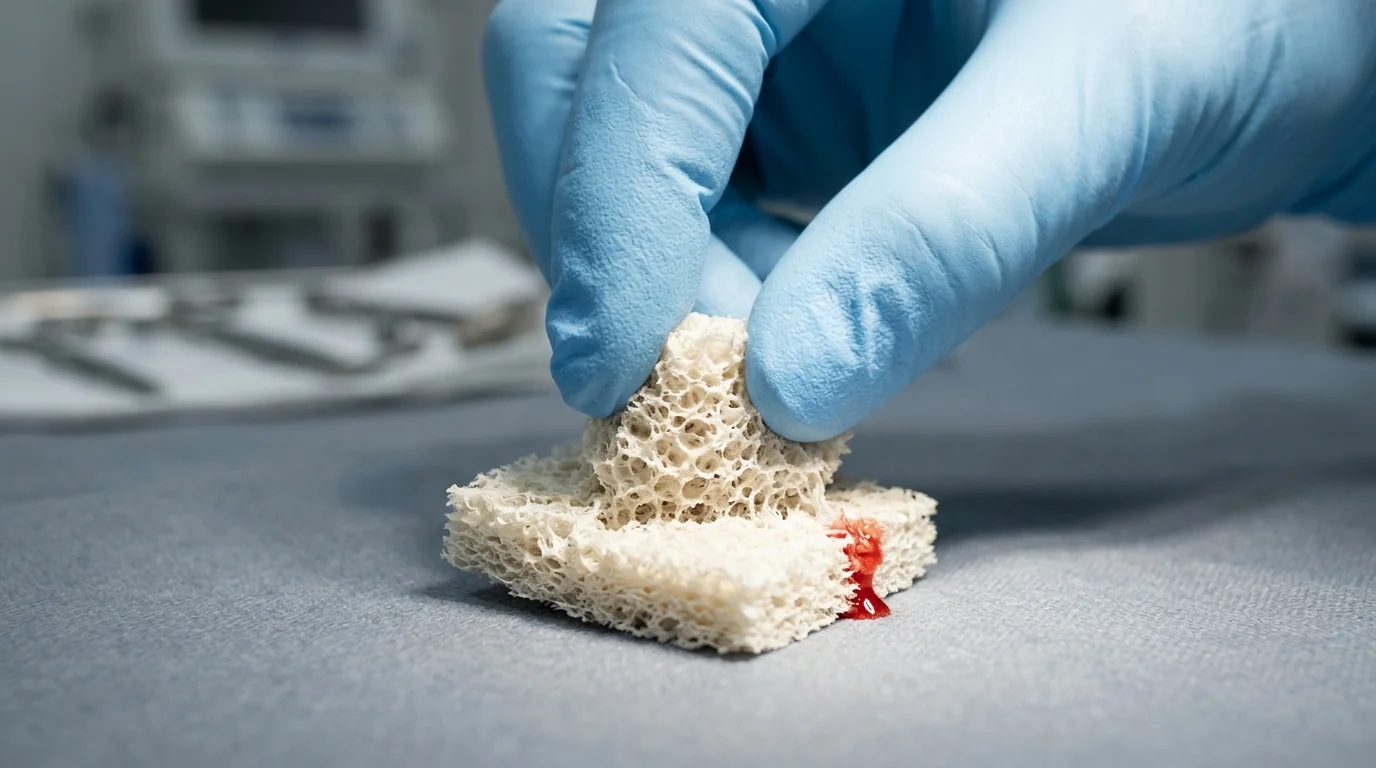 Topical haemostatic agents are broadly classified by how they interact with the body's coagulation cascade. Understanding this distinction is the first step in making an informed selection.
- Mechanical Haemostats: These agents act as a physical barrier at the bleeding site. They provide a passive scaffold or matrix that facilitates platelet aggregation and clot formation. They do not contain active biological components and rely on the patient's own clotting factors to be effective. Examples include absorbable gelatin sponges and oxidized regenerated cellulose (ORC).
- Active Haemostats: These agents contain biologically active components, such as thrombin or fibrinogen, that directly and actively participate in the coagulation cascade to accelerate clot formation. They are particularly effective in patients with coagulopathies or those on anticoagulation therapy, as they can bypass certain steps in the natural clotting process.
- Flowable Haemostats: These are typically combination products, combining a passive mechanical matrix (like gelatin granules) with an active component (like thrombin). Their flowable consistency allows them to conform to irregular wound geometries and penetrate bleeding sites that are difficult to access with solid pads or sponges.
- Sealants: While primarily used to prevent air or fluid leaks, sealants (like fibrin sealants) are also powerful haemostats. They form a robust, cross-linked barrier over the tissue, physically sealing off bleeding vessels. They are often used in cardiovascular, thoracic, and splenic surgery where maintaining a seal is as critical as controlling bleeding.
A Clinical Classification of Haemostatic Agents
Selecting the right haemostat depends on the surgical speciality, the type of tissue, the nature of the bleeding, and the surgeon's preference. The table below outlines common categories, their properties, and typical applications.
| Haemostat Type | Primary Material | Mechanism of Action | Common Clinical Applications | Key Handling Characteristics |
| Absorbable Gelatin Sponge/Powder | Purified porcine or bovine gelatin | Mechanical (provides scaffold for clot formation) | General surgery, neurosurgery, orthopaedics; manages venous and capillary oozing | Can be applied dry or saturated with saline/thrombin; pliable and can be cut to size |
| Oxidized Regenerated Cellulose (ORC) | Plant-based cellulose | Mechanical (swells into a gelatinous mass) + Chemical (low pH promotes vasoconstriction) | Neurosurgery, cardiovascular, ENT; useful on delicate tissues | Conforms well to surfaces; fully absorbable; possesses some bactericidal properties |
| Microfibrillar Collagen (MFC) | Bovine collagen | Mechanical (attracts and aggregates platelets) | Solid organ surgery (liver, spleen), orthopaedics | Applied dry with pressure; highly effective but can adhere to instruments |
| Bone Wax | Beeswax, paraffin, isopropyl palmitate | Mechanical (occludes bleeding channels in bone) | Orthopaedics, neurosurgery (craniotomy), cardiothoracic (sternotomy) | Non-absorbable; pliable by hand; must be used sparingly to avoid inhibiting bone healing |
| Chitosan-based Dressings | Polysaccharide from crustaceans | Mechanical + Bioadhesive (positively charged, attracts red blood cells) | Trauma, emergency medicine, military field use | Forms a strong seal over high-pressure bleeding; often used externally |
| Fibrin Sealant | Fibrinogen and thrombin | Active (mimics the final step of the coagulation cascade) | Cardiovascular, splenic trauma, soft tissue sealing | Applied via a dual-syringe system; forms a strong, durable clot |
Key Evaluation Criteria for Procurement and Clinical Use
Beyond the basic classification, a rigorous evaluation process is essential for standardising haemostat selection within your institution. A senior clinician or procurement officer should consider the following factors.
- Efficacy & Bleeding Severity: The primary question is always: will it stop the bleed? Assess the agent's indicated use—is it for mild capillary oozing, moderate venous bleeding, or to control problematic bleeding from cancellous bone? The speed of haemostasis is a critical factor in reducing operative time and blood loss.
- Biocompatibility & Absorption Profile: For any agent left in situ, its interaction with body tissues is paramount. Key questions include:
- Is it fully resorbable? If so, what is the typical absorption time (days vs. weeks)?
- What is the swelling profile? A haemostat that swells significantly may not be suitable for use in confined spaces like the spinal canal.
- What is the risk of foreign body reaction, adhesion formation, or granuloma? Materials with a low pH or high density may have different tissue responses.
- Handling & Intraoperative Usability: An effective agent that is difficult to deploy is of little value. Evaluate its physical properties:
- Is it pliable and easy to cut to the required shape and size?
- Does it maintain its integrity when saturated with blood?
- Does it adhere to wet gloves or instruments, making placement difficult?
- For flowable agents, is the mixing and delivery system simple, reliable, and resistant to clogging?
- Surgical Speciality Requirements: The needs of a neurosurgeon are distinct from those of an orthopaedic surgeon. An agent for dural repair must be gentle and non-inflammatory, while an agent for a total knee arthroplasty must effectively control bleeding from cut bone surfaces. Your facility's portfolio should reflect the case mix.
- Storage, Sterility, and Shelf Life: From an operational standpoint, storage requirements (e.g., refrigeration for certain active agents) impact logistics. A long shelf life and room-temperature storage capability simplify inventory management and reduce waste.
- Regulatory Compliance: Ensuring all procured items meet stringent national and international standards is non-negotiable. When evaluating options, it's crucial to verify certifications like CDSCO approval and ISO 13485. A well-curated selection of haemostatic agents and consumables from a reputable B2B platform will have these credentials clearly documented, simplifying the compliance aspect of procurement.
Best Practices for Storage, Handling, and Application
Effective use of haemostatic agents extends beyond selection to proper management and application in the clinical environment.
- Strict Aseptic Technique: All haemostats are sterile, single-use consumables. The integrity of the packaging must be confirmed before opening. Once opened, the agent must be applied using a no-touch technique to prevent contamination.
- Adherence to IFU: Always follow the manufacturer's Instructions for Use. Some agents must be applied dry, while others can be moistened with sterile saline. Active agents may require reconstitution. Deviating from the IFU can compromise efficacy and patient safety.
- Prepare the Bleeding Site: Before applying the haemostat, blot away excess blood to allow the agent to make direct contact with the source of bleeding. A pool of blood can dilute the agent or prevent it from adhering to the tissue surface.
- Apply Firm, Direct Pressure: After placing the haemostat, apply gentle but firm pressure with a sterile sponge for the manufacturer-recommended duration (typically 1-5 minutes). This ensures intimate contact and facilitates the clotting process. Do not "wipe" or "smear" the agent.
- Use the Minimal Effective Amount: Apply enough material to cover the bleeding area, but avoid over-packing. Excess material can act as a nidus for infection, delay healing, or cause compression of adjacent structures.
- Inventory Management: Implement a First-Expiry, First-Out (FEFO) stock rotation system in your OT, CSSD, or pharmacy. Regularly check for expired products and ensure storage conditions (temperature, humidity) are consistently met.
- Clinical Documentation: The type, brand, and quantity of haemostatic agent used must be clearly documented in the surgical notes and the patient's medical record. This is vital for postoperative monitoring and tracking any potential adverse events.
Equip Your Facility Today
Achieving effective haemostasis is fundamental to patient safety and successful surgical outcomes. A well-stocked and thoughtfully selected inventory of haemostatic agents is a marker of a prepared and efficient facility. Evaluate your department's specific needs and explore a comprehensive range of quality-assured options to ensure your clinical teams have the right tools for every procedure.
FAQs