

Hospitals
Selecting the Right Examination Light: A Clinical and Operational Breakdown
A practical guide for clinicians and procurement heads on selecting the right examination light. Covers illumination quality, mounting options, and operational factors.


In any clinical setting—from a busy outpatient department to a specialised dental practice—the quality of illumination directly impacts diagnostic accuracy. An examination light is not merely a utility; it is a fundamental diagnostic instrument. Suboptimal lighting can obscure critical visual cues, leading to misinterpretation of tissue colour, texture, and condition.
For procurement and clinical heads, specifying the correct examination light involves looking beyond simple brightness. It requires a nuanced understanding of light quality, ergonomic design, and the specific demands of the clinical environment. This guide breaks down the essential parameters for making an informed selection.
Core Illumination Parameters: Beyond Just Brightness
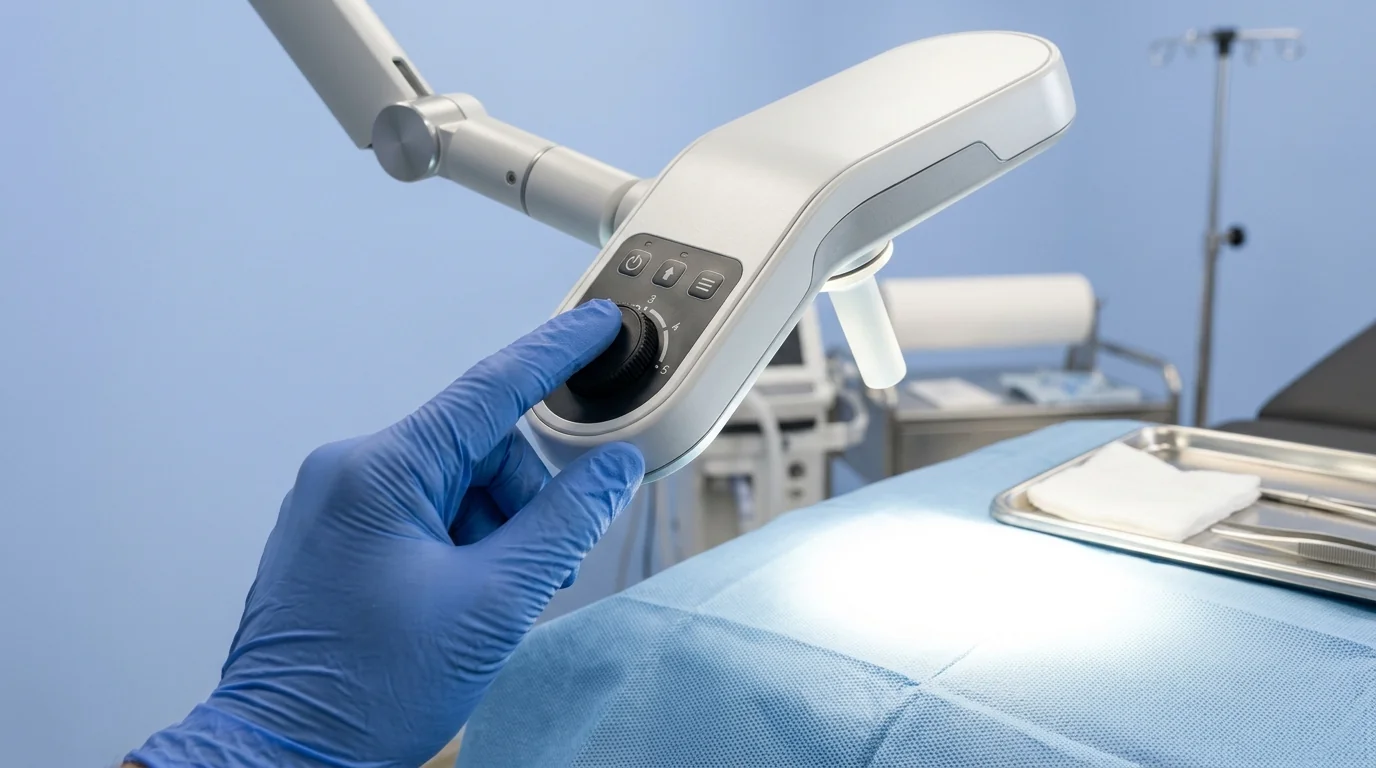 The quality of light is defined by several key metrics. Understanding these is critical for ensuring clinicians have the visual information they need to make accurate assessments.
-
Light Intensity (Lux): Measured in Lux at a specific distance (typically 0.5 or 1 metre), this indicates the brightness of the light falling on a surface. A general examination may require 30,000-50,000 Lux, while more focused procedures might benefit from higher intensities. The critical feature is not maximum Lux, but rather a variable intensity control that allows the clinician to adjust the brightness to reduce glare and suit the specific examination area without washing out details.
-
Colour Rendering Index (CRI or Ra): This is arguably the most important clinical parameter. CRI measures the ability of a light source to reveal the colours of objects faithfully in comparison to a natural light source. On a scale of 0 to 100, a higher CRI indicates better colour fidelity. For medical diagnostics, a CRI of 95 or higher is the standard. A low CRI can dangerously misrepresent tissue health, masking signs of cyanosis, jaundice, or inflammation.
-
Colour Temperature (Kelvin): Measured in Kelvin (K), this defines the colour appearance of the light, from warm (yellowish) to cool (bluish). For diagnostic purposes, a neutral white light, typically between 4,000K and 5,000K, is ideal. This range provides clear, accurate colour representation without the clinical coldness of very high-Kelvin light or the warm cast of low-Kelvin light that can obscure yellowish tints in the skin or sclera.
-
Light Field Diameter: This refers to the size of the light spot at the recommended working distance. A well-designed examination light will offer a clearly defined, homogenous light patch. Some advanced models offer an adjustable focus to change the light field diameter, allowing the user to concentrate illumination on a small area or broaden it for a general overview.
Light Source Technology: The Dominance of LED
While older halogen lamps are still in use, Light Emitting Diode (LED) technology is now the definitive standard for all new medical lighting procurements. The operational and clinical advantages are significant.
Key Benefits of LED Technology:
- Low Heat Emission: LEDs produce minimal infrared radiation, resulting in a "cold" light beam. This enhances patient comfort, especially during prolonged examinations, and prevents the desiccation of exposed tissues.
- Extended Operational Life: LED modules are typically rated for 30,000 to 50,000 hours of operation. This drastically reduces the maintenance overhead and lifecycle servicing associated with frequent halogen bulb replacements.
- Energy Efficiency: LEDs consume significantly less power than halogen bulbs for the same light output, contributing to lower operational expenditures for the facility.
- Superior Light Quality: LED technology allows for precise control over colour temperature and achieves a very high CRI, ensuring consistent and accurate illumination throughout the product's lifespan.
Mounting Configurations: Matching the Light to Your Workspace
The physical form factor and mounting style of an examination light determine its utility within a specific clinical space. The selection process must account for room layout, workflow, and flexibility requirements.
Common Mounting Types:
| Mounting Type | Flexibility | Space Footprint | Installation Requirement | Ideal Use Case |
| Mobile / Floor-Standing | High | High (floor space) | None | Multi-purpose rooms, clinics needing to share a light, backup units. |
| Wall-Mounted | Medium | None (floor space) | Structural wall anchor | Dedicated OPD bays, consultation rooms, minor procedure areas. |
| Ceiling-Mounted | High | None (floor space) | Professional; ceiling structure dependent | Procedure rooms, minor OTs, dental surgeries where floor access is critical. |
| Table/Rail-Mounted | Low (localised) | Minimal | Clamp-on | ENT workstations, gynaecology tables, specific diagnostic setups. |
At a glance: Mobile units offer versatility but can clutter floor space. Wall and ceiling mounts provide a permanent, integrated solution for dedicated rooms, clearing the floor but sacrificing portability.
Clinical Application and Specification Checklist
When evaluating options, use a checklist to align technical specifications with your facility's clinical needs.
- Define the Primary Use Case: A dermatology clinic requires perfect colour rendering. An ENT specialist needs a focused, shadow-free beam. A general OPD needs a versatile, easy-to-position light. Define the application first.
- Verify Illumination Quality: Insist on a CRI of 95+ and a colour temperature between 4,000K and 5,000K. These are non-negotiable for clinical safety.
- Assess Ergonomics and Maneuverability: The articulated arm must be easy to position with one hand and, crucially, must hold its position without drifting. Check the total reach of the arm to ensure it can adequately cover the entire examination area from its mounting point.
- Examine the Controls: The on/off switch and intensity controls should be located on or near the light head for easy access during an examination. Sealed membrane controls are preferable as they are easier to clean and disinfect than knobs or switches with crevices.
- Prioritise Infection Control: The light head and arm should have smooth, non-porous surfaces with minimal gaps to facilitate effective cleaning with hospital-grade disinfectants. Models with removable, autoclavable handles offer a higher level of asepsis for minor procedures.
- Consider Power and Backup: For mobile units, especially those used in casualty or procedure rooms, an integrated battery backup is a valuable feature to ensure uninterrupted operation during power failures.
Evaluating these factors systematically will help you specify the right solution for your department. You can explore a range of high-specification examination lights for various clinical settings to see how these features are implemented across different models.
Operational Considerations: Maintenance, Safety, and Compliance
Properly specified equipment must be supported by robust operational protocols to ensure longevity and safety.
- Maintenance and Cleaning: Develop a clear protocol for cleaning and disinfection. Use only manufacturer-recommended or compatible disinfectants to avoid damaging polymer lenses or housings. Periodically inspect the tension of the articulated arm and adjust as needed to prevent drift. Check power cords and connections for any signs of wear or damage.
- Safety Protocols: For mobile lights, ensure casters are in good working order and that brakes are used when the light is in a static position. For wall and ceiling-mounted units, installation must be performed by qualified personnel to ensure the mounting is secure and can handle the mechanical load of the arm. All medical electrical equipment must have proper earthing to prevent electrical hazards.
- Regulatory Compliance: Ensure the equipment complies with relevant standards for medical electrical devices, such as IEC 60601-1. Within India, look for BIS certification as an indicator of adherence to national safety and quality standards. Proper documentation and certification are essential for hospital accreditation and audits.
Equip Your Facility Today
Ensuring every examination bay is equipped with appropriate, high-quality illumination is a foundational step in delivering accurate diagnoses and effective care. By focusing on clinical light quality, ergonomic design, and long-term operational reliability, you invest directly in patient safety and clinical excellence.
FAQs