

Hospitals
Selecting the Right Bed Pan: A Clinical and Operational Overview
A detailed guide for procurement managers on selecting bed pans. Covers material types (stainless steel, plastic), design variations, and infection control protocols for Indian healthcare facilities.


For any healthcare facility, the humble bed pan is a non-negotiable component of patient care. Its proper selection and use directly impact patient dignity, comfort, infection control, and the prevention of complications like pressure ulcers. As procurement heads and senior clinicians, our evaluation of this seemingly simple device must go beyond the basics, focusing on material science, ergonomic design, and integration into our facility's decontamination workflows.
This overview provides a practical framework for specifying the right bed pan based on clinical application, patient population, and operational efficiency. It is a peer-to-peer breakdown of the factors that matter in day-to-day practice.
Material and Construction: The First Decision Point
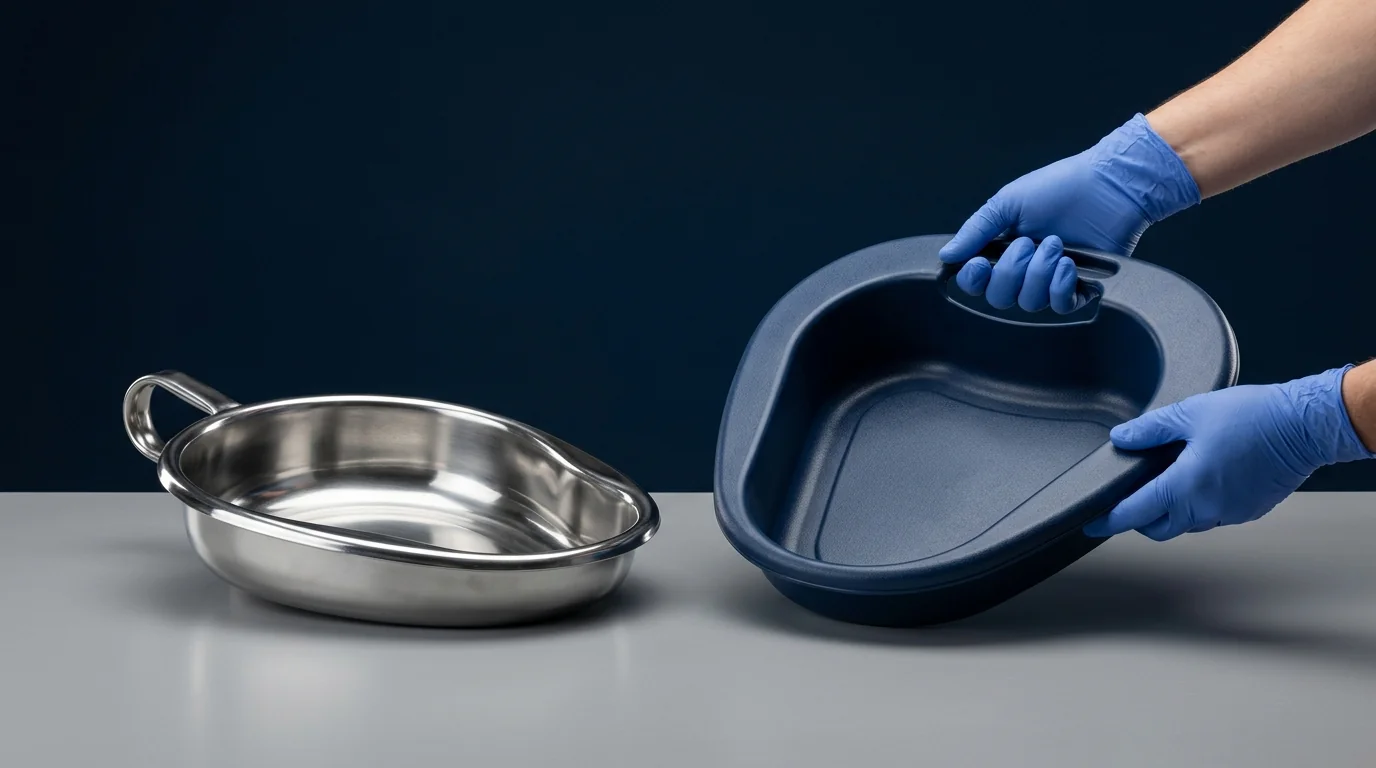 The choice between stainless steel and polymer (plastic) is the primary branch in the decision tree. Each has distinct advantages that suit different environments and protocols.
- Stainless Steel: The traditional choice in many hospital wards, particularly in OTs and ICUs. Its non-porous surface offers excellent resistance to corrosion and is highly durable. The primary advantage is its suitability for high-temperature sterilisation, including autoclaving, ensuring a high level of asepsis. However, it can feel cold and hard to the patient, potentially causing discomfort, and is significantly heavier for nursing staff to handle.
- Plastic (Polypropylene and other Polymers): Modern polymer-based pans are lighter, warmer to the touch, and often more anatomically contoured, enhancing patient comfort. They are available in both reusable (autoclavable) and single-patient-use variants. While easier on the patient, their durability against repeated chemical disinfection and autoclaving cycles must be verified. Lower-grade plastics can stain, scratch, or warp over time, creating potential reservoirs for microorganisms.
Here is a direct comparison of operational characteristics:
| Feature | Stainless Steel | Medical-Grade Plastic |
| Durability | High; resistant to drops, dents | Variable; can crack or warp |
| Sterilisation | Excellent; withstands autoclaving | Varies; check for "autoclavable" spec |
| Patient Comfort | Can be cold, hard, heavy | Warmer, lighter, often contoured |
| Weight | Heavier | Lighter, easier for staff to handle |
| Long-Term Integrity | Can last for years with proper care | May need replacement sooner |
| Odour Retention | Low to none | Can be a factor if scratched or aged |
Design Variations and Their Clinical Applications
Not all bed pans are shaped the same. The design dictates its suitability for specific patient conditions.
- Standard Bed Pan: Also known as a regular or adult bed pan, this design features a higher, contoured rim. It is suitable for the majority of patients who have enough mobility to lift their hips onto the pan with assistance.
- Fracture Pan: This is a smaller, lower-profile, wedge-shaped pan with one flat end. The design is critical for patients who cannot lift their hips or roll from side to side. It is essential for individuals with hip fractures, spinal cord injuries, pelvic injuries, or those in skeletal traction. Using a standard pan in these cases can cause further injury or significant pain.
- Bariatric Pan: Designed for obese patients, these pans feature a much higher weight capacity, a wider seating surface for stability, and are typically constructed from high-strength reinforced polymer. Their design helps distribute weight evenly, enhancing patient safety and comfort.
- Pans with Lids: A simple but important feature. A corresponding lid minimises odour, reduces the risk of spillage during transport from the bedside to the sluice room, and is a key component of standard infection control precautions.
Key Evaluation Criteria for Procurement
When sourcing bed pans, move beyond a simple feature list. Evaluate them against the daily realities of your clinical staff and patient needs.
Patient Safety and Comfort
- Ergonomics: Are the edges smooth and rounded to prevent skin breakdown? Is the shape contoured to the human body?
- Material Feel: For patients with sensitive skin or those at high risk for pressure sores, a warmer plastic pan may be preferable to cold steel.
- Stability: The base should be wide enough to prevent tipping when the patient shifts their weight.
Durability and Load Capacity
- Weight Rating: Always verify the specified load capacity, especially when sourcing for bariatric care.
- Material Grade: For stainless steel, check the grade (e.g., 304) for corrosion resistance. For plastic, confirm if it is a medical-grade, non-porous polymer.
Ease of Cleaning and Decontamination
- Surface Finish: The surface must be completely non-porous. Avoid pans with seams, deep scratches, or complex textures where biofilm can develop.
- Chemical Compatibility: Ensure the material can withstand the hospital-grade disinfectants used in your facility without degrading.
- Autoclave Suitability: If your protocol involves autoclaving, this must be a specified feature of any plastic pan you consider.
Manual Handling for Nursing Staff
- Handles and Grips: Well-designed handles are crucial for safe placement, removal, and transport.
- Weight: A lighter pan reduces the risk of musculoskeletal strain for caregivers, especially in high-dependency units.
Infection Control and Decontamination Protocols
A bed pan is a high-risk item for cross-contamination. A robust standard operating procedure (SOP) for handling and decontamination is non-negotiable and should align with the National Guidelines for Infection Prevention and Control in Healthcare Facilities.
The Decontamination Cycle:
- At the Bedside: Staff must wear appropriate PPE (gloves, apron). After use, the pan should be covered immediately with its lid or a disposable cover.
- Transport: Carry the pan away from the body to avoid contaminating uniforms.
- Emptying & Cleaning: Empty contents into the designated toilet or sluice. If using a bedpan washer-disinfector, follow the machine’s validated cycle.
- Manual Cleaning: If washing manually, first rinse with cold water (hot water can coagulate proteins and make them harder to remove). Then, scrub with a designated long-handled brush using a neutral detergent solution. Rinse thoroughly.
- Disinfection: Immerse the pan in a hospital-grade disinfectant for the manufacturer-recommended contact time.
- Final Rinse & Drying: Rinse off the disinfectant (if required by the product instructions) and dry completely. Air drying or using a dedicated clean cloth is acceptable.
- Storage: Store in a clean, dry, designated area, inverted to prevent dust accumulation.
Ensuring your facility is equipped with the appropriate number and type of pans is the first step in maintaining this cycle without interruption. You can evaluate a range of bed pans suitable for hospital use to meet these demanding protocols.
Equip Your Facility Today
Selecting the correct bed pan is a fundamental detail that significantly impacts patient dignity, infection control, and nursing efficiency. By evaluating materials, design, and usability against your specific clinical needs and decontamination protocols, you ensure your facility is well-equipped for this essential aspect of patient care.
FAQs

