

Hospitals
Selecting the Right Medical Infusion Set: An Operational Breakdown for Clinical Teams
An operational guide for clinicians and procurement managers on selecting the correct medical infusion set. Covers parts, vented vs. non-vented types, and key specs.


In any clinical setting, from a high-dependency ICU to a local dental practice performing conscious sedation, the humble medical infusion set is a constant. As a fundamental tool for intravenous therapy, its performance directly impacts patient safety, treatment efficacy, and nursing efficiency. Yet, with subtle but critical variations between models, selecting the correct set is a decision that demands both clinical understanding and operational foresight. This is not a one-size-fits-all consumable; a mismatched set can lead to inaccurate dosing, line occlusion, or contamination risks.
This guide provides a detailed breakdown for procurement managers and senior clinicians tasked with sourcing these essential items. We will move beyond the basics to cover the specific components, selection criteria, and operational protocols that ensure you are equipping your teams with the right tools for every application.
Deconstructing the IV Infusion Set: A Component-by-Component Review
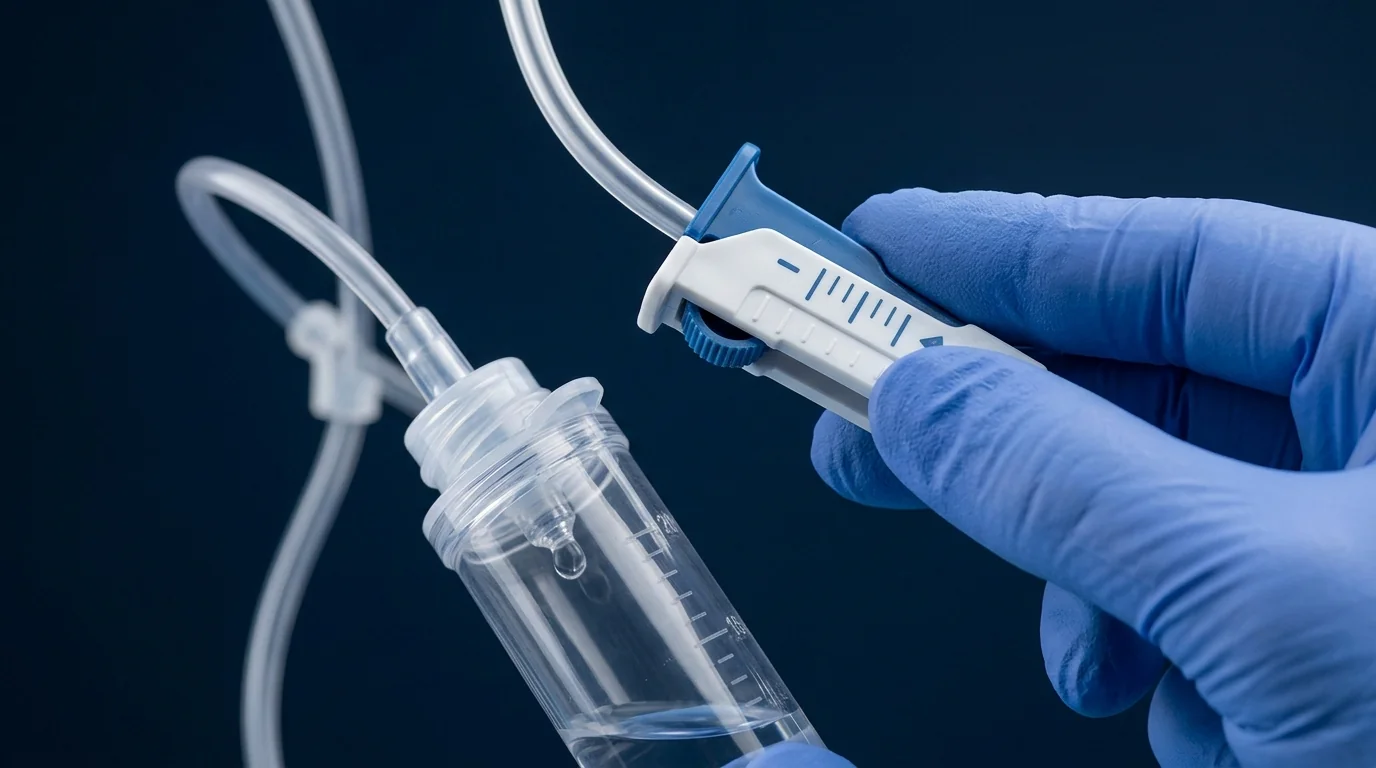 Understanding the function of each component is the first step in making an informed procurement decision. A standard iv infusion set is an assembly of several critical parts, and the quality of each one contributes to the overall reliability of the device. Familiarity with these infusion set parts allows for a more granular evaluation of supplier offerings.
-
Spike: This sharp, sterile plastic component pierces the rubber stopper or port of the IV fluid container. A well-designed spike creates a secure, leak-proof connection without coring (shedding particles from the stopper). Spikes may be vented or non-vented, a distinction we will cover in detail.
-
Drip Chamber: This transparent chamber allows for visualization of the fluid flow from the container into the tubing. It serves two purposes: confirming flow and allowing for a manual count of the drip rate (drops per minute). The design of the nozzle inside the chamber determines the drop factor (gtt/mL).
-
Fluid Filter: Located at the base of the drip chamber, this micron filter (typically 15-micron) is designed to trap any particulate matter present in the IV solution, preventing it from entering the patient's bloodstream.
-
Tubing: The long, flexible PVC tube constitutes the main fluid pathway. Key attributes to evaluate are its length (standard is ~150 cm), transparency for detecting air bubbles, and kink resistance to ensure an uninterrupted flow even if the patient moves. High-quality sets use medical-grade, DEHP-free PVC to prevent leaching of harmful plasticizers.
-
Roller Clamp: This simple but vital mechanism controls the fluid flow rate. It works by compressing the tubing. A high-quality roller clamp allows for precise, incremental adjustments and maintains its set position without drifting, which is critical for accurate gravity-fed infusions.
-
Injection Port (Y-Site): This access point, typically a Y-shaped junction, allows for the intermittent administration of medications via a needle or needle-less syringe without disrupting the primary infusion. Look for latex-free ports to prevent allergic reactions.
-
Connector: This is the terminal end of the set that connects to the patient's IV cannula. The Luer lock connector, with its threaded screw-on design, is the standard for a secure, leak-proof, and accidental-disconnection-proof attachment.
The Critical Choice: Vented vs. Non-Vented IV Sets
One of the most fundamental decisions in selecting iv sets is choosing between a vented and a non-vented design. This choice is dictated entirely by the type of IV fluid container being used in your facility.
Vented IV Set A vented iv set incorporates a small air inlet, typically on the spike, covered by a hydrophobic filter that prevents microbial contamination. This vent allows sterile air to enter the container as the fluid drains.
- When to Use: Vented sets are mandatory for use with rigid or semi-rigid containers, such as glass bottles or hard plastic bottles. As fluid leaves these non-collapsible containers, a vacuum is created, which would stop the flow. The vent equalizes the pressure, allowing gravity to sustain the infusion. Using a non-vented set with a glass bottle will cause the flow to cease shortly after starting.
Non-Vented IV Set A non-vented set, also known as a standard set, has a solid spike with no air inlet. It is designed to create a closed system.
- When to Use: Non-vented sets are used exclusively with flexible, collapsible plastic IV bags. As the fluid infuses, the bag simply collapses on itself, requiring no external air to displace the fluid. This is the most common type of IV container in modern healthcare. The Daynacare Infusion Set - Non Vented Pack of 50 is a prime example of a standard, reliable non-vented set suitable for the vast majority of flexible IV bags used in wards, OTs, and OPDs.
Key Evaluation Criteria for Institutional Procurement
When evaluating different brands or seeking a reliable daynacare iv set supplier, move beyond the basic specifications and consider these operational and clinical factors.
| Feature | Macrodrip Set | Microdrip Set |
| Drop Factor | 10, 15, or 20 gtt/mL | 60 gtt/mL |
| Primary Use Case | Routine hydration, rapid fluid administration (trauma, OT), antibiotic infusions. | Pediatrics, neonates, geriatric patients, critical care (e.g., cardiac drugs), chemotherapy. |
| Flow Control | Suitable for higher flow rates. Less precise for very slow infusions. | Essential for precise, low-volume, and slow-rate infusions where fluid overload is a major risk. |
Beyond the Drop Factor:
- Material and Biocompatibility: Confirm that the tubing is made from medical-grade PVC and is explicitly labeled "DEHP-free" and "non-pyrogenic." This is a non-negotiable patient safety standard.
- Sterilization and Packaging: The industry standard for sterilization is Ethylene Oxide (EO). Each set must be individually sealed in a durable, tamper-evident peel-pouch that clearly states the sterilization method, manufacturing date, and expiry date.
- Regulatory Compliance: Look for products that conform to recognized standards. For infusion sets, ISO 8536-4 is the key international standard. BIS or CE marks provide further assurance of quality control during manufacturing.
- Physical Quality: When evaluating samples, assess the small details. Is the roller clamp easy to adjust with one hand but firm enough to hold its position? Is the tubing soft and pliable without easily kinking? Is the Luer lock smooth to thread and secure when tightened?
Ensuring Safety and Efficacy: Best Practices in a Clinical Setting
Proper product selection is only half the battle. Adherence to strict clinical protocols is essential to prevent complications like infection, air embolism, and infiltration.
Core Protocols:
- Aseptic Technique: Strict hand hygiene and a non-touch technique are paramount when handling the sterile spike and connector ends. The IV port on the fluid bag and the patient's cannula hub must be disinfected with an appropriate antiseptic swab before connection.
- Priming the Line: Before connecting to the patient, the entire infusion set must be primed with IV fluid. This involves slowly opening the roller clamp to allow fluid to fill the tubing completely, displacing all air. Gently tapping the tubing helps dislodge any stubborn air bubbles. This step is critical to prevent air embolism.
- Flow Rate Management: For gravity infusions, the flow rate must be calculated and then set by manually counting the drops in the drip chamber for a full minute while adjusting the roller clamp. The rate should be re-checked periodically, especially after the patient changes position.
- Single-Use Policy: All infusion sets are single-use devices. They must be discarded safely in appropriate biomedical waste containers after the infusion is complete or as per hospital policy (typically every 24-72 hours), whichever comes first. Reusing sets poses a severe risk of bloodstream infections.
Maintaining an adequate inventory of the correct type of IV Set for each clinical area is foundational to enabling these safety protocols and ensuring that staff are never forced to use an inappropriate device.
Equip Your Facility Today
Ensuring your clinical teams are equipped with high-quality, application-appropriate infusion sets is a cornerstone of safe and effective patient care. Standardizing on reliable consumables reduces clinical risk and streamlines procurement. For a comprehensive range of infusion therapy consumables designed to meet the rigorous standards of Indian healthcare facilities, explore the selections on MedikaBazaar.
FAQs

