

Hospitals
Finding the Right Diagnostic Spirometer Supplier
A B2B buying guide for procurement managers in India. Evaluate specs, compare criteria, and find a reliable diagnostic spirometer supplier on MedikaBazaar.


Your desk is covered in requisitions for a new diagnostic spirometer. The pulmonology department needs an upgrade, and the general OPD wants a reliable screening tool. As a procurement head, your job isn't just to find any supplier; it's to find the right long-term partner who understands the operational realities of an Indian healthcare facility.
This isn't about flashy brochures. This is a practical, checklist-driven guide to help you source, evaluate, and procure the right spirometry equipment for your specific needs, ensuring clinical accuracy, operational efficiency, and a sound investment. Let's cut through the noise and focus on what matters.
The Pre-Procurement Checklist: Defining Your Exact Needs
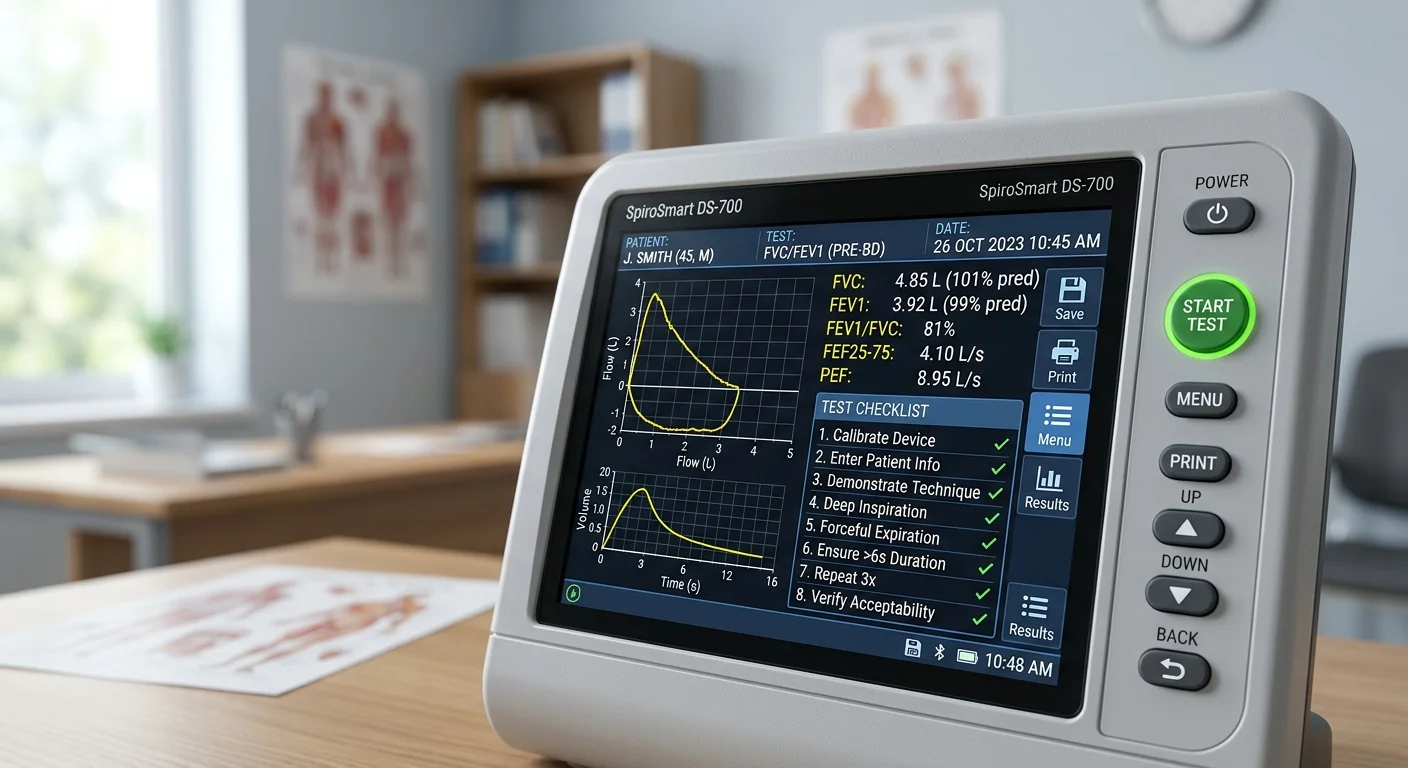 Before you even start looking for a diagnostic spirometer supplier, you need to define your requirements internally. A device that’s perfect for a high-volume PFT lab is overkill for a small clinic. Use this checklist to build your technical specification sheet.
-
Clinical Setting & Volume:
- Primary Use Case: Is this for screening in a general OPD, detailed diagnostics in a pulmonology department, or pre-operative assessment?
- Patient Load: How many spirometry tests will be performed daily? 5-10, 20-30, or 50+? High volumes demand robust hardware and efficient workflow software.
- Location: Will it be a stationary desktop unit in a dedicated PFT lab, or do you need a portable spirometer online for bedside testing in wards or for use in outreach camps? Portability impacts battery life and durability requirements.
-
Operator & Workflow:
- Primary User: Will the device be operated by a trained respiratory therapist, a general clinician, or a junior technician? The user interface (UI) and guidance features must match the operator’s skill level.
- EMR/HIS Integration: Is seamless integration with your existing Hospital Information System a must-have? Specify your data protocol requirements (e.g., HL7). Manual data entry is a source of error and inefficiency.
- Reporting Needs: Do you require basic reports or advanced interpretative analysis with graphical overlays (e.g., flow-volume loops)?
-
Consumables & Maintenance:
- Transducer Type: Do you prefer a reusable turbine/pneumotach transducer that requires sterilisation, or are single-use disposable sensors a better fit for your infection control protocol and workflow?
- Calibration: What is the required calibration frequency? Does it require a 3-L syringe on-site? Factor in the time and cost of routine calibration.
Key Specifications to Evaluate in a Spirometry Machine
Once you have your internal needs defined, you can critically evaluate the technical specifications of any spirometry machine you consider. Look beyond the marketing claims and focus on these operational metrics.
-
Compliance with ATS/ERS 2019 Standards: This is non-negotiable. The device must meet the latest American Thoracic Society/European Respiratory Society guidelines for accuracy and repeatability. Ask for documentation confirming this.
-
Measured and Calculated Parameters: At a minimum, the device should measure FVC, FEV1, FEV1/FVC, PEF, and FEF25-75%. Advanced diagnostics may require parameters like MVV, SVC, and pre/post-bronchodilator comparison. Ensure the device you choose provides all the parameters your clinicians require.
-
Sensor Technology & Accuracy:
- Turbine: Often robust and reusable, but may require careful cleaning and calibration. Good for high-volume settings where TCO on consumables is a concern.
- Pneumotach (e.g., Lilly-type): Highly accurate but can be sensitive to moisture and temperature. Often used with disposable filters or mouthpieces.
- Ultrasonic: No moving parts, highly accurate, and less affected by environmental factors. Calibration checks are often less frequent.
-
Connectivity and Software:
- Data Transfer: Does it use USB, Bluetooth, or Wi-Fi? Ensure it’s compatible with your facility's IT infrastructure.
- PC Software: Evaluate the bundled software. Is it intuitive? Does it allow for easy patient database management, trend analysis, and custom report generation? A clunky software interface will create a bottleneck in your OPD.
- Printer Compatibility: Can it connect directly to a standard A4 printer or does it require a proprietary thermal printer? This affects ongoing operational costs.
For facilities needing a balance of portability and comprehensive features, a device like the GSM Spirometer often fits the bill. It’s designed as a gsm spirometer for clinic use, offering connectivity and the necessary parameters for both screening and diagnostic work.
Beyond the Spirometer Price: Criteria for Supplier Evaluation
The sticker price is just one part of the equation. A low initial medical spirometer device price can be misleading if the supplier fails on service or the cost of consumables is high. Use this checklist to vet potential suppliers.
| Evaluation Criteria | What to Look For |
| Regulatory Approval | Must have CDSCO approval for sale in India. Ask for the license number. ISO 13485 certification for the manufacturer is a strong indicator of quality control. |
| Warranty & AMC | Standard 1-year warranty is minimum. Check the terms of the Annual Maintenance Contract (AMC) post-warranty. What is covered? What is the response time for a service call? |
| After-Sales Support | Do they have trained service engineers in your city or region? A supplier without local support is a major operational risk for a critical diagnostic device. |
| Training & Installation | Is on-site installation and comprehensive user training included in the cost? A complex spirometer is ineffective if your staff can't use it correctly. |
| Consumables Availability | How readily available are compatible mouthpieces, bacterial/viral filters, and nose clips? Check the lead time and cost. Stockouts on consumables render your investment useless. |
| Reputation & Reviews | Ask for references from other hospitals or labs of your size. Check their track record on platforms like MedikaBazaar for peer reviews and ratings. |
When you need to buy gsm lung function test equipment, choosing a platform that vets its suppliers on these criteria simplifies your job significantly.
Common Procurement Pitfalls to Avoid
We’ve all been there. A decision that looked good on paper turns into an operational headache. Here are common pitfalls to avoid when you see a spirometry machine for sale.
- Ignoring Total Cost of Ownership (TCO): Don't just focus on the initial spirometer price. Calculate the TCO over 3-5 years, including the cost of disposables, calibration syringes, and AMC. A cheaper device with expensive, proprietary consumables can cost more in the long run.
- Underestimating Training Needs: Assuming staff can "figure it out" leads to inconsistent testing and inaccurate results. Insist on structured training from the supplier as part of the procurement deal.
- Neglecting Consumables Strategy: Waiting until you run out of mouthpieces to place an order disrupts patient care. Plan your consumable inventory and ensure your supplier can guarantee a stable supply chain. When you're ready to gsm spirometer buy, discuss a recurring order for consumables at the same time.
- Overlooking IT Integration: Confirming EMR compatibility after the device has been delivered is a recipe for disaster. Involve your IT department early in the evaluation process to ensure the device's data output and connectivity match your hospital's system.
Why Procure Through MedikaBazaar?
As procurement professionals, our biggest challenges are supplier verification, price discovery, and supply chain reliability. This is where a dedicated B2B platform adds direct value.
- Vetted Suppliers: MedikaBazaar aggregates and vets suppliers, ensuring they meet regulatory and quality standards. This saves you the time and risk of dealing with unverified vendors.
- Transparent Pricing: You can easily compare the medical spirometer device price across different models and brands in one place, ensuring you get competitive rates for your bulk purchase. GST-compliant invoicing is standard.
- Pan-India Logistics: Whether your facility is in a metro city or a Tier-3 town, MedikaBazaar's supply chain ensures timely delivery of both capital equipment and the necessary consumables.
- One-Stop Solution: From the initial device to the recurring need for mouthpieces and filters, you can manage your entire pulmonology procurement through a single account, simplifying your workflow and vendor management.
Exploring the comprehensive range of devices allows you to match your specific clinical and budget requirements. You can view various types of Spirometer models to find the one that best suits your facility's needs.
Equip Your Facility Today
Making the right procurement decision for a diagnostic spirometer directly impacts clinical outcomes and operational efficiency. By following a structured evaluation process, you can ensure your investment is sound, your clinicians are well-equipped, and your patients receive the highest standard of care.
Ready to upgrade your pulmonary function testing capabilities? Explore MedikaBazaar’s extensive range of diagnostic spirometers and consumables from leading brands, all on a single, reliable platform.
FAQs

