

Hospitals
Complete Micropipette Usage Guide
How to use micropipette: Proper holding, setting volumes, aspiration/dispensing tips. Calibration schedule included. Professional lab pipettes from Medikabazaar.


Micropipette Fundamentals
Micropipettes are precision-engineered instruments used for accurately measuring and transferring small volumes of liquids. They play a critical role in high-performance laboratory environments such as pharmaceutical research and development, clinical diagnostics, and quality control. With an operational volume range from 0.1 µl to 10,000 µl, micropipettes offer versatility across a wide range of applications, with volume accuracy regulated in accordance with ISO 8655 standards.
Single vs Multichannel Types
Single-channel pipettes are designed to transfer one sample at a time, making them suitable for laboratories with low sample volumes, such as research and development settings. They use a single disposable tip to aspirate and dispense precise liquid volumes and are commonly applied in analytical chemistry, cell culture, genetics, and immunology work.
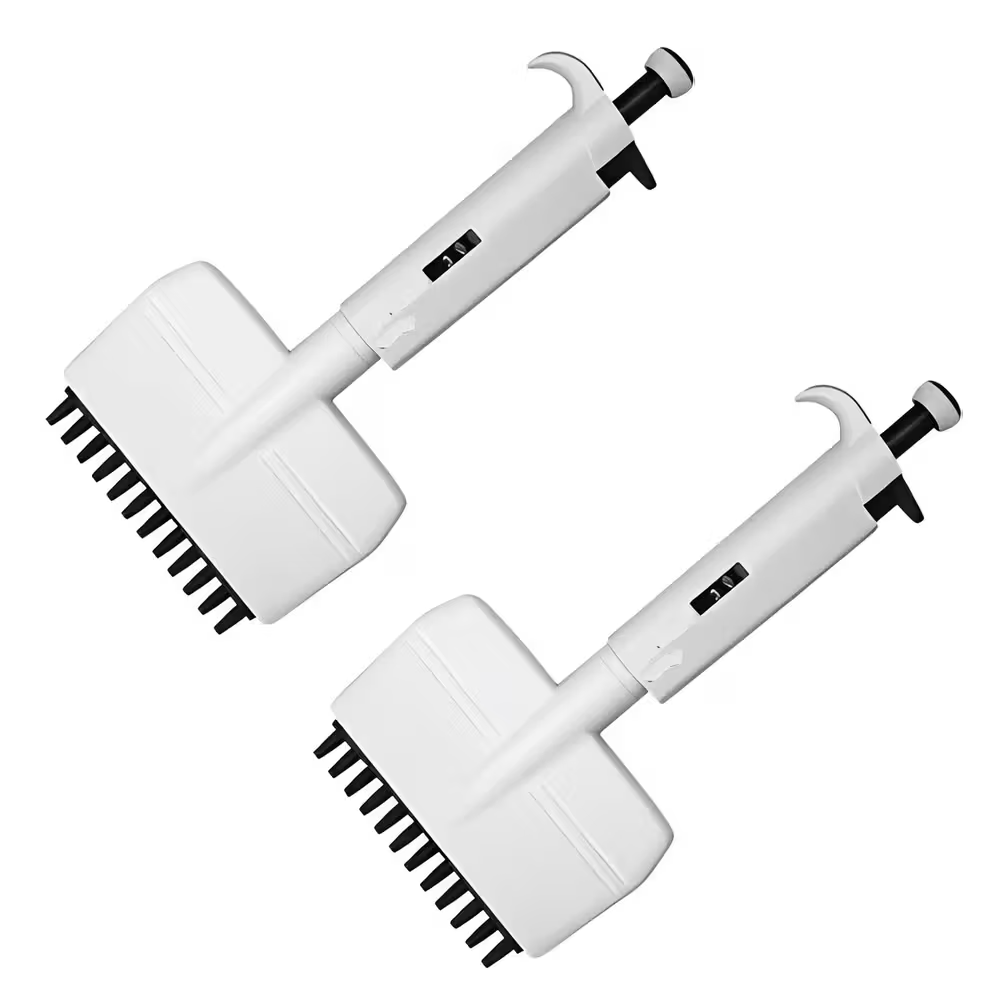
Multi-channel pipettes operate on the same principle but allow simultaneous dispensing through multiple tips commonly 8 or 12 making them ideal for high-throughput tasks. They are widely used for efficiently filling multi-well plates in applications like ELISA, DNA amplification, and molecular screening.
Major differences:
Single-channel pipettes offer a wider volume range and greater flexibility for individual samples, while multi-channel pipettes significantly improve efficiency by reducing pipetting steps, minimizing operator fatigue, and improving overall reproducibility. Although multi-channel pipettes may require more time for calibration and maintenance, they are preferred for repetitive, large-scale liquid handling.
Volume Range Selection Guide
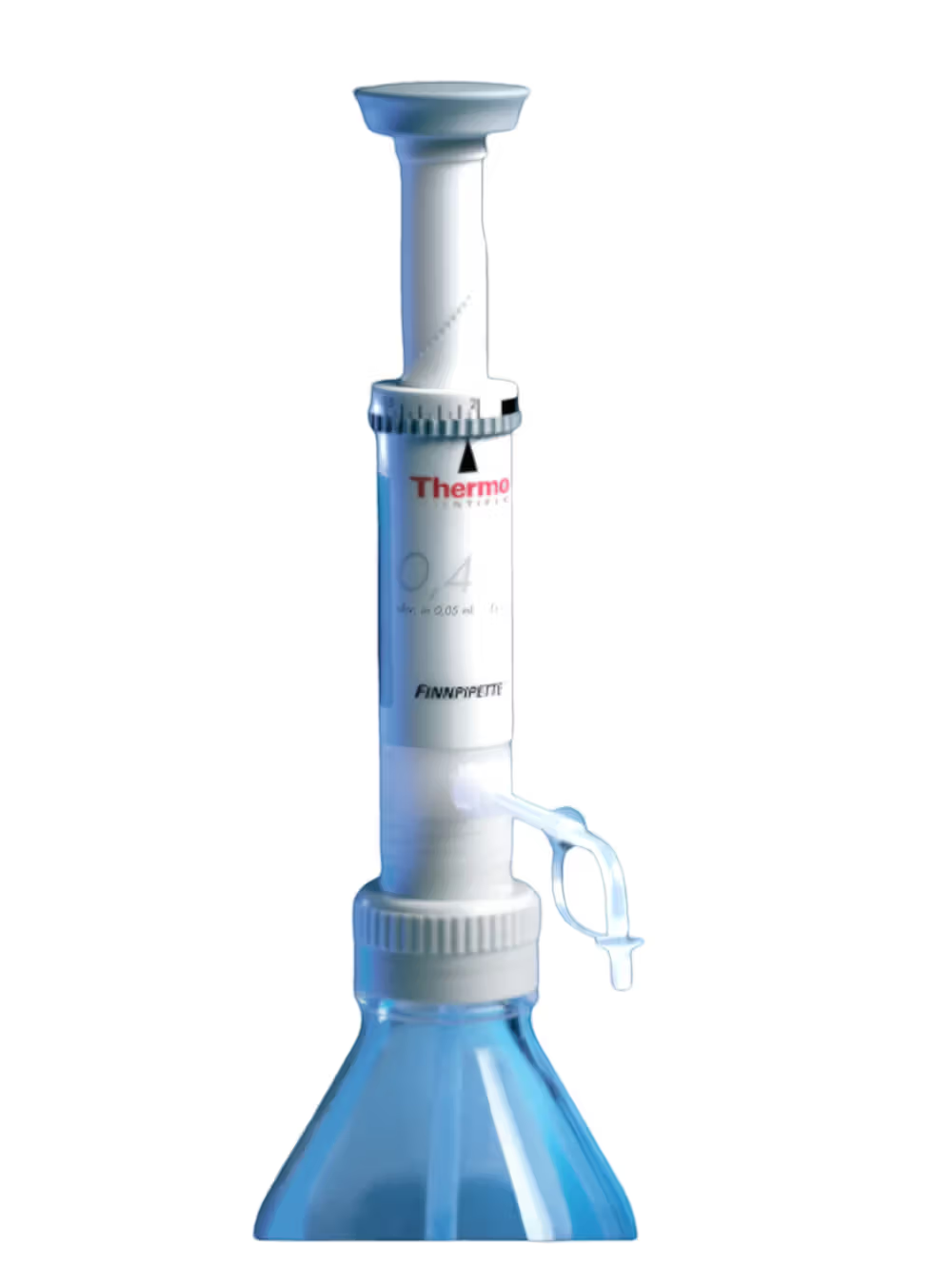
Micropipettes are available across a wide range of volumes, typically from 0.1 µl up to 10,000 µl. Single-channel variable volume micropipettes are commonly classified based on their dispensing range and precision. The table below outlines standard micropipette sizes along with their increment, accuracy, and precision limits, as defined under ISO 8655-2 guidelines.
Common Sizes of Single-Channel Micropipettes (ISO 8655-2)
| Volume Range (µl) | Pipette Type | Increment (µl) | Accuracy (± %) | Accuracy (± µl) | CV (± %) | CV (± µl) |
| 0.2 – 2 | P2 | 0.002 | 2.0 | 0.04 | 1.2 | 0.024 |
| 0.5 – 10 | P10 | 0.02 | 1.0 | 0.10 | 0.5 | 0.05 |
| 2 – 20 | P20 | 0.02 | 0.8 | 0.16 | 0.4 | 0.08 |
| 5 – 50 | P50 | 0.1 | 0.8 | 0.40 | 0.4 | 0.20 |
| 10 – 100 | P100 | 0.2 | 0.6 | 0.60 | 0.2 | 0.20 |
| 20 – 200 | P200 | 0.2 | 0.6 | 1.20 | 0.2 | 0.40 |
| 100 – 1000 | P1000 | 1.0 | 0.6 | 6.00 | 0.2 | 2.00 |
| 500 – 5000 | P5000 | 10.0 | 0.6 | 30.00 | 0.2 | 10.00 |
| 1000 – 10000 | P10000 | 20.0 | 0.6 | 60.00 | 0.2 | 20.00 |
Pipetting Technique Mastery
Improper pipetting techniques are a common cause of variability and sample loss in laboratory workflows. To ensure consistent accuracy, laboratory personnel should be well trained in correct handling practices for mechanical micropipettes. Pre-wetting the tip, especially when working with volatile liquids, helps reduce errors caused by evaporation.
During aspiration, the pipette should be held upright to maintain stable air pressure within the shaft and achieve uniform liquid uptake. Plunger movement should be smooth and controlled releasing it too quickly can introduce air bubbles, while uneven operation affects volume accuracy. It is also essential to operate the pipette strictly within its specified volume range, as over-aspiration can lead to long-term calibration issues.
Calibration Standards Explained
Condition the distilled water by keeping it in the refrigerator so that it reaches a uniform temperature. After a few minutes, measure and note the water temperature using a thermometer.
Aspirate the distilled water using the micropipette and dispense it into a weigh boat placed on a calibrated balance. Record the weight of the dispensed water. Repeat this procedure 5–10 times, noting each measurement carefully.
The dispensed volume can be calculated using the formula V = Z × W, where V is the volume of water dispensed, W is the measured weight, and Z is the conversion factor based on the density of water at the recorded temperature.
Determine the average dispensed volume by dividing the total calculated volume by the number of measurements taken. Pipette accuracy can then be evaluated using the formula A = (100 × Vavg) / V₀, where A represents accuracy, Vavg is the average measured volume, and V₀ is the set (theoretical) volume.
Lab Safety & Ergonomics
Proper lab safety and ergonomics are critical when working with micropipettes to ensure accurate results and reduce operator strain. Using appropriate PPE, maintaining correct posture, and adopting ergonomic pipetting techniques such as relaxed grip, neutral wrist position, and regular breaks help prevent repetitive stress injuries while supporting consistent and reliable liquid handling.
Bulk Procurement Strategies
Partnering with Medikabazaar enables efficient bulk procurement through a centralized platform offering competitive pricing, assured quality, and reliable supply. Streamlined ordering, volume-based discounts, and nationwide logistics support help organizations optimize costs while ensuring uninterrupted access to essential medical and laboratory supplies.
FAQs

