

Hospitals
Mayo Scissors: Selection Criteria and Best Practices for the Operating Theatre
A detailed resource for clinicians and procurement heads on selecting and using Mayo scissors. Understand straight vs. curved types, material grades, and maintenance.


In any operating theatre or procedural setting, the reliability of your instruments is non-negotiable. Among the most fundamental of these is the pair of Mayo scissors. Recognisable by their sturdy build and semi-blunt tips, they are the workhorse of surgical scissors, designed for cutting heavy fascia, sutures, and other dense tissues where more delicate instruments would fail.
However, not all Mayo scissors are created equal. Making the right selection requires a clear understanding of their types, material grades, and intended applications. This guide provides a practical, peer-to-peer overview to inform your facility’s procurement and operational protocols.
Anatomy and Core Characteristics
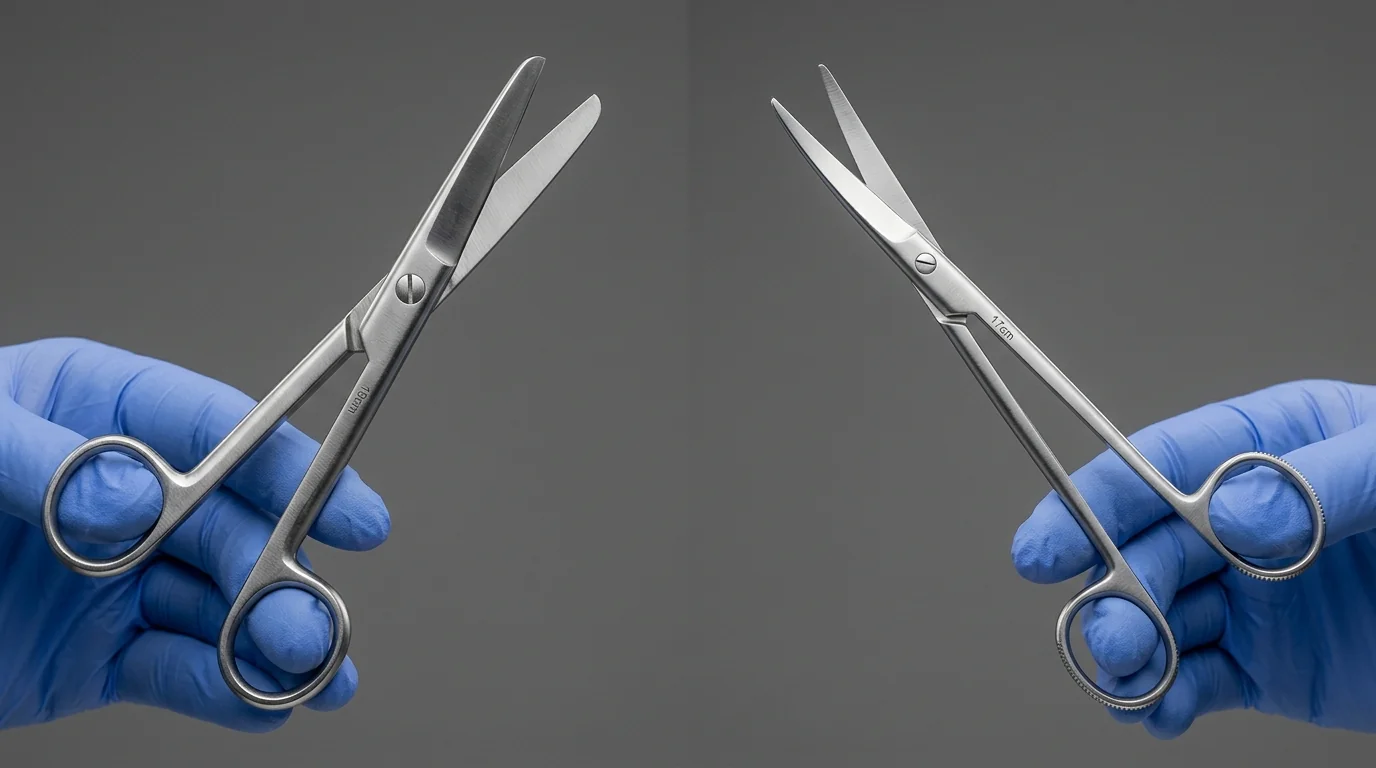 Unlike the finer, more delicate Metzenbaum scissors used for dissecting soft tissue, Mayo scissors are engineered for strength and durability.
Their key features include:
- Robust Construction: A heavier build with a thicker cross-section allows them to apply significant cutting force without flexing or breaking.
- Semi-Blunt Tips: The standard configuration is blunt/blunt, a critical safety feature designed to prevent accidental piercing of underlying tissues during dissection or suture cutting.
- Ring Handles: Provide a secure and familiar grip for precise control.
- Surgical-Grade Stainless Steel: Typically manufactured from AISI 410 or 420 grade stainless steel, which offers an excellent balance of hardness (for edge retention) and corrosion resistance, essential for withstanding repeated sterilisation cycles.
This combination of features makes them indispensable for tasks that demand controlled, powerful cutting.
The Critical Distinction: Straight vs. Curved Blades
The single most important decision when specifying Mayo scissors is the blade configuration. The choice between straight and curved blades is entirely dictated by the clinical application.
Straight Mayo Scissors Often referred to as "suture scissors," the straight-bladed variant is primarily used for surface-level work. Their linear profile makes them ideal for cutting sutures, drains, and medical dressings with a clean, predictable action. They are typically used when the material to be cut can be easily lifted or is on a flat plane.
Curved Mayo Scissors The curved blade is designed for dissecting and cutting within a surgical wound or body cavity. The curvature allows the surgeon to manoeuvre around anatomical structures, providing better visibility of the blade tips while cutting. This design is essential for dissecting tough tissues like fascia, muscle, and tendons deep within the operative field. The curved tips can also be used to spread and separate tissue planes.
Here is a simple breakdown of their primary roles:
| Feature | Straight Mayo Scissors | Curved Mayo Scissors |
| Primary Use | Suture cutting, surface dissection | Deep tissue dissection, cutting heavy tissue |
| Blade Profile | Straight | Gentle, continuous curve |
| Typical Context | Post-procedure suture removal, cutting drapes or gauze | Intra-operative dissection of fascia, muscle |
| Advantage | Precision on flat surfaces | Enhanced visibility and access in wounds/cavities |
Key Selection Criteria for Your Facility
When sourcing Mayo scissors, moving beyond the basic type requires evaluating several material and manufacturing factors that directly impact performance, longevity, and patient safety.
- Material and Grade: The quality of the stainless steel is paramount. Look for instruments specifying the grade (e.g., AISI 420), which indicates a high carbon content for superior hardness and edge retention. For high-volume surgical departments, consider instruments with Tungsten Carbide (TC) inserts. These blades are significantly harder, remain sharp far longer, and are typically identified by gold-plated handles.
- Blade Finish: Instruments are available with two main finishes. A mirror or polished finish is highly corrosion-resistant but can produce glare under bright OT lights. A satin or dull finish is often preferred by surgical teams as it minimises reflection, reducing eye strain during long procedures.
- Length and Size: Mayo scissors are available in lengths ranging from approximately 14 cm to 23 cm. The choice depends entirely on the surgical specialty. Shorter instruments are suitable for superficial procedures or in specialties like dentistry and ophthalmology, while longer variants are necessary for accessing deep structures in general, gynaecological, or orthopaedic surgery.
- Regulatory Compliance: Ensure any instrument you source meets recognised quality standards. Certifications such as ISO 13485 (specifying quality management systems for medical device manufacturing) and CE marking provide assurance of manufacturing consistency and safety. When evaluating suppliers, ensuring they adhere to these quality standards is non-negotiable for all your facility's needs. You can explore a wide range of compliant Medicalequipments to meet these rigorous requirements.
Best Practices for Handling, Sterilisation, and Maintenance
The operational lifespan and performance of your Mayo scissors depend heavily on your facility’s instrument care protocols. Implementing a rigorous process is essential.
Cleaning and Decontamination: Immediately after use, instruments must be wiped to remove gross bioburden. They should then be submerged in a neutral pH enzymatic cleaner. Avoid using saline or harsh detergents, which can cause pitting and corrosion. Utilising an ultrasonic cleaner before sterilisation is highly effective for cleaning hard-to-reach areas like the box lock.
Sterilisation: Autoclaving is the standard method for sterilisation. Always process scissors in the open position to allow steam to penetrate the box lock and joint surfaces effectively. Follow the autoclave manufacturer's validated parameters for time, temperature, and pressure (e.g., 134°C).
Inspection and Maintenance: Before each use, instruments must be inspected.
- Check for sharpness: A sharp scissor should cut cleanly through a piece of latex glove material. If it snags or chews the material, it needs sharpening. Never test on gauze, as this will rapidly dull the blades.
- Check for alignment: The tips should meet perfectly when closed.
- Inspect the box lock: Check for cracks or stiffness, which can indicate instrument fatigue.
- Lubricate: After cleaning and before autoclaving, apply a surgical-instrument-safe lubricant ("instrument milk") to the box lock to ensure smooth operation.
Proper maintenance is crucial for extending the life of any surgical instrument, such as these Dolphin Mayo Scissors, ensuring they perform reliably in every procedure. Instruments that are pitted, rusted, or cracked should be removed from service immediately.
Equip Your Facility Today
Selecting the right instruments is fundamental to procedural success and patient safety. By understanding the specific design, material, and maintenance requirements of tools like Mayo scissors, you ensure your team is equipped for optimal performance. For your facility's full range of surgical and procedural needs, review the specifications available on MedikaBazaar to make an informed decision.
FAQs

