
Malaria Rapid Test Guide: Usage & Results


Malaria RDT Fundamentals
Malaria rapid diagnostic tests (RDTs) are used to identify malaria infections by detecting parasite-related substances in a patient’s blood. They offer a practical diagnostic option where laboratory microscopy is unavailable or limited and help support timely clinical decision-making.
Although test designs may vary by manufacturer, the underlying method remains similar. Malaria RDTs work by identifying specific antigens released by malaria parasites during infection. Some tests are designed to detect a single species such as Plasmodium falciparum or Plasmodium vivax, while others can identify multiple species, including P. malariae and P. ovale. Samples are typically collected through a simple finger-prick.
These tests are based on lateral flow immunoassay technology. When blood is applied, parasite antigens bind to labelled antibodies and move along a test strip inside the cassette. This interaction produces a visible test line, indicating a positive result. A separate control line confirms that the test has functioned correctly, ensuring the reliability of the Malaria test kit result.
Test Kit Components Explained
A typical malaria rapid diagnostic test (RDT) kit includes a test cassette, a sterile lancet for finger-prick blood collection, a capillary tube or dropper for sample transfer, buffer solution, and an alcohol swab. Some kits may also include a desiccant and clear instructions for use to ensure accurate testing and safe handling.
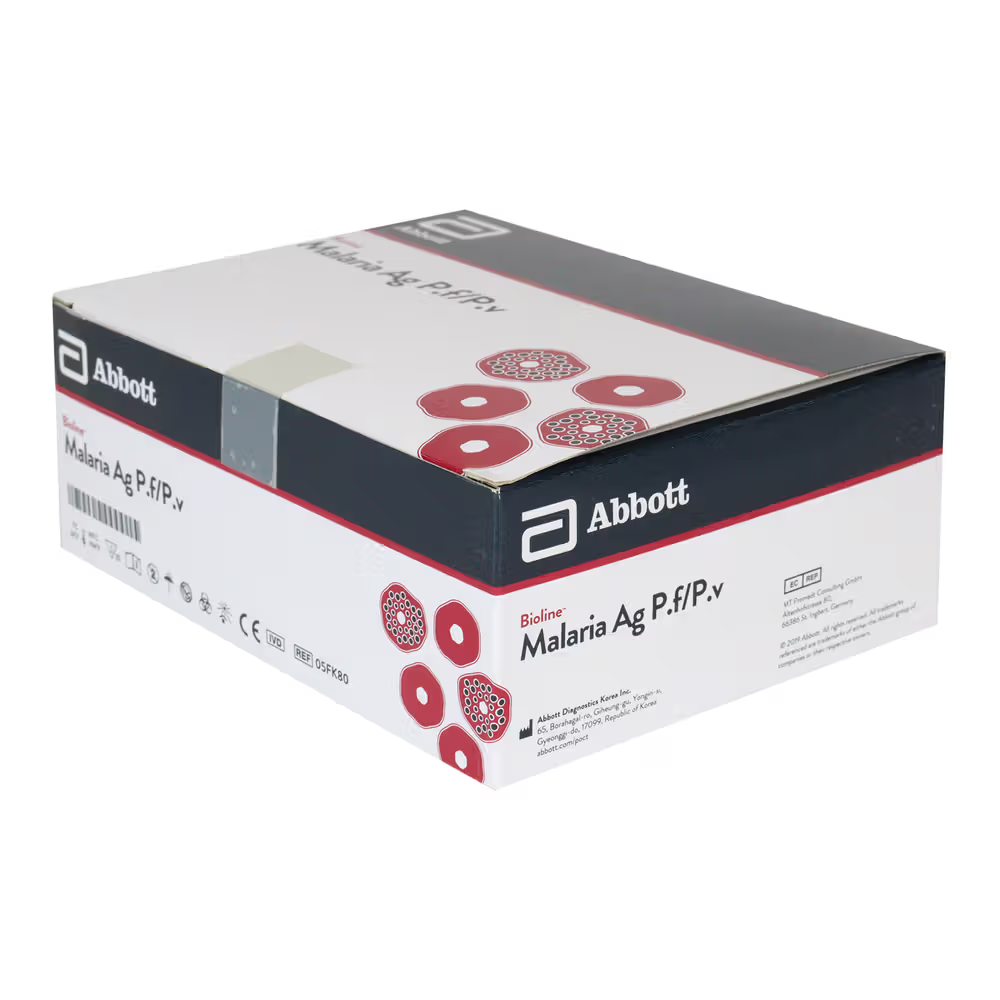
Pf vs Pv Detection Lines
Negative for Malaria:
Only one pink–purple line appears in the Control (C) region, indicating no malaria antigens detected.
P. falciparum Positive (Pf):
Two lines appear one in the Control (C) region and one in the Pf test line indicating infection with Plasmodium falciparum.
P. vivax Positive (Pv):
Two lines appear one in the Control (C) region and one in the Pv test line indicating infection with Plasmodium vivax.
Mixed Infection (Pf + Pv):
Three lines appear Control (C), Pf, and Pv indicating co-infection with P. falciparum and P. vivax.
Invalid Result:
If the Control (C) line does not appear, the test result is invalid. The test should be repeated using a new device.
Pf vs Pv Detection Lines (Quick Guide)
| Line Appears | Interpretation |
| C only | Negative |
| C + Pf | P. falciparum detected |
| C + Pv | P. vivax detected |
| C + Pf + Pv | Mixed infection |
| No C line | Invalid test |
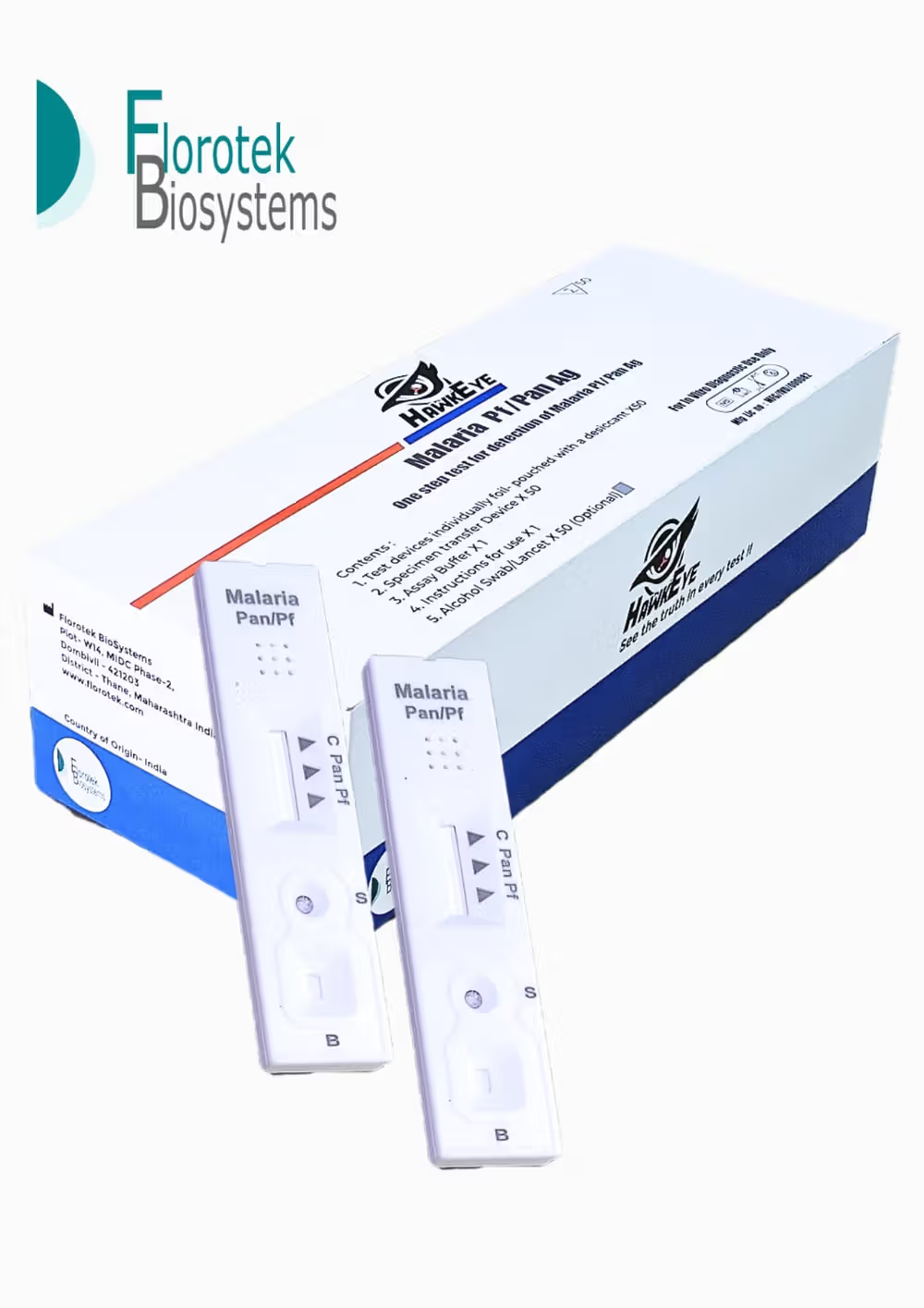
Sample Collection Techniques
Ensure proper hand hygiene and wear gloves before sample collection.
Use a sterile lancet to obtain a finger-prick blood sample.
Allow a sufficient drop of blood to form without excessive squeezing.
Collect the blood using the provided capillary tube, loop, straw, or pipette.
Avoid air bubbles and ensure the correct sample volume is collected.
Dispose of lancets and collection devices immediately in a sharps container.
Quality Control Procedures
Verify test kit expiry dates and storage conditions before use.
Check that the control line appears to confirm test validity.
Use kits strictly according to the manufacturer’s instructions.
Store test kits in recommended temperature and humidity conditions.
Record results accurately and report any invalid or inconsistent outcomes.
Result Interpretation Guide
Malaria rapid diagnostic test results should be read only after the specified waiting time. The appearance of a control line confirms that the test has functioned correctly. A test line indicates the presence of malaria antigens and confirms infection, while the absence of a test line with a visible control line indicates a negative result. If the control line does not appear, the result is invalid and the test must be repeated using a new kit.
Bulk Procurement Benefits
Bulk procurement helps healthcare facilities reduce per-unit costs, ensure consistent product availability, and simplify inventory management. By purchasing in larger quantities, clinics and laboratories can minimize frequent reordering, maintain uninterrupted workflows, and improve budget planning while ensuring reliable access to essential medical supplies.
Related Products

4.3
Fastest by 14th Apr
COD
J Mitra Advantage Mal Card Test Kit Pack of 50 Tests
₹812
₹3,37576% OFF
₹756 with MBFIRST
3.7
Fastest by 14th Apr
COD
Abbott Mal AG P.F/P.V (D) Malaria rapid card
₹583
₹2,34475% OFF
₹496 with ABBOTT15
Fastest by 15th Apr
COD
Shom Malaria Pf/Pv Antigen Rapid Test Kit
₹952
₹5,00081% OFF
₹886 with MBFIRST
Fastest by 15th Apr
COD
HawkEye Malaria Pf/Pan Ag
₹870
₹3,81077% OFF
₹810 with MBFIRST
Fastest by 15th Apr
COD
HawkEye Malaria Pf Ag
₹870
₹3,81077% OFF
₹810 with MBFIRST


FAQs
SOCIAL MEDIA
DOWNLOAD APP
HELP US IMPROVE
SOCIAL MEDIA
DOWNLOAD APP