

Hospitals
A Functional Classification of Surgical Instruments for OT Teams
A practical, category-wise guide to surgical instruments names and uses for Indian hospital OT teams. Covers cutting, grasping, retracting, and haemostatic tools.


In any operating theatre, efficiency and patient safety are paramount. A well-organised instrument trolley, where every tool is correctly identified and readily available, is not a matter of convenience—it is a critical component of successful surgical outcomes. For procurement heads and OT supervisors, a deep understanding of surgical instruments names and uses: a category-wise guide for OT teams is fundamental to equipping a facility, training staff, and maintaining standards.
Thinking about instruments based on their function—what they do—is the most practical approach. This classification simplifies tray assembly, streamlines communication during procedures, and aids in accurate inventory management. This guide breaks down essential instruments into their primary functional categories.
Cutting and Dissecting Instruments
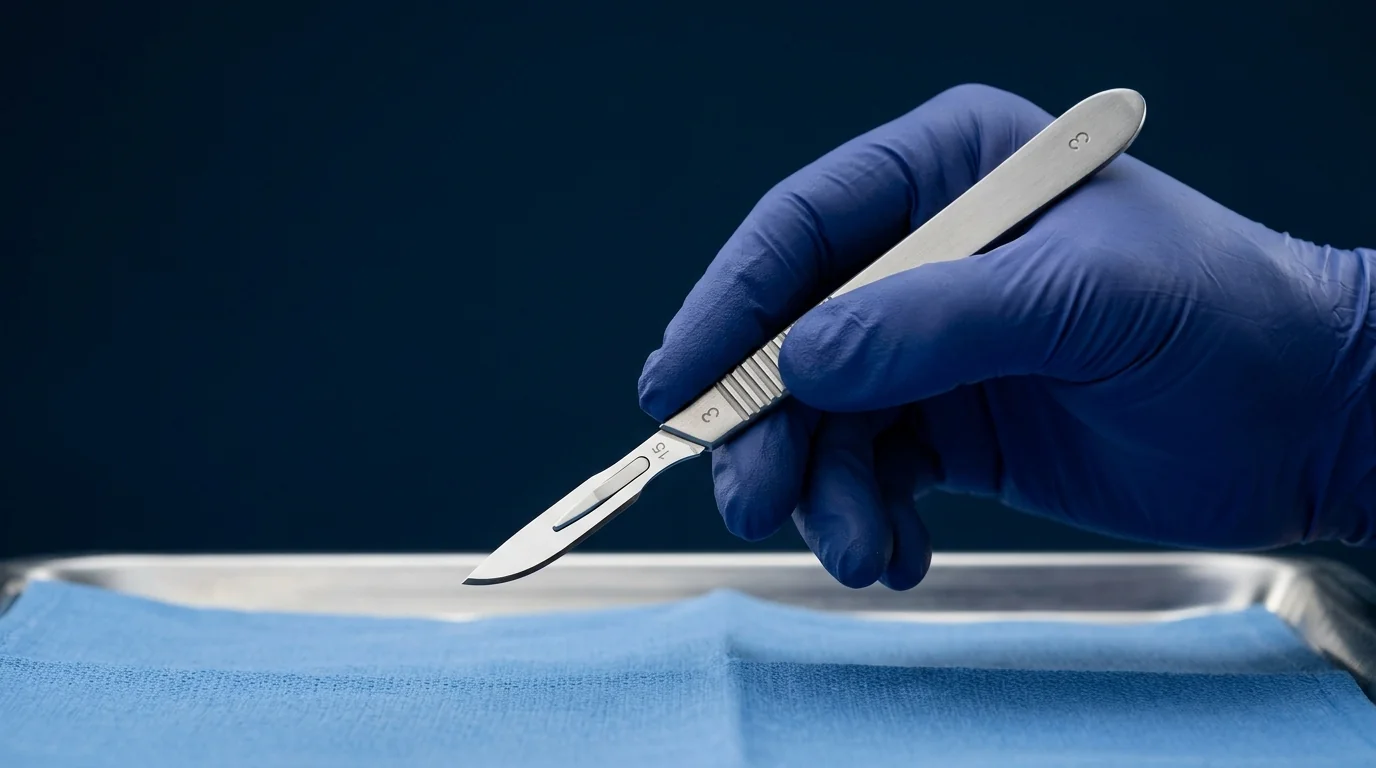 These instruments are designed to incise, excise, or separate tissue. Precision, sharpness, and durability are their defining characteristics.
- Scalpels: The primary tool for making incisions. It consists of a reusable handle and a disposable blade.
- Use: The BP Handle (Bard-Parker) is the most common type, with different sizes (No. 3, No. 4) accommodating various blade shapes (e.g., No. 10, 11, 15, 22). The choice depends on the depth and nature of the required incision.
- Surgical Scissors: Used for cutting tissue, sutures, and other materials. They are distinguished by blade type (curved or straight), tip (blunt or sharp), and weight.
- Mayo Scissors: Heavy-duty scissors for cutting tough fascia, connective tissue, and sutures. Straight Mayo scissors are typically used for cutting sutures ("suture scissors"), while curved ones are for dissecting heavy tissue. The robust design of tools like Lifex Mayo Scissors makes them a staple in most sets.
- Metzenbaum Scissors: More delicate than Mayo scissors, with a longer shank-to-blade ratio. Used for fine dissection of delicate tissues and blunt dissection. Not intended for cutting sutures or drains.
Grasping and Holding Instruments
These instruments are used to hold and manipulate tissues, needles, or other objects within the surgical field, providing a secure grip without causing undue trauma.
- Forceps: Essentially surgical tweezers, available in toothed (for skin and fascia) and non-toothed/atraumatic (for delicate structures like bowel or blood vessels) variants.
- Adson Forceps: Small forceps with fine tips, used for grasping delicate tissue and skin during suturing. Available with and without teeth.
- DeBakey Forceps: Atraumatic forceps with a distinctive row of fine teeth, designed for manipulating blood vessels and soft tissues with minimal damage.
- Tissue Forceps: General-purpose forceps for holding and manipulating tissues. The configuration of the teeth determines their use; for example, 1x2 toothed tissue forceps provide a firm grip on denser tissues.
- Allis Forceps: A ratcheted instrument with sharp teeth that interlock. Used for grasping tough tissue (fascia, tendons) that is being removed. It is considered a traumatic instrument.
- Babcock Forceps: A ratcheted, atraumatic forceps with a fenestrated, rounded tip. Used for grasping delicate, tubular structures like the fallopian tube or appendix without crushing them.
Haemostatic Instruments (Clamps)
Haemostats, or artery forceps, are crucial for achieving haemostasis by clamping blood vessels. Most are ratcheted to lock them in place.
- Kelly Forceps: A larger haemostat used for clamping larger vessels or tissue bundles. The serrations on the jaws go halfway down the length.
- Crile Forceps: Similar to Kelly forceps, but the serrations extend along the entire length of the jaw, providing a more secure grip.
- Mosquito Forceps (Halsted): A smaller, fine-tipped haemostat used for clamping small blood vessels, particularly in delicate or superficial procedures. A well-made pair of artery forceps is indispensable for achieving a clear, bloodless surgical field.
Retracting and Exposing Instruments
Retractors are used to hold back tissues or organs to expose the surgical site. They can be hand-held or self-retaining.
- Hand-held Retractors: Require an assistant to hold them in place.
- Army-Navy Retractor: A double-ended retractor with different-sized blades on each end, used for retracting shallow or superficial incisions.
- Deaver Retractor: A large, flat retractor shaped like a question mark, used for holding back deep abdominal or thoracic organs.
- Self-retaining Retractors: Have a locking mechanism (ratchet or screw) that keeps the blades open, freeing up the assistant's hands.
- Weitlaner Retractor: Has prongs (sharp or blunt) and is used for retracting in small, deep incisions, common in orthopaedic and neurosurgery.
- Balfour Retractor: A large abdominal retractor with side blades and a central blade, used to retract the abdominal wall during laparotomies.
Suturing and Stapling Instruments
These are the tools required for closing wounds and anastomosing tissues.
- Needle Holders (Needle Drivers): Used to grasp and drive the suturing needle through tissue. The jaws are short and sturdy, often with a tungsten carbide insert for enhanced grip and durability.
- Mayo-Hegar Needle Holder: A common type with a ratchet lock and no built-in scissors.
- Olsen-Hegar Needle Holder: Combines a needle holder and scissors, allowing the surgeon to suture and cut without changing instruments. Selecting a reliable tool like the Adson Straight Needle Holder is critical for precise needle control.
- Surgical Staplers: Used for rapid placement of surgical staples for wound closure or tissue anastomosis. Available in various designs for skin, bowel, and vascular surgery.
Suctioning and Aspirating Instruments
These are used to remove blood, fluids, and debris from the surgical field to maintain visibility.
- Yankauer Suction Tip: The most common type, with a large tip and a bulbous head designed to aspirate fluid without damaging surrounding tissue.
- Poole Suction Tip: Has multiple holes to prevent clogging when suctioning large amounts of fluid, typically in the abdominal cavity.
- Frazier Suction Tip: A fine, angled tube used for precise suctioning in small or delicate areas, such as in neurosurgery or ENT procedures.
Assembling Standard Instrument Sets
While every procedure has unique requirements, most facilities standardise on basic trays.
Basic Minor Surgery Tray:
- 1 x No. 3 Scalpel Handle
- 2 x Mosquito Forceps (Curved)
- 2 x Kelly Forceps (Curved)
- 1 x Adson Forceps with Teeth
- 1 x Adson Forceps without Teeth
- 1 x Mayo-Hegar Needle Holder
- 1 x Straight Mayo Scissors
- 4 x Towel Clips
Major Laparotomy Tray:
- Includes all items from the minor set.
- Additional Scalpel Handles (No. 4)
- Multiple Haemostats (Kelly, Crile) of varying lengths.
- Tissue Forceps (e.g., DeBakey).
- Grasping Clamps (Allis, Babcock).
- Self-retaining Retractor (e.g., Balfour).
- Hand-held Retractors (e.g., Deaver, Richardson).
- Suction Tips (Yankauer, Poole).
- Longer Scissors and Needle Holders.
Procurement Criteria: What to Look For
When sourcing instruments, several factors beyond the name and type are critical for performance and longevity.
- Material: Surgical-grade stainless steel is the standard. Look for designations like AISI 300 or 400 series. Tungsten Carbide (TC) inserts on needle holders and scissors provide a harder, more durable working surface.
- Finish: A matte or satin finish is preferred over a highly polished one as it reduces glare from OT lights, minimising surgeon eye fatigue.
- Traceability: Each instrument should be clearly marked with the manufacturer's name, a catalog number, and a CE mark, indicating compliance with quality standards. This is vital for inventory and sterilisation tracking.
- Passivation: This is a chemical process that removes free iron from the surface of the stainless steel and creates a passive chromium oxide layer, significantly increasing resistance to corrosion and rust.
A thorough evaluation of these parameters ensures that your facility is equipped with reliable tools. For procurement managers, having access to a comprehensive catalogue of Medicalequipments is essential for comparison and selection based on procedural needs and quality benchmarks.
Instrument Care and Sterilisation Protocols
The lifespan and safety of surgical instruments depend entirely on a robust cleaning and sterilisation process.
- Pre-Cleaning: Instruments should be wiped clean of gross debris with a sterile sponge and water during the procedure.
- Decontamination: Immediately after surgery, instruments should be submerged in an enzymatic cleaner or sterile water to prevent blood and proteins from drying. Biofilm formation begins quickly.
- Manual & Automated Cleaning: Thoroughly scrub instruments, paying close attention to hinges, serrations, and lumens. Use neutral pH detergents. Ultrasonic cleaners are effective for complex instruments.
- Inspection & Lubrication: After cleaning and drying, inspect each instrument for damage, stiffness, or misalignment. Apply a surgical-grade instrument lubricant ("instrument milk") to hinged instruments.
- Sterilisation: Assemble instruments into trays and wrap them. Steam autoclaving is the gold standard. A typical cycle is 134°C at 30 psi for a minimum of 4 minutes for wrapped instruments. Flash sterilisation should be reserved for emergencies only.
- Storage: Store sterile packs in a clean, dry, controlled environment.
Equip Your OT with Precision Instruments
A surgeon's skill is only as effective as the tools in their hands. Ensuring your operating theatre is equipped with high-quality, well-maintained, and correctly organised surgical instruments is a direct investment in patient safety and procedural excellence. For your facility's specific surgical needs, explore the extensive range of instruments available on Medikabazaar.
FAQs

