

Hospitals
A Procurement Framework for Selecting Diagnostic Ophthalmic Lenses
A procurement manager's guide to selecting the right ophthalmic lens for optometrists. Covers specifications, certifications, supplier evaluation, and common pitfalls.


As a procurement head or senior clinician, your responsibility extends beyond securing equipment; it involves ensuring every instrument enhances diagnostic accuracy and operational efficiency. When evaluating an apparently simple but clinically critical category like the ophthalmic lens for optometrists and ophthalmologists, a structured approach is essential. A high-quality diagnostic lens is not a commodity—it is a direct interface for clinical decision-making.
This guide provides a practical, checklist-driven framework for evaluating and sourcing non-contact slit-lamp lenses, ensuring your selection meets the rigorous demands of a modern Indian eye care facility.
Needs Assessment Checklist: The Foundation of Your Procurement
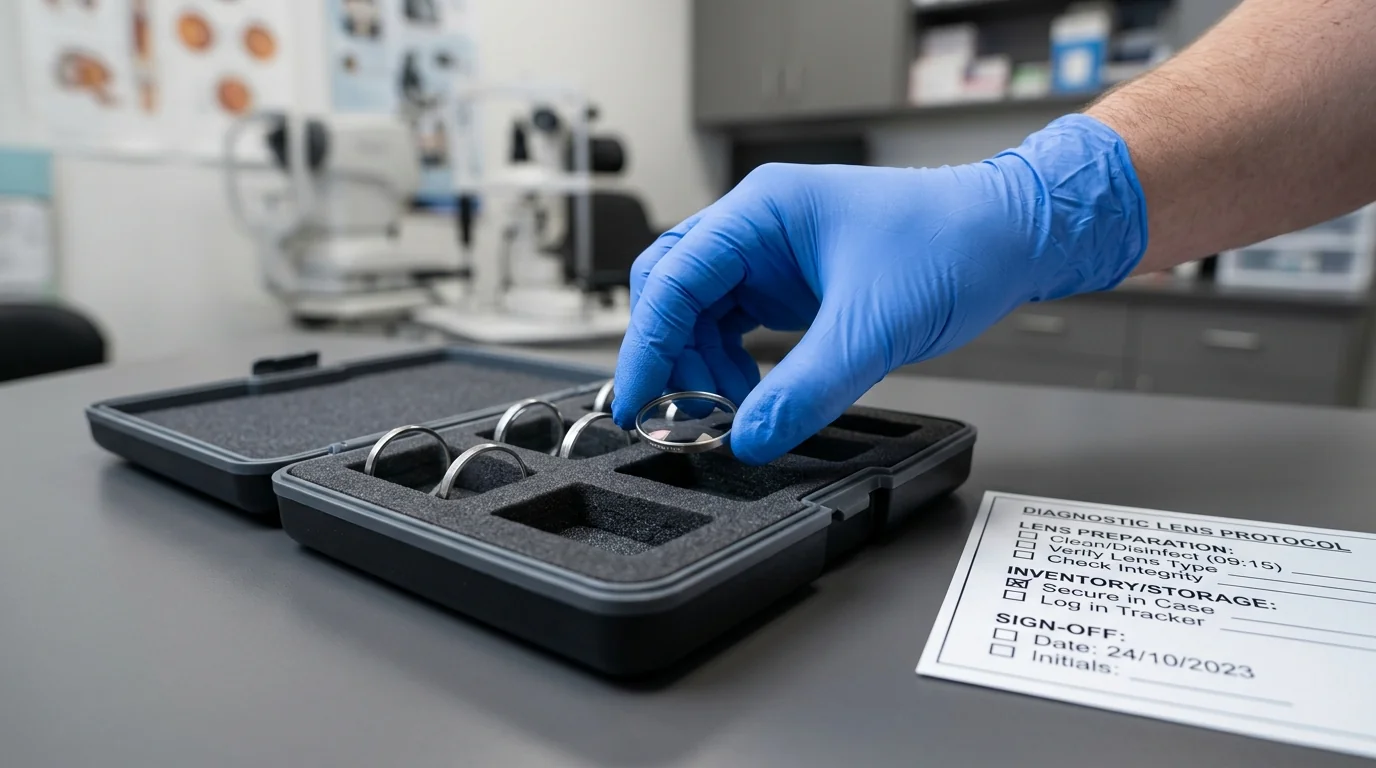 Before reviewing spec sheets, a clear internal needs assessment prevents over-specification or sourcing an instrument misaligned with your clinical workflow.
- Daily Examination Volume:
- Low Volume (<20/day): A single, versatile lens might suffice.
- High Volume (50+/day): Multiple units are necessary to allow for cleaning cycles. Durability and scratch resistance become primary concerns.
- Facility Type & Scope:
- Standalone Optometry Clinic: Focus on a workhorse lens for routine fundus screening, like a 90D.
- Multi-Specialty Hospital (Ophthalmology Dept.): Requires a broader set of lenses for different diagnostic needs—wide-field for screening, high-magnification for detailed macular or optic nerve head evaluation.
- Vision Centre / Outreach Camp: Portability and durability are key. Lenses with robust construction and protective casing are essential.
- Primary Clinical Application:
- General Fundus Screening: A wide-field lens is the standard. The role of the 90 D lens in ophthalmology is precisely this—providing a broad, clear view of the posterior pole.
- Glaucoma & Optic Disc Evaluation: Requires higher magnification to assess the optic nerve head. A 78D or 60D lens is often preferred.
- Macular & Retinal Pathology: High-magnification, high-resolution lenses are necessary for detailed examination of the central retina.
- Practitioner Base & Training Needs:
- Senior Consultants: May have specific preferences based on years of experience.
- Residents & Trainees: Lenses used in training settings must be exceptionally durable to withstand frequent handling and the occasional drop.
Decoding Key Specifications: A Technical Evaluation Checklist
Once your clinical needs are defined, you can assess specific product attributes. Look for clear documentation from the supplier on these parameters.
- Optical Material and Coatings:
- Lens Material: The core of the instrument. High-refractive-index glass is the standard for superior image clarity, minimal distortion, and high scratch resistance. PMMA is a lighter alternative but may be more prone to surface damage over time.
- Anti-Reflective (AR) Coating: This is non-negotiable. A multi-layered broadband AR coating minimises glare and reflections from the lens surface, maximising light transmission for a brighter, clearer view of the fundus. Verify the type and durability of the coating.
- Dioptric Power and Field of View (FOV):
- These two specifications are inversely related. A higher diopter lens provides a wider field of view but lower magnification.
- 90D Lens: Offers a very wide FOV (typically 75°-90°) with lower magnification (approx. 0.75x). Ideal for a comprehensive, quick look at the entire posterior pole.
- 78D Lens: Provides a narrower FOV but higher magnification (approx. 0.93x). Better suited for detailed examination of the optic disc and macula.
- Regulatory Compliance and Certifications:
- ISO 13485:2016: This certification indicates the manufacturer operates under a quality management system specifically for medical devices. It's a critical indicator of consistent production quality.
- CE Marking: Signifies conformity with European health, safety, and environmental protection standards. For ophthalmic instruments, this is a strong mark of quality and safety.
- FDA Approval: While not mandatory in India, clearance from the U.S. Food and Drug Administration is another powerful indicator of a product's quality and safety validation.
- Sterilisation & Disinfection Protocol:
- The lens must withstand your facility's standard disinfection protocol without degradation.
- Confirm compatibility with common disinfectants like 70% isopropyl alcohol or glutaraldehyde-based solutions. Some aggressive cleaning agents can damage the AR coating over time. The manufacturer should provide a clear list of approved and prohibited agents.
Beyond the Spec Sheet: Critical Comparison Criteria
Two lenses with identical diopter power can perform very differently in a clinical setting. These qualitative factors are just as important as the technical specifications.
- Ergonomics and Build Quality:
- The lens housing should be durable, with a non-slip grip that feels balanced in the practitioner's hand. Anodized aluminium is a common choice for its balance of light weight and strength. The knurled ring or grip design can significantly impact ease of use during a long OPD session.
- Image Clarity and Aberration Control:
- A superior lens uses aspheric surfaces to correct for optical aberrations, delivering a sharp, distortion-free image across the entire field of view. When evaluating, look for edge-to-edge clarity and minimal colour fringing. This is what separates a premium diagnostic tool from a basic one.
- Durability of Coatings and Housing:
- Ask the supplier about the hardness and application process of the AR coating. A robust, multi-layer hard coat on a product like the Sugra 90D Lens - 8 x 8 x 6cm (SUGRA-014) ensures it withstands thousands of cleaning cycles without degrading optical performance.
- Included Accessories:
- A hard, protective case is not a minor detail. It is essential for protecting the lens from dust, moisture, and physical damage, thereby extending its operational life and protecting the investment.
Supplier Evaluation Checklist for Ophthalmic Lenses
Your choice of supplier is as critical as your choice of product. A reliable partner ensures supply chain integrity and long-term support.
- Documentation and Traceability:
- Can the supplier provide batch numbers and certificates of conformity (CoC) and quality (CoQ) upon request? A professional sugra 90d lens supplier should have this readily available.
- Are ISO and CE certificates for the manufacturer easily accessible?
- Portfolio and Specialisation:
- Does the supplier offer a comprehensive range of ophthalmology instruments? A supplier with a deep catalogue in ophthalmology demonstrates category expertise. This simplifies procurement, allowing you to source multiple items, from a simple diagnostic Lens to more complex equipment like a lensometer for verifying spectacle prescriptions, from a single, vetted source.
- Logistics and Supply Chain Reliability:
- What is their average lead time for delivery to your location?
- Do they have a robust inventory management system to prevent stockouts of critical supplies?
- Can they manage and consolidate shipments for large institutional orders?
- After-Sales and Warranty Support:
- Is there a clear, documented process for handling warranty claims or reporting transit damage?
- What is the standard warranty period, and what does it cover (e.g., manufacturing defects vs. wear and tear)?
Common Procurement Pitfalls to Avoid
- Pitfall 1: Prioritising Unit Cost Over Optical Quality. A lens with poor optics can lead to missed pathology. The long-term cost of a misdiagnosis far outweighs any initial savings from a cheaper, lower-quality instrument.
- Pitfall 2: Neglecting End-User Feedback. The clinicians and optometrists are the ultimate arbiters of a lens's performance. Involve them in the evaluation. If possible, arrange for a trial or demo of a sample unit.
- Pitfall 3: Overlooking the Protective Case. A lens stored improperly is a lens that will be replaced prematurely. Factoring in the quality of the included case is part of evaluating the total package.
- Pitfall 4: Assuming All Lenses are Universal. While most lenses work with most slit lamps, subtle differences in working distance and ergonomics can impact workflow. Confirm compatibility and practitioner comfort.
Equip Your Facility Today
Making an informed decision on ophthalmic lenses is a direct investment in your facility’s diagnostic capability. By using a structured evaluation framework, you ensure that every instrument procured adds tangible clinical value and withstands the rigours of daily use. Explore the curated range of high-quality ophthalmology instruments on MedikaBazaar to find the right solutions for your specific operational and clinical requirements.
FAQs

