

Hospitals
Evaluating Surgical Suture Suppliers: A Checklist for Indian Healthcare Facilities
A detailed guide for procurement managers on evaluating surgical suture suppliers. Covers material selection, regulatory compliance, and supplier checklists for institutional use.


Selecting a surgical suture supplier extends far beyond comparing product lists. For any hospital, clinic, or diagnostic centre, this is a decision that directly impacts clinical outcomes, operational efficiency, and patient safety. A suture is not a generic commodity; it is a Class II or III medical device whose performance characteristics must be precisely matched to the clinical need. This guide provides a structured framework for procurement teams and senior clinicians to systematically evaluate both the product and the supplier, ensuring every suture sourced meets stringent institutional standards.
Initial Needs Assessment: Defining Your Suture Requirements
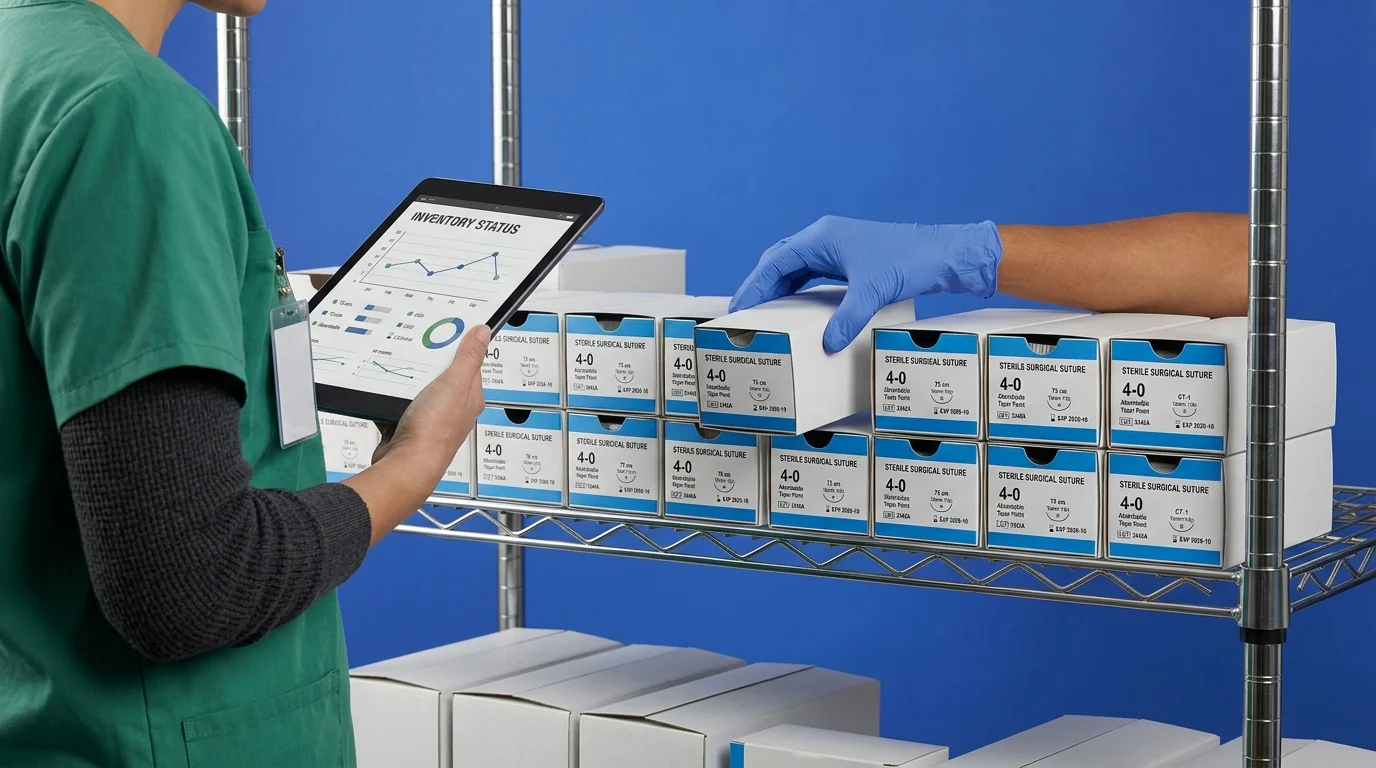 Before evaluating suppliers, the first step is a rigorous internal audit of your facility's specific needs. A tertiary care hospital's requirements are vastly different from a standalone dental clinic's.
Facility Caseload & Departmental Needs Checklist:
- High-Volume, Multi-Specialty Hospital: Do you require a broad formulary covering General Surgery, Orthopaedics (high-tensile strength), Cardio-thoracic (inert monofilaments like polypropylene), and OB/GYN (rapidly absorbing synthetics)? Map your monthly consumption across all major Operation Theatres.
- Specialty Clinic (e.g., Dermatology, Ophthalmology, Dental): Your needs are more focused. You likely require a narrower range of fine-gauge sutures (e.g., 5-0 to 7-0) with specific needle profiles (e.g., reverse cutting for tough skin).
- Outpatient Department & Minor OT: Assess the need for wound closure kits and common sutures for procedures like skin laceration repair or biopsy closures. High-turnover items like
silk suture 2-0and 3-0 are common staples here. - Volume & Consumption Patterns: Quantify your usage. Do you need to plan for
bulk lotus silkus 3-0 pack of 12deliveries to maintain OT stock levels, or are smaller, more frequent replenishments sufficient? Establishing a consumption baseline is critical for supply chain planning.
Deconstructing the Suture: Key Technical Specifications for Evaluation
Once you have defined your needs, you can evaluate the technical specifications of the suture material itself. These physical and biological properties determine the suture's performance in a clinical setting.
Material Composition: Absorbable vs. Non-Absorbable
- Absorbable Sutures: These are broken down by the body over time.
- Natural: Surgical Gut (Plain/Chromic). Derived from bovine or ovine intestine. Effective but can be more tissue-reactive.
- Synthetic: Polyglactin (Vicryl), Poliglecaprone (Monocryl), Polyglycolic Acid (PGA). Offer predictable absorption profiles and minimal tissue reaction. The choice depends on the required duration of wound support.
- Non-Absorbable Sutures: These remain in the body permanently or are removed after wound healing.
- Natural: Surgical Silk. A braided material known for its excellent handling, suppleness, and knot security. While technically non-absorbable, it loses most of its tensile strength over a year. A reliable workhorse for many procedures, a common example being the Lotus Silkus Suture 3-0 - LNW5028 Pack of 12, it serves as a benchmark for handling properties. Many surgeons are familiar with brand names in this category, like
Mersilk sutureproducts. - Synthetic: Nylon, Polypropylene (Prolene), Polyester. These materials are highly inert, provoking minimal tissue reaction, making them ideal for cardiovascular and plastic surgery.
Suture Structure and Size
- Monofilament vs. Multifilament (Braided): Monofilaments pass through tissue more smoothly with less drag, reducing the risk of bacterial wicking. Multifilaments offer superior flexibility and knot security but have higher capillarity.
- USP Gauge: The United States Pharmacopeia (USP) sizing denotes the suture diameter. The more zeroes, the finer the suture (e.g., 6-0 is finer than 3-0). The gauge must be matched to the tissue's strength; using too large a suture can increase tissue trauma.
Needle Characteristics
The needle is just as critical as the thread. Evaluate based on:
- Point Type: Taper point for soft, easily penetrated tissue; Cutting or Reverse Cutting for tough tissue like skin; and Tapercut for dense, fibrous tissue.
- Curvature: Typically 1/4, 3/8, or 1/2 circle, chosen based on the accessibility and depth of the surgical site.
- Swage: Ensure a clean, secure attachment between the suture and needle (atraumatic swage) to minimize tissue damage upon entry.
Regulatory and Quality Assurance Checklist
Compliance is non-negotiable. Your supplier must provide surgical sutures that meet all national and international standards.
- Manufacturing Certification: Is the manufacturer ISO 13485:2016 certified? This is the global standard for quality management systems for medical devices.
- Sterility Assurance: Confirm the method of sterilisation (Ethylene Oxide or Gamma radiation) and check that packaging is robust, impermeable, and clearly indicates sterility. A damaged foil pouch means a non-sterile suture.
- Regulatory Approval: Verify that the products have the necessary CDSCO (Central Drugs Standard Control Organization) manufacturing license or import license.
- Traceability: Each box and individual suture pack must have a clear Lot Number and Expiry Date. This is essential for inventory management (FEFO - First-Expiry, First-Out) and indispensable in the rare event of a batch recall.
Evaluating the Surgical Suture Supplier: Beyond the Product Catalogue
A quality product is only half the equation. The supplier's logistical capability is what ensures that product is available when your surgeons need it.
| Evaluation Criteria | What to Look For |
| Supply Chain Reliability | Consistent lead times. Demonstrated ability to manage inventory for high-demand items. A transparent supply chain. |
| Logistical Competence | Adherence to delivery schedules. Proper handling of temperature-sensitive products. Emergency supply protocols. |
| Documentation & Support | Provision of Certificates of Analysis/Conformity upon request. Responsive point-of-contact for queries. |
| Geographic Reach | A network that can reliably service your facility's location, whether in a metro area or a Tier-2/3 city. |
Common Pitfalls in Medical Silk Suture Procurement
Experienced procurement managers learn to spot and avoid these common traps.
- Pitfall 1: Brand Fixation Over Specification. Focusing solely on a familiar brand name (e.g., only considering
Mersilk 3-0) without evaluating clinically equivalent alternatives can create supply chain vulnerabilities and prevent optimisation. Focus on the material, gauge, and needle specifications first. - Pitfall 2: Ignoring Shelf Life. Sutures expire. Over-ordering slow-moving, specialised sutures can lead to significant wastage. A robust inventory management system is crucial.
- Pitfall 3: Bypassing End-User Feedback. The procurement team must work with surgeons and OT staff. Sourcing a suture that meets all technical specs but has poor "handling feel" or memory will lead to clinical dissatisfaction and potential waste.
- Pitfall 4: Neglecting Packaging Usability. Flimsy or poorly designed sterile packaging can be difficult to open aseptically in the OT, slowing down procedures and increasing contamination risk.
Equip Your Facility Today
A systematic approach to medical silk suture procurement protects your patients, empowers your clinicians, and strengthens your facility's operational backbone. By using this checklist to evaluate both the product specifications and supplier capabilities, you can make an informed decision that ensures a consistent supply of high-quality, reliable surgical sutures.
As you conduct your evaluation, explore the detailed product specifications and regulatory compliance information available for the full range of sutures on MedikaBazaar to equip your teams effectively.
FAQs

