

Hospitals
Evaluating Surgical OT Lights: A Clinical and Operational Breakdown
An expert guide for procurement managers on selecting the right OT light. Understand key parameters like lux, CRI, R9 value, and dome configuration for your facility.


In any operating theatre, the surgical or OT light is not merely a source of illumination; it is a precision instrument integral to procedural success and patient safety. Suboptimal lighting can lead to surgeon fatigue, misidentification of tissues, and increased procedural time. For a procurement head or senior clinician, selecting the right OT light system involves a nuanced understanding of photometrics, ergonomics, and operational demands that go far beyond a simple lumen rating.
This guide provides a peer-to-peer breakdown of the critical parameters to evaluate when specifying or upgrading your facility's surgical lighting. We will move past marketing literature to focus on the technical and clinical specifications that directly impact surgical outcomes.
Core Illumination Parameters: Beyond Just Brightness
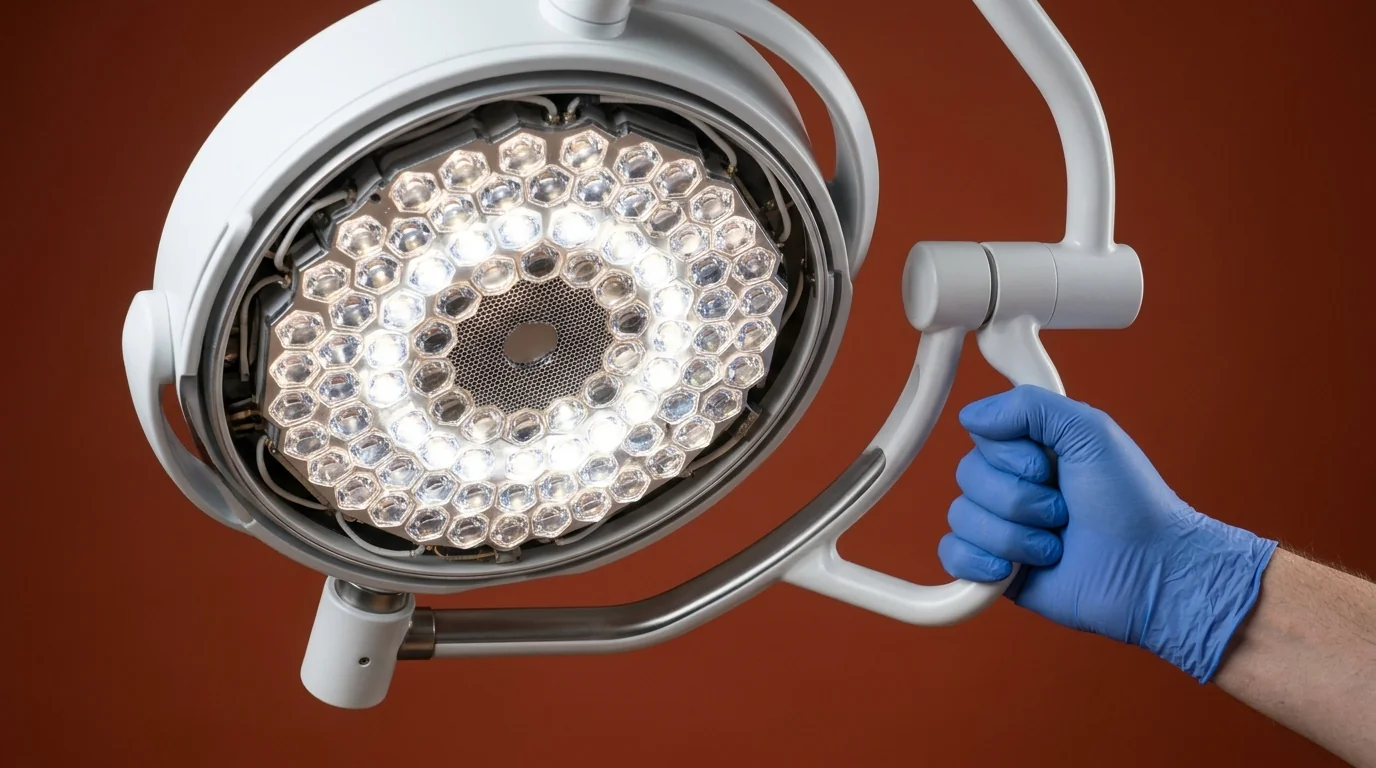 The quality of light is defined by several interconnected metrics. Focusing solely on intensity is a common but critical oversight.
Illumination Intensity (Lux) This measures the intensity of light falling on a surface, in this case, the surgical site. Modern LED OT lights typically offer a range from 40,000 to 160,000 lux, which is more than adequate for even the most demanding procedures.
- Key Consideration: The ability to adjust intensity is crucial. Maximum intensity is not always required and can cause glare on wet tissues or discomfort for the surgical team. A smooth, wide-ranging dimming control allows the lead surgeon to tailor the light precisely to the phase of the operation and the specific tissue being observed.
Colour Rendition Index (CRI) and R9 Value This is arguably the most critical parameter for clinical accuracy. CRI measures how accurately a light source reveals the true colours of an object compared to natural daylight.
- CRI: A CRI of 95 or higher (out of 100) is the accepted standard for surgical lights. Anything less can distort the appearance of tissues, making it difficult to differentiate between healthy, ischemic, or necrotic structures.
- R9 Value: This is a specific component of the CRI that measures the light's ability to render deep, saturated red tones accurately. For surgery, the R9 value is of paramount importance. A high R9 value (>90) ensures that subtle variations in blood, muscle, and organ tissue are clearly visible, which is vital for accurate diagnosis and precise intervention. Always demand the R9 specification, not just the general CRI.
Colour Temperature (Kelvin) Measured in Kelvin (K), this defines the "warmth" or "coolness" of the light. Lower Kelvin values produce a warmer, yellowish light, while higher values produce a cooler, bluish light.
- Operational Impact: Most modern OT lights offer an adjustable colour temperature, typically from 3,500K to 5,000K. This allows the surgical team to select a setting that reduces strain during long procedures. Some surgeons prefer a cooler light for better concentration, while others find a neutral or slightly warmer tone provides more natural tissue rendition. The ability to adjust this is a significant ergonomic advantage.
Depth of Illumination (L1+L2) This parameter quantifies how well the light maintains adequate focus and intensity within a surgical cavity. It is defined as the distance between the point of maximum illumination and the points above and below it where the intensity drops to 20% of the maximum.
- Clinical Relevance: A large depth of illumination means the surgeon does not have to constantly refocus the light when working in deep cavities (e.g., in cardiac or abdominal surgery). The light remains focused deep inside the site even when the surgeon's head or hands partially obstruct the beam.
Physical Configuration and Design Considerations
The physical form of the light system dictates its usability, integration with other OT equipment, and infection control compliance.
Light Source: LED Dominance While older facilities may still have halogen lights, Light Emitting Diodes (LEDs) are the undisputed standard today.
- Advantages of LED:
- Low Heat Emission: LEDs emit significantly less infrared radiation, preventing tissue desiccation at the surgical site and keeping the OT environment cooler and more comfortable for the surgical team.
- Longevity: LEDs have a rated life of 50,000 hours or more, drastically reducing the operational burden of bulb replacements and associated downtime.
- Energy Efficiency: They consume far less power than halogen bulbs, contributing to lower operational expenditures.
- Superior Light Quality: LEDs enable precise control over colour temperature and achieve higher, more stable CRI and R9 values.
Dome and Arm Configuration The setup depends entirely on the size of the OT and the types of procedures performed.
- Ceiling-Mounted: The most common configuration, available in single, dual, or triple dome setups. A dual-dome system is the standard for major OTs, allowing for primary and secondary illumination from different angles to eliminate shadows.
- Mobile: Stand-mounted lights are suitable for minor procedure rooms, emergency departments, or as a backup/supplementary light in a major OT.
- Arm System: Look for a system with smooth, stable articulation and a wide range of movement. The arm should hold its position without drifting and be easy to manoeuvre with a sterile handle. The choice between a ceiling-mounted or mobile unit often depends on the OT's primary function and available space. As you evaluate these different hardware configurations, you can explore our complete range of Medicalequipments to see various options available for different clinical settings.
Laminar Flow Compatibility In ultra-clean OTs, the surgical light dome can disrupt the sterile laminar airflow from the ceiling to the surgical field.
- Aerodynamic Design: Select lights with an open architecture or aerodynamically optimised, flower-petal-shaped domes. This design minimises air turbulence, ensuring the sterile air curtain remains intact and reducing the risk of surgical site infections (SSIs).
Advanced Features for Modern Surgical Suites
Modern OT lights are evolving into integrated platforms that enhance workflow and training.
Shadow Management Technology This is a key feature of premium lights. By using a matrix of multiple, overlapping light sources, the system can automatically detect an obstruction (like the surgeon's head) and increase the intensity of the remaining, unobstructed LEDs to "fill in" the shadow. This ensures a consistently illuminated field without any manual adjustment.
Endoscopy Mode ("Endo Mode") A non-negotiable feature for any multi-purpose OT. This setting provides low-level, glare-free ambient illumination (typically green or white) for the room while the primary procedure is performed using the light from an endoscope displayed on a monitor. It ensures the nursing and anaesthesia staff can work safely without compromising the surgeon's view of the screen.
In-light HD Camera and Monitor Arm Integration Many systems now offer the option of an HD or 4K camera integrated into the central axis of the light dome.
- Benefits: This is invaluable for teaching, telementoring, remote consultations, and precise documentation. Ensure the camera offers optical zoom, auto-focus, and a stable video output. The system should also support an optional, sterilisable monitor arm for in-OT viewing.
Maintenance, Safety, and Compliance
An OT light is a long-term capital asset; its reliability and ease of maintenance are critical.
- Cleaning and Sterilisation: The light housing should be made of durable, non-porous materials like aluminium with an anti-microbial powder coating that can withstand standard hospital disinfectants. Handles must be easily detachable and autoclavable. Check the IP (Ingress Protection) rating for resistance to dust and liquids.
- Electrical Safety: Ensure the system complies with IEC 60601 standards for medical electrical equipment. It must be connected to the hospital's essential power line with UPS backup to prevent a catastrophic loss of light during a procedure.
- Service and Spares: Confirm the availability of local service support and spare parts like LED modules, control boards, and power supplies. While LEDs have a long life, individual modules can fail and must be replaceable without requiring a full dome replacement.
Equip Your Facility Today
Specifying an OT light system is a decision that will impact your surgical teams and patient outcomes for over a decade. By looking beyond the basic specifications and focusing on clinical light quality, ergonomic design, and long-term reliability, you can ensure your operating theatre is equipped with a tool that truly enhances surgical precision.
For a detailed look at various OT light configurations and to find a solution that fits your facility's specific procedural needs, explore the comprehensive range of surgical equipment available on MedikaBazaar.
FAQs