

Hospitals
Evaluating Scrotal Support for Post-Operative and Ambulatory Care
A detailed guide for clinicians and procurement heads on selecting appropriate scrotal support based on material, design, and clinical application in Indian healthcare facilities.


In any surgical or urological practice, patient outcomes are directly influenced by the quality of post-procedural care. While major interventions command significant attention, smaller ancillary supplies often play a disproportionately large role in patient comfort, compliance, and recovery. Effective scrotal support is a prime example—a fundamental component in the management of post-operative recovery, testicular trauma, and certain chronic conditions.
For a procurement manager or senior clinician, selecting the right type of support is not a trivial matter. It involves understanding the interplay between clinical requirements, material science, and patient ergonomics. A well-specified scrotal support can significantly reduce pain, minimise complications like hematomas, and encourage early ambulation, while a poorly chosen one can cause discomfort, skin breakdown, and non-compliance. This guide outlines the core criteria for evaluating and standardising this essential medical supply for your facility.
The Clinical Imperative for Correct Scrotal Support
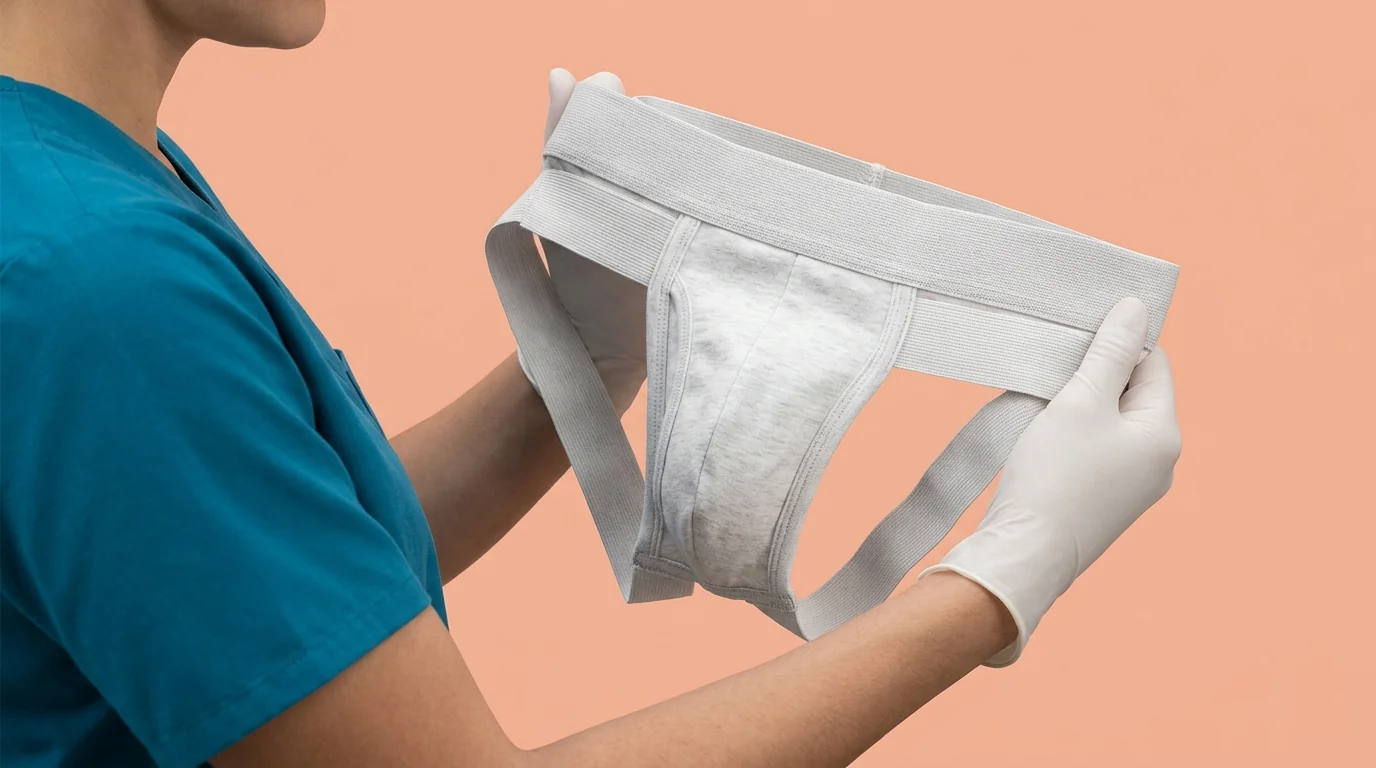 The primary function of a scrotal support is to provide elevation and gentle compression to the scrotum. This simple mechanical action has several profound clinical benefits that are critical in both post-operative settings (hydrocelectomy, varicocelectomy, vasectomy) and for managing acute conditions like epididymitis or orchitis.
- Pain and Edema Management: Following surgery or trauma, inflammation and fluid accumulation are inevitable. By lifting the testicles, a support reduces gravitational pull and dependent edema, which are major sources of pain. The gentle compression helps to limit swelling and provides a sense of security to the patient.
- Hemostasis and Hematoma Prevention: In the immediate post-operative period, controlled compression helps small blood vessels to achieve hemostasis. This significantly lowers the risk of a scrotal hematoma, a painful complication that can delay healing and may require further intervention.
- Enhanced Patient Mobility: Pain and the feeling of vulnerability can make patients hesitant to move. A secure scrotal support gives the patient the confidence to ambulate sooner after a procedure. This early mobility is crucial for preventing deep vein thrombosis (DVT) and other complications associated with bed rest.
- Patient Compliance and Psychological Comfort: Discomfort leads to non-compliance. A well-designed, properly fitted support is more likely to be worn as prescribed. Furthermore, the psychological benefit of feeling secure and protected should not be underestimated during the recovery phase.
Core Evaluation Criteria: A Procurement Checklist
Sourcing scrotal supports requires a methodical approach that goes beyond a simple size and quantity check. The following criteria form a practical checklist for procurement teams and clinical heads.
Material Composition and Quality
The material is the foundation of the support's effectiveness and the patient's comfort, particularly in India's varied climate.
- Fabric Blend: Look for blends of cotton and elastane (spandex). Cotton offers breathability and is soft against the skin, reducing the risk of irritation. Elastane provides the necessary stretch and compression for a secure fit without constricting blood flow.
- Moisture-Wicking Properties: The scrotal area is prone to perspiration. Materials that wick moisture away from the skin are essential for maintaining hygiene and preventing maceration or fungal infections.
- Hypoallergenic and Latex-Free: To prevent contact dermatitis, confirm that the materials, especially the elastic waistband, are hypoallergenic. Specifying latex-free options is a critical safety measure for patients with known allergies.
- Durability: The fabric should withstand repeated wear and washing (if intended for multi-day patient use) without losing its elasticity. Poor quality elastic will degrade quickly, rendering the support ineffective.
Design and Anatomical Construction
The design determines how well the support functions. A one-size-fits-all approach is clinically inadequate.
- Pouch Design: The pouch should be anatomically shaped, providing adequate room without being too loose. Seams should ideally be external or flat-felled to prevent chafing on sensitive post-operative skin.
- Waistband: A wide, soft, and non-rolling waistband is crucial. It should distribute pressure evenly around the waist without digging in. Adjustable hook-and-loop closures can offer a more customised fit than a simple elastic band.
- Understraps (if present): Some designs include elastic straps that go between the legs to secure the pouch. These must be soft and easily adjustable to avoid irritation and discomfort in the perineal area.
- Sizing Accuracy: Work with suppliers who provide a clear, reliable sizing chart based on waist circumference measurements. Procuring a full range of sizes (e.g., Small, Medium, Large, XL, XXL) is non-negotiable. An improperly sized support—either too tight or too loose—will fail to provide the intended therapeutic benefit.
Evaluating the different designs available is crucial, and facilities should review a comprehensive collection of scrotal support options to match specific departmental needs across urology, general surgery, and emergency medicine.
Operational and Safety Protocols for Use
Procuring the right product is only half the battle. Implementing clear protocols for its use is essential for patient safety and efficacy.
- Staff and Patient Education: Nursing and junior medical staff must be trained on how to correctly measure a patient for size and demonstrate proper application. Upon discharge, patients need to receive unambiguous instructions on how to wear the support, for how long each day, and for what duration of recovery.
- Hygiene and Laundering: Clear guidance on cleaning is vital. Most scrotal supports are intended for single-patient use but can be worn for several days or weeks. Patients should be advised to hand wash the support in cool water with a mild detergent and to air dry it completely. Machine washing and high-heat drying can destroy the elastic fibres.
- Skin Integrity Monitoring: Staff must instruct patients to regularly check the skin under the waistband and straps for any signs of redness, chafing, or pressure marks. Any skin breakdown must be reported to the clinical team immediately.
- Prescribed Duration of Wear: It is important to reinforce that a scrotal support is a temporary therapeutic device. The treating physician will specify the duration of use, and patients should be counselled against wearing it indefinitely without clinical guidance, as this can lead to dependency or skin issues.
Compliance and Quality Standards
While specific BIS standards for scrotal supports are not prominent, you can use general medical device and textile standards as markers of quality.
- Medical Device Classification: In India, such non-invasive support devices typically fall under Class A (low risk) of the Medical Device Rules, 2017. Ensure your supplier complies with basic regulatory requirements.
- Material Biocompatibility: For materials in prolonged contact with skin, suppliers who can provide information on biocompatibility (e.g., adherence to ISO 10993 principles) demonstrate a higher commitment to quality.
- Manufacturing Environment: Sourcing from manufacturers who operate under a certified quality management system, such as ISO 13485 (Medical devices — Quality management systems), provides an additional layer of assurance regarding production consistency and quality control.
Equip Your Facility Today
Ensuring your urology, general surgery, and outpatient departments are equipped with appropriately specified scrotal supports is a direct investment in patient comfort and successful post-procedural outcomes. Reviewing your facility’s formulary against these clinical and material criteria will help standardize care, reduce complications, and improve overall patient compliance.
FAQs

