

Hospitals
Evaluating Portable Nebulizers: A Checklist for Clinical and Operational Teams
A detailed procurement guide for hospital and clinic managers on evaluating and selecting the right portable nebulizer based on clinical needs and operational specs.


As healthcare delivery extends beyond fixed stations in the respiratory ward, the strategic procurement of the right portable nebulizer becomes critical. These devices are no longer just for domiciliary care; they are essential tools in OPD, casualty, post-operative wards, and pediatric units, enabling timely aerosol medication delivery wherever the patient is. This guide moves beyond marketing brochures to provide a structured evaluation framework for clinical and procurement teams. It is a peer-to-peer checklist for selecting a device that is not just functional, but also operationally sound, clinically effective, and durable for institutional use.
Initial Needs Assessment: Defining Your Facility's Requirement Profile
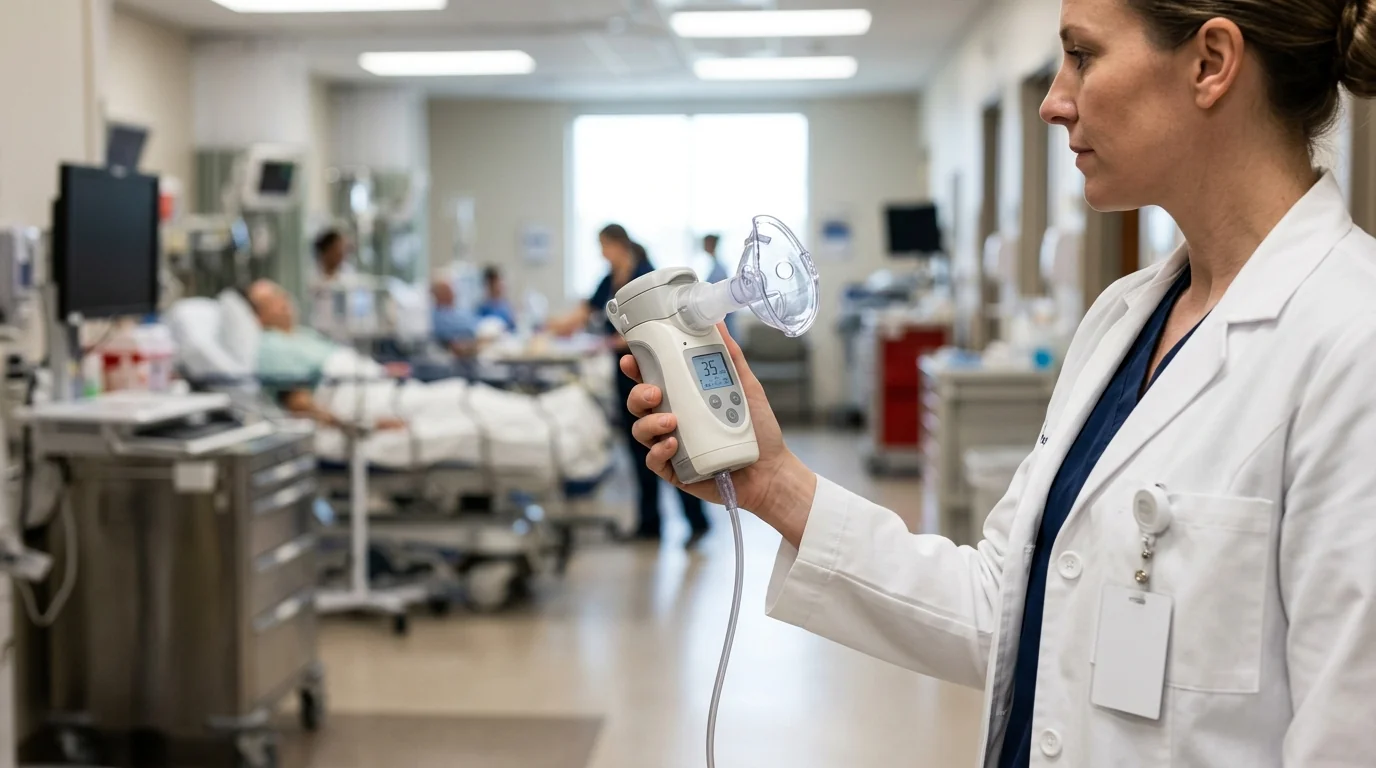 Before evaluating specific models, a thorough internal needs assessment is essential. A device perfectly suited for a small dental clinic is likely inadequate for a high-traffic hospital emergency department. Use this checklist to define your specific operational context.
1. Define Use-Case Volume and Environment:
- Low Volume (e.g., small specialty clinic, dental practice): Fewer than 5 uses per day. Focus on ease of cleaning and compact storage.
- Medium Volume (e.g., polyclinic, nursing home): 5-20 uses per day. Durability and availability of consumables become more significant factors.
- High Volume (e.g., hospital casualty, pediatric ward): Over 20 uses per day. Prioritise robust construction, rapid disinfection protocols, and service support. The environment dictates the form factor—is it for bedside use in a ward, rapid deployment in an emergency room, or for mobile health teams?
2. Profile Patient Demographics:
- Pediatric Use: Requires devices with low noise levels to reduce patient anxiety, and a certified Mass Median Aerodynamic Diameter (MMAD) suitable for smaller airways. The availability of correctly sized, soft-seal pediatric masks is non-negotiable.
- Geriatric Use: Simplicity of operation is key for both the patient and any attending caregiver. Models with single-button operation and clear indicators are preferable.
- General Adult Population: Standard adult masks and mouthpieces suffice, but consider patient mobility needs. A lighter, battery-operated unit may be required for ambulating post-operative patients.
Key Technical Specifications for Evaluation
Once the need is defined, you can assess devices against concrete technical benchmarks. Look for these specifications on the manufacturer's data sheet.
Nebulization Technology The core technology dictates the device's performance, noise, and suitability for certain medications.
- Jet (Compressor) Nebulizers: These are the traditional workhorses. They use a compressor to force air through the liquid medication, creating a fine aerosol mist. They are robust and effective for a wide range of medications, including more viscous solutions. Models like the AccuSure MD Compact Nebulizer exemplify how this technology can be packaged into a smaller footprint for clinical convenience.
- Vibrating Mesh Technology (VMT): These devices use a piezoelectric element to vibrate a mesh with thousands of laser-drilled holes, extruding the medication through as a uniform aerosol. They are virtually silent, highly efficient with minimal medication wastage, and extremely compact. However, they require meticulous cleaning to prevent clogging and may not be compatible with all high-viscosity or suspension-based medications.
Aerosol Particle Size (MMAD) This is arguably the most critical clinical specification. Mass Median Aerodynamic Diameter (MMAD) indicates the particle size. For medication to effectively reach the lower respiratory tract, the particle size must be within the 1-5 micron range. A device producing particles larger than 5 microns will result in medication depositing in the upper airways, reducing therapeutic efficacy. Always verify the manufacturer's stated MMAD.
Nebulization Rate and Medication Capacity
- Nebulization Rate: Measured in ml/minute, this indicates how quickly the device can aerosolize the medication. A typical clinical nebuliser will have a rate between 0.2 ml/min and 0.5 ml/min. A faster rate is not always better; it must align with the patient's breathing capacity and the prescribed treatment duration.
- Medication Cup Capacity: Typically ranges from 6 ml to 10 ml. Ensure the capacity is sufficient for the standard single-dose volumes used in your facility to avoid under-dosing or the need to refill mid-treatment.
Power Source and Portability For a "portable nebulizer," the power source is a defining feature.
- Mains Powered: Reliable for stationary use in clinics or wards.
- Rechargeable Battery: Essential for true portability and use during patient transport or in areas with unreliable power. Evaluate the battery type (Lithium-ion is preferred), operational time on a full charge, and the total recharge time.
- Disposable Batteries (AA/AAA): Common in personal mesh nebulizers, but less practical for high-volume institutional use due to recurring operational costs and management overhead.
Regulatory Compliance and Quality Assurance Checklist
Procuring a medical device requires rigorous due diligence on its quality and safety credentials.
- Certifications: Verify that the device has requisite certifications. Look for ISO 13485 (Quality Management for Medical Devices) and CE marking. This indicates the manufacturer adheres to international standards for safety and performance.
- Material Biocompatibility: The materials used for the medication cup, mask, and mouthpiece must be medical-grade and latex-free to prevent adverse reactions. Check for compliance with standards like ISO 10993.
- Disinfection Protocol: The user manual must provide clear, validated instructions for cleaning and disinfection between patients. Can components be autoclaved, or do they require specific chemical disinfectants? Understanding this is vital for your facility's infection control protocol and impacts operational workflow. This applies to every type of Nebulizer you might consider.
Beyond the Spec Sheet: Supplier Evaluation Criteria
The quality of the device is only one part of the equation. The reliability of the supplier is equally important for long-term operational success. When searching for an accusure md nebulizer supplier or a partner for any brand, consider these points.
- After-Sales Support and Warranty: What is the standard warranty period? What does it cover—only the compressor motor or the full unit? Crucially, what is the process for service and repairs? A supplier with an accessible, responsive service network in India is invaluable.
- Availability of Consumables: A common oversight is failing to plan for consumables. Confirm the long-term availability and lead times for proprietary or specific-fit items like air filters (for compressor models), medication cups, and masks. A device is rendered useless if its consumables cannot be reliably sourced. An evaluation of an
accusure nebulizer, for example, should include an assessment of its accessory supply chain. - Training and Implementation Support: A good supplier will offer to train your biomedical and nursing staff on the correct operation, cleaning, and basic troubleshooting for the specific नेबुलाइजर मशीन (nebulizer machine) you procure. This is especially important when introducing a new technology like VMT.
Common Procurement Pitfalls to Avoid
- Ignoring Total Cost of Ownership (TCO): A low initial unit cost can be misleading. Factor in the long-term cost of consumables (filters, masks, medication chambers), potential maintenance, and the operational cost of downtime if the device is unreliable.
- Mismatching Device to Environment: Sourcing a lightweight, consumer-grade mesh nebulizer for a high-turnover casualty ward is a recipe for premature failure. Match the device's durability and design to the intended clinical environment.
- Overlooking Cleaning Protocols: Failing to consider the time and complexity of the disinfection process can create significant bottlenecks for your staff and increase the risk of cross-contamination.
- Assuming Universal Medication Compatibility: Not all medications, especially certain steroid suspensions, are suitable for all nebulizer types. Always cross-verify medication compatibility with the device manufacturer's guidelines to prevent device damage and ensure therapeutic delivery.
Equip Your Facility Today
Selecting the right portable nebulizer is a technical decision that directly impacts patient care and operational efficiency. By moving beyond basic features and applying this structured evaluation checklist, procurement managers and clinical heads can ensure they source equipment that is safe, effective, and perfectly aligned with their facility’s unique demands.
For your institutional requirements, explore a curated selection of clinically vetted medical devices and equipment on MedikaBazaar, India's largest B2B platform for medical supplies.
FAQs

