

Hospitals
Evaluating the Modern OT Table: A Clinical and Operational Perspective
A detailed guide for hospital procurement heads on selecting an OT table. Covers key movements, C-arm compatibility, load capacity, and maintenance protocols.


In any operating theatre, the OT table is far more than a surface for the patient. It is a dynamic, multi-functional device that directly impacts surgical access, patient safety, imaging integration, and team ergonomics. Selecting the right operating table requires a detailed understanding of its mechanical capabilities, the demands of your surgical specialties, and the operational realities of maintenance and infection control.
This guide provides a peer-to-peer overview of the critical factors to consider when evaluating an OT table for a new setup or a departmental upgrade. We will move beyond catalogue specifications to discuss what truly matters in day-to-day clinical practice.
Core Functionality: Understanding OT Table Movements and Articulation
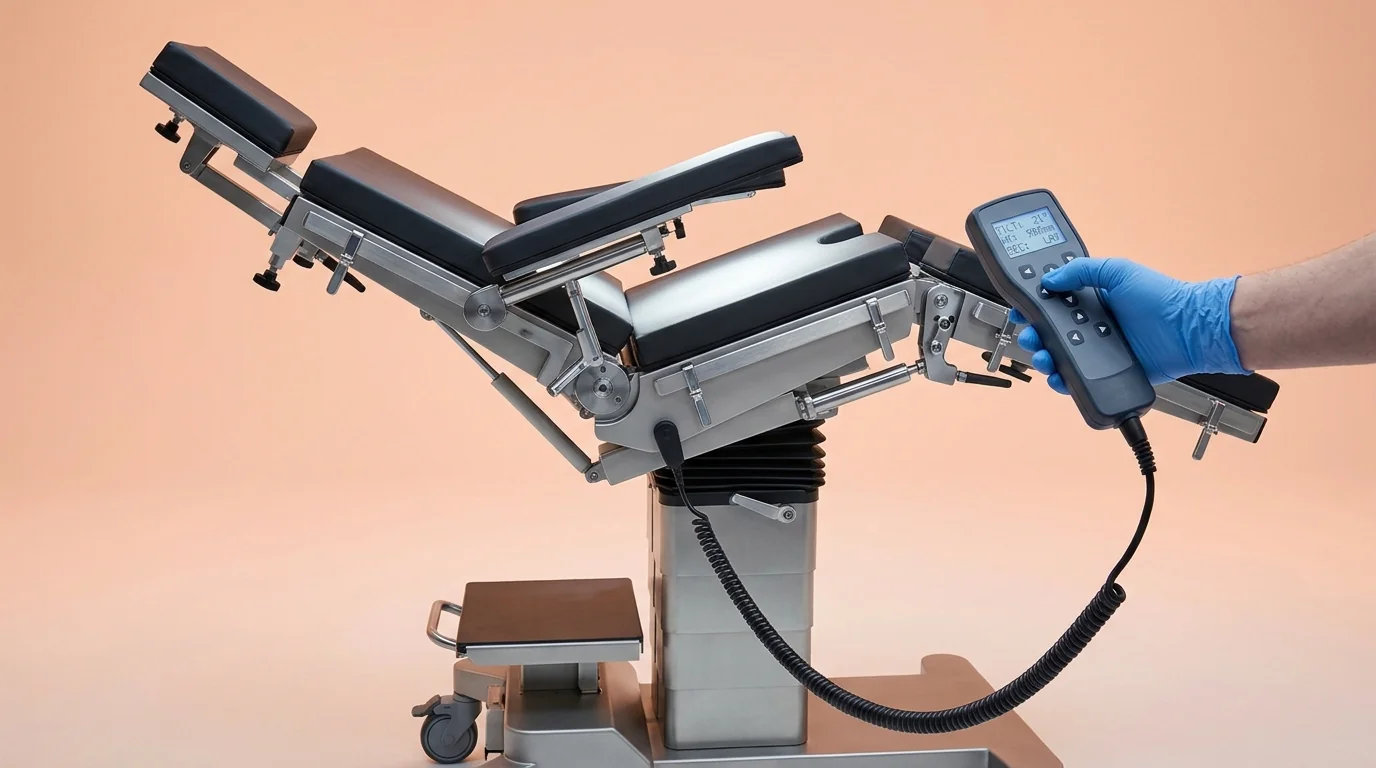 The precision and range of an OT table's movements are its most fundamental attributes. Each articulation serves a specific clinical purpose, enabling optimal surgical site exposure and physiological management.
Key table movements include:
- Height Adjustment (Up/Down): This is essential for surgeon ergonomics. A proper table height reduces fatigue and strain during long procedures, allowing the surgical team to maintain a comfortable and stable posture.
- Trendelenburg & Reverse Trendelenburg: Tilting the table head-down (Trendelenburg) uses gravity to shift abdominopelvic organs for better exposure in lower abdominal and pelvic surgeries. It's also used in managing hypotensive episodes. The head-up (Reverse Trendelenburg) position is used in head and neck procedures to reduce venous congestion and for certain laparoscopic surgeries.
- Lateral Tilt (Right/Left): Tilting the patient side-to-side is critical for procedures like nephrectomy, thoracotomy, and certain spinal surgeries, again using gravity to improve access and visibility.
- Longitudinal Slide (Head/Foot): This function is non-negotiable for any OT planning to use a C-arm. It allows the patient to be moved longitudinally over the table base, enabling a wide imaging window from head to toe without having to move the C-arm gantry or the table base itself.
- Flex / Reflex (Jackknife Position): Creating a V-shape (flex) or an inverted V-shape (reflex) is necessary for specific procedures, particularly in spinal surgery, proctology, and urology, to open up intervertebral spaces or provide access to the perineum.
- Sectional Adjustments: The ability to independently adjust the head, back, seat, and leg sections allows for precise patient positioning, from a seated position for neurosurgery to lithotomy for urological or gynaecological procedures.
Power and Control Mechanisms: Electro-Hydraulic vs. Fully Electric
The driving mechanism of the table determines its smoothness, speed, and reliability.
At a glance:
- Electro-Hydraulic: This is the most common and robust system. It uses an electric pump to power hydraulic cylinders that drive the table's movements. These tables are known for their high load capacity, smooth articulation, and reliability. Most high-end models include a manual override or an independent battery backup system, which is a critical safety feature in case of a power failure.
- Fully Electric: These tables use individual electric motors or actuators for each movement. They can offer extremely precise, quiet, and sometimes faster adjustments. However, they can be more complex electronically, and maintenance may require specialised technical expertise.
- Manual/Hydraulic: Primarily found in smaller clinics or minor procedure rooms, these tables use manual pumps (foot or hand-operated) for height adjustment and mechanical locks for other positions. While functional for basic procedures, they lack the precision and ease of use required for complex, multi-hour surgeries.
The control interface—typically a wired, liquid-resistant handheld remote—is the primary point of interaction. Look for intuitive controls with clear icons. A secondary control panel on the table column itself is a valuable backup.
Critical Evaluation Criteria for OT Table Procurement
When comparing models, move beyond the basic specifications and assess these practical, high-impact features.
Patient Load Capacity A standard table typically supports 150-220 kg. However, with the rising incidence of bariatric cases, sourcing a table with a capacity of 250 kg, 300 kg, or even higher is a strategic decision. It's crucial to verify that this weight capacity applies to all articulations, not just a static, centered load.
Radiolucency and C-Arm Compatibility For orthopaedics, neurosurgery, vascular surgery, and interventional procedures, this is a primary decision factor. A radiolucent tabletop, typically made of carbon fibre or high-pressure laminate, allows X-rays to pass through with minimal obstruction. Key considerations are:
- The size of the metal-free imaging window.
- The extent of the longitudinal slide function.
- The material of the side rails and clamps, which can create artifacts if they are in the imaging field.
Modularity and Accessory Compatibility A modular design allows a single OT table to be adapted for multiple specialties, maximizing its utility. Evaluate the range and ease of attachment for essential accessories:
- Orthopaedic attachments (traction bars, leg spars)
- Neurosurgery headrests and skull clamps (e.g., Mayfield-style)
- Lithotomy stirrups or leg holders
- Arm boards and lateral supports
- Anaesthesia screens and instrument trays
Confirm that the side rails are a standard size to ensure compatibility with both the manufacturer's accessories and your existing equipment.
Base Design and Mobility The table's base impacts both stability and C-arm access. A low-profile, T-shaped base provides stability, while a more centered column base can offer superior access for imaging equipment and the surgical team's feet. A robust, single-touch floor lock is mandatory to ensure the table is completely immobile during the procedure. High-quality castors are essential for easy movement for cleaning and room repositioning.
Mattress Quality and Infection Control For procedures lasting several hours, the mattress is critical for preventing pressure ulcers. Look for high-density, viscoelastic, or gel-infused foam mattresses that provide effective pressure redistribution. The mattress cover must be antistatic, waterproof, flame-retardant, and resistant to common hospital disinfectants. Welded or sealed seams are superior to stitched ones, as they prevent fluid ingress and bacterial growth.
Operational and Safety Protocols in the Indian Context
A high-quality OT table is only effective when supported by rigorous operational protocols.
Pre-Operative Checklist Before the first case of the day, the OT team should perform a quick functional check:
- Confirm all powered movements are smooth and responsive using the remote.
- Test the floor lock to ensure it engages securely.
- Verify the table returns to the neutral/zero position correctly.
- For battery-powered tables, check the charge level.
- Ensure all necessary attachments for the scheduled cases are present and in good working order.
Maintenance and Compliance Regular maintenance is non-negotiable for patient safety and device longevity.
- Daily Cleaning: The table and mattress must be thoroughly cleaned and disinfected between every case according to your hospital's infection control policy.
- Preventive Maintenance: A formal Annual Maintenance Contract (AMC) or Preventive Maintenance Contract (PMC) with a qualified biomedical engineering team is critical. This should include periodic calibration, inspection of hydraulic/electric systems, checking for fluid leaks, and load testing.
- Standards: Ensuring your OT table, and indeed all your capital Medicalequipments, comes from manufacturers adhering to quality management systems like ISO 13485 is a foundational step in risk management. CE marking is another indicator of compliance with European health and safety standards.
Equip Your Facility Today
Selecting the right OT table is a long-term investment in surgical capability, patient safety, and operational efficiency. By carefully evaluating the interplay of movement, modularity, imaging compatibility, and maintenance requirements against your facility's specific clinical needs, you can make an informed decision that will serve your surgeons and patients for years to come.
For a detailed look at various operating tables that meet these demanding clinical criteria, explore the comprehensive range available on MedikaBazaar.
FAQs