

Hospitals
Evaluating Lotus Silkus Sutures for Your Surgical Practice
An in-depth guide for clinicians and procurement heads on the properties, applications, and operational considerations of Lotus Silkus sutures in surgery.


As clinical and operational leaders, our choice of surgical consumables has a direct impact on patient outcomes and procedural efficiency. Among the most fundamental of these is the surgical suture. While the market is filled with advanced synthetic options, the braided silk suture remains a fixture in operating theatres for its unique and reliable characteristics. Understanding the specific properties of a material like the lotus silkus suture is crucial for informed procurement and optimal clinical application.
This guide provides a peer-to-peer breakdown of what you need to know about this non-absorbable, natural suture material. We will move beyond the spec sheet to discuss its composition, handling characteristics, appropriate clinical uses, and the operational factors that matter in a busy Indian healthcare facility.
Core Composition and Material Properties
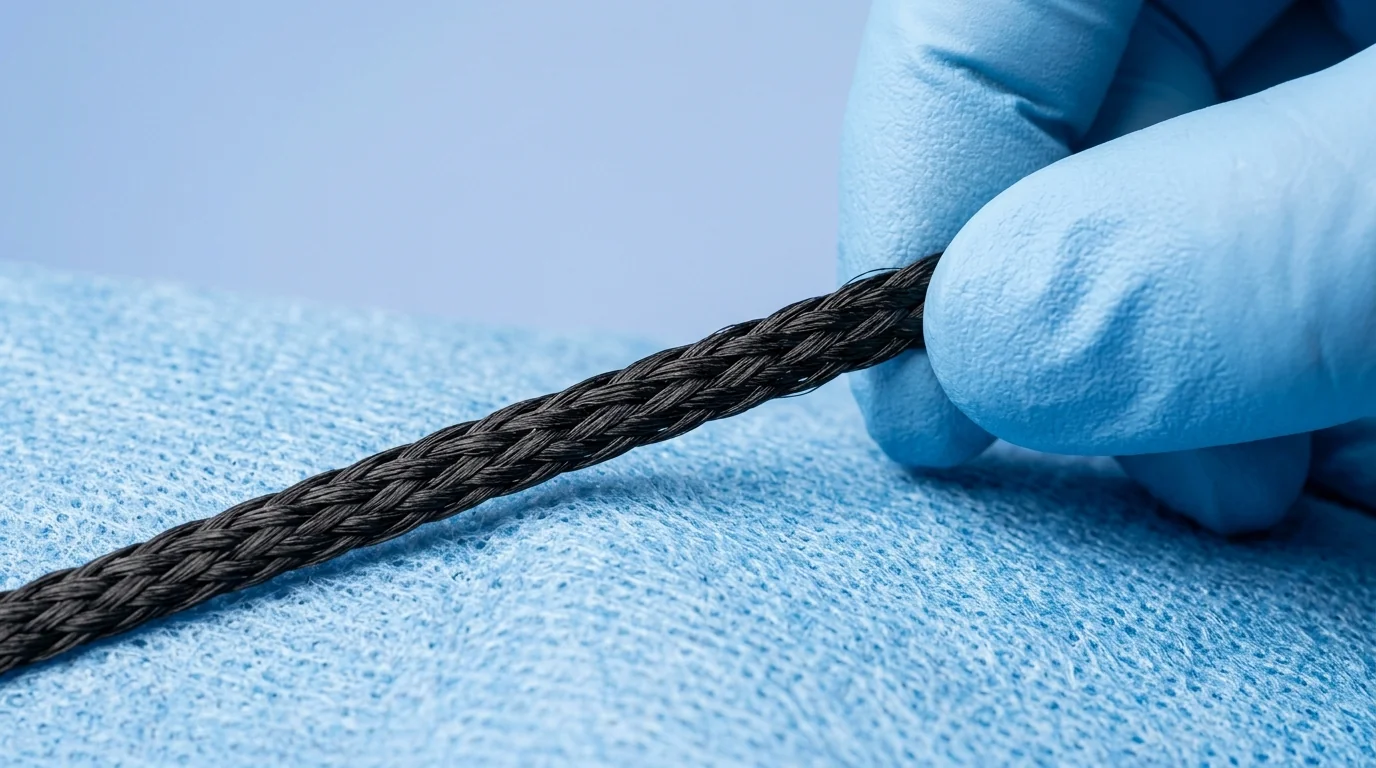 The foundation of a silk suture's performance lies in its natural origin and processing. This directly influences its strength, handling, and interaction with patient tissue.
- Material Source: Silk sutures are derived from the organic protein fibre fibroin, produced by the larvae of the silkworm Bombyx mori. This natural origin is key to its unique texture and handling.
- Processing and Structure: The raw silk is processed to remove the gummy outer layer (sericin), which can cause a more pronounced tissue reaction. The purified fibroin threads are then precision-braided to form a multifilament suture. This braided structure is fundamental to its high tensile strength and excellent knot security.
- Coating: To enhance its performance, the braided suture is typically coated with a biocompatible material, such as wax or a silicone compound. This coating smooths the surface, reducing tissue drag (sawing effect) during placement and improving its handling characteristics.
- Tensile Strength and Absorption Profile: A Lotus Silkus suture is classified as non-absorbable. However, this requires a nuanced understanding. It exhibits high initial tensile strength, but being a natural protein, it is gradually broken down by proteolytic enzymes in the body. It typically loses most of its tensile strength within one year and is usually fully absorbed by two years. Therefore, it is not suitable for applications requiring permanent tissue approximation, such as in cardiovascular prostheses.
Clinical Applications: Where Silk Sutures Excel
The exceptional handling of silk makes it a preferred material in numerous surgical scenarios where precision and knot security are paramount. Its use, however, must be weighed against its higher tissue reactivity compared to synthetic alternatives.
Common Procedural Uses:
- General Surgery: Frequently used for ligating blood vessels and securing surgical drains. It is also an excellent option for skin closure, provided the sutures are removed post-operatively.
- Ophthalmic Surgery: The fine gauges and superb handling of silk make it a valuable tool for delicate procedures on the cornea and other ocular structures where precise placement is critical.
- Dental and Oral Surgery: Ideal for suturing mucosal flaps and extraction sites due to its soft feel and secure knotting, which minimises patient discomfort.
- Securing Devices: Its reliability makes it a standard choice for securing catheters, drains, and other temporary medical devices to the skin.
When outfitting your facility, a clear view of all available materials is essential. Reviewing a comprehensive catalogue of surgical suture types and sizes allows you to match the specific needs of each department—from general surgery to specialised units—with the most appropriate materials.
Sizing and Needle Selection: A Practical Guide
Specifying the correct suture requires matching the USP size and needle configuration to the tissue type and surgical goal.
Suture Sizing (USP): The diameter of the suture is denoted by the United States Pharmacopeia (USP) system. A higher number followed by a zero indicates a smaller diameter (e.g., 5-0 is thinner than 3-0).
- Fine Tissues (Ophthalmology, Microsurgery): 6-0 to 10-0
- Skin Closure (Face): 5-0 to 6-0
- General Skin/Fascia Closure: 3-0 to 4-0
- Heavy Fascia/Drain Fixation: 2-0 to 0
Surgical Needle Selection: The needle must carry the suture through tissue with minimal trauma. The choice depends on tissue density.
- Reverse Cutting: Features a triangular body with the third cutting edge on the outer curvature. This design is highly effective for penetrating tough tissue like skin or fascia with a reduced risk of tissue cutout.
- Taper Point: A round-bodied needle that tapers to a sharp point. It is atraumatic and ideal for soft, easily pierced tissues like peritoneum, muscle, and gastrointestinal tissue.
- Tapercut: A hybrid needle with a taper point body and a cutting tip. It offers the penetration of a cutting needle with the minimized trauma of a taper point, useful for dense, fibrous tissues.
For many standard procedures, a combination like the Lotus Silkus Suture 3-0 with a reverse cutting needle provides a versatile option for skin closure and drain fixation.
Operational and Procurement Considerations
Beyond clinical use, several operational factors must be managed to ensure patient safety and inventory control.
- Sterility and Packaging: Sutures are supplied sterile in individually sealed, tamper-evident packages. Before use, the integrity of each package must be visually inspected. They are typically sterilised using Ethylene Oxide (EtO) gas or gamma irradiation. Resterilisation in-house is strictly contraindicated as it compromises the material's integrity and sterility assurance.
- Storage: Sutures must be stored in a cool, dry environment, away from direct sunlight and heat, to preserve their tensile strength and prevent the packaging from becoming brittle.
- Quality Compliance: When sourcing, ensure the product complies with the necessary quality standards. Look for manufacturing under an ISO 13485 certified quality management system and adherence to specifications laid out in the Indian Pharmacopoeia (IP), United States Pharmacopeia (USP), or European Pharmacopoeia (EP).
Silk vs. Synthetic Non-Absorbable Sutures: An Operational Comparison
Choosing between silk and a synthetic like nylon or polypropylene involves a trade-off between handling and tissue reactivity.
| Feature | Silk (e.g., Lotus Silkus) | Nylon (Monofilament) | Polypropylene (Monofilament) |
| Origin | Natural, Protein-based | Synthetic, Polyamide | Synthetic, Polyolefin |
| Structure | Braided | Monofilament | Monofilament |
| Tensile Strength Retention | Loses strength over 1 year | Gradual loss over years | Permanent, inert |
| Handling & Pliability | Excellent, minimal memory | Stiffer, has more memory | Very smooth, can be slippery |
| Knot Security | Excellent | Good, requires extra throws | Fair, requires multiple throws |
| Tissue Reactivity | Moderate to High | Low | Very Low (Inert) |
| Bacterial Wicking Risk | Potential (braided structure) | Low | Very Low |
This table underscores silk's primary advantage: its superior handling and knot-tying feel. However, for permanent implantation or in cases with a high risk of infection, the inertness of a synthetic monofilament like polypropylene is often the more prudent choice.
Equip Your Facility with Confidence
Selecting the right suture is a decision that balances surgical technique, patient factors, and material science. The Lotus Silkus suture, with its natural composition and excellent handling, holds a well-deserved place in the surgical armamentarium. By understanding its specific properties and operational requirements, you can ensure your teams are equipped with reliable, effective tools for a wide range of procedures.
For your facility's needs, explore MedikaBazaar's extensive range of high-quality surgical consumables to ensure you have the right materials for every clinical demand.
FAQs

