

Dentist
Evaluating Endomotors for Modern Endodontic Practice
A practical guide for clinicians and procurement managers on selecting, using, and maintaining endomotors for efficient and safe root canal therapy.


Modern endodontics demands precision, efficiency, and predictable outcomes. While manual instrumentation has its place, the operational standard for root canal therapy is now mechanised preparation. At the heart of this shift are endomotors, the specialised electric devices that provide the controlled power and motion necessary to drive modern nickel-titanium (NiTi) file systems.
For any practice head or procurement lead, understanding the functional nuances of these devices is not just about equipping a clinic—it's about investing in a core clinical capability. A well-chosen endomotor directly impacts procedure time, patient comfort, and the clinical success rate by minimising iatrogenic errors and standardising canal shaping. This guide breaks down the essential criteria for evaluating these critical instruments from a clinical and operational perspective.
The Shift from Manual to Mechanised Canal Preparation
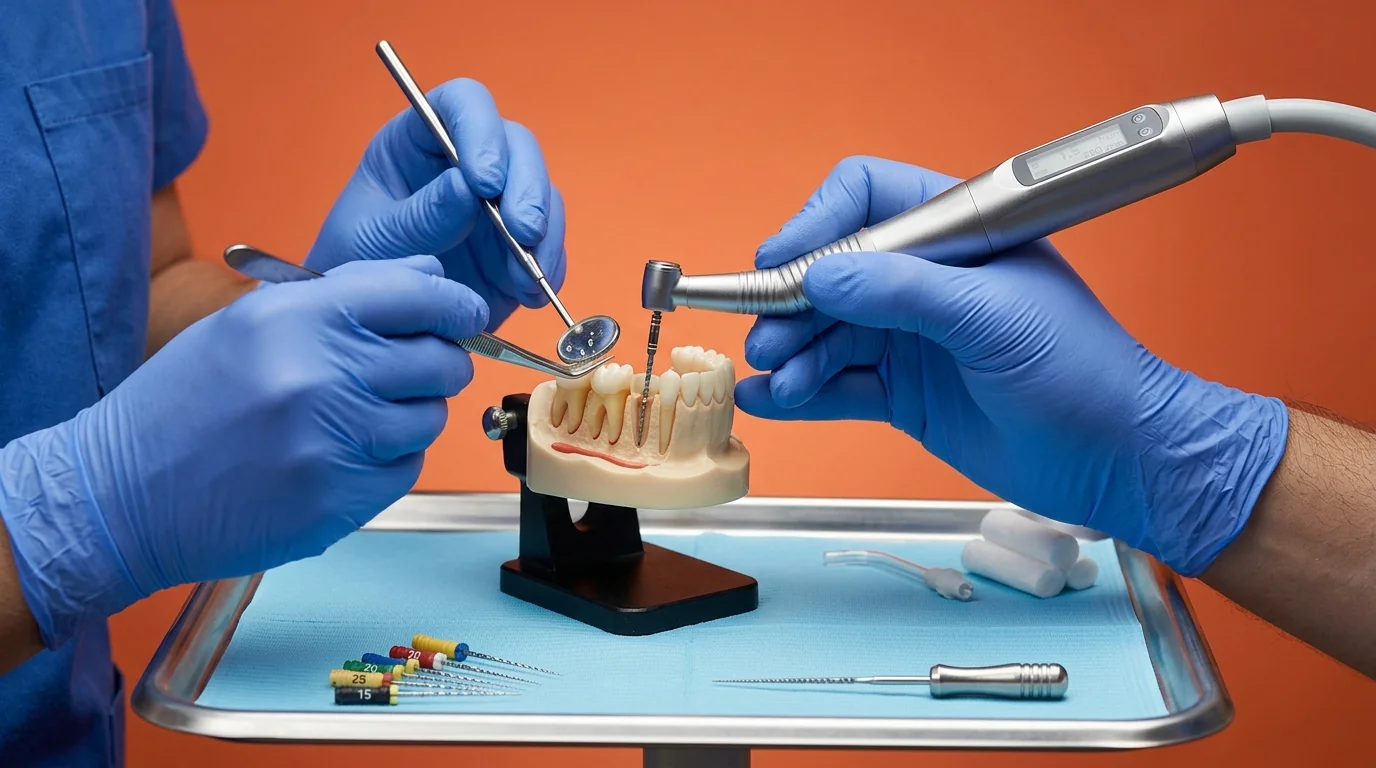 The limitations of manual stainless steel hand files are well-documented by any practising clinician. Operator fatigue, the significant time required for complex canal anatomies, and the inherent risks of procedural errors such as ledging, transportation, or perforation are constant challenges.
Mechanised instrumentation, powered by an endomotor, directly addresses these issues. By delivering consistent rotational or reciprocating motion at a precisely controlled speed and torque, these systems enable:
- Improved Canal Centering: NiTi files driven by an endomotor are better able to follow the natural canal curvature, reducing the risk of straightening the canal (transportation).
- Enhanced Debris Removal: The continuous motion facilitates more effective irrigation and removal of pulpal tissue and dentinal debris.
- Reduced Procedure Time: Mechanised shaping is significantly faster than manual techniques, improving both patient tolerance and clinic throughput.
- Increased Predictability: Standardised file sequences and motor settings lead to more consistent and repeatable canal shapes, which is fundamental for effective obturation.
Core Components and Operating Principles
At a high level, all endomotors share a similar architecture. Understanding these components is the first step in evaluating different models for your facility.
- Control Unit: This is the central processing unit of the device. It houses the user interface, which can range from simple dials and buttons to a full-colour LCD or OLED screen. The control unit allows the operator to set and monitor critical parameters like speed, torque, and motion mode. Many units come with pre-programmed settings for popular NiTi file systems.
- Micromotor: This is the engine that generates the motion. Modern, high-quality endomotors use brushless DC micromotors. These are quieter, produce less vibration, have a longer operational lifespan, and provide more consistent torque delivery compared to older, brushed motor designs.
- Handpiece and Contra-angle Head: The micromotor connects to a handpiece, which is fitted with a contra-angle head that holds the endodontic file. Look for contra-angles with a reduction gear (e.g., 16:1) to translate the motor’s high speed into the low-speed, high-torque motion required for canal preparation. A small head size is also a significant advantage for improving visibility, especially in posterior teeth.
- Power Source: Endomotors are available in both corded and cordless configurations. Corded models offer continuous, uninterrupted power, while cordless, battery-powered models provide superior portability and freedom of movement, eliminating cord drag. The choice often comes down to operator preference and clinic layout.
Key Functional Parameters for Clinical Evaluation
When specifying an endomotor, move beyond the spec sheet and consider how these functions translate to daily clinical practice.
1. Torque Control and Auto-Reverse This is arguably the most critical safety feature. Torque is the rotational force applied to the file. If a file binds in the canal, excessive torque will cause it to fracture.
- Function: Torque control allows you to set a maximum torque limit (measured in Ncm). When the motor senses that this limit is being approached or exceeded, it will automatically stop or reverse rotation to disengage the file.
- Clinical Impact: This single feature is the primary defence against intracanal file separation, one of the most significant complications in endodontic therapy. An endomotor without reliable, adjustable torque control is not suitable for modern practice.
2. Speed Control The rotational speed (in RPM) must be adjustable to match the manufacturer's recommendations for the specific NiTi file system you are using.
- Function: Most endomotors offer a range from approximately 150 to 1,000 RPM. The ability to precisely control this speed is essential for both safety and cutting efficiency.
- Clinical Impact: Using a file at the incorrect speed can increase the risk of cyclic fatigue fracture or reduce its cutting effectiveness.
3. Motion Modes: Rotary vs. Reciprocation The way the file moves is a key differentiator between systems.
- Continuous Rotation: The file rotates 360 degrees in one direction (usually clockwise). This is the traditional motion for most rotary NiTi systems.
- Reciprocation: The file rotates through a large cutting angle in one direction and a smaller releasing angle in the opposite direction. This back-and-forth motion is designed to reduce torsional and cyclic fatigue on the file, potentially lowering the risk of fracture. Many single-file systems rely on this motion.
- The Verdict: A modern endomotor should ideally offer both continuous rotation and reciprocation modes to provide the flexibility to work with any major file system your clinicians prefer.
4. Integrated Apex Locator This feature combines two separate devices into one, creating a significant workflow efficiency.
- Function: An integrated apex locator uses electronic impedance measurement to provide a real-time reading of the file's position within the root canal. The reading is displayed on the control unit, often with an audible alert as the file tip approaches the apical foramen.
- Clinical Impact: This reduces the need for frequent working length confirmation radiographs, saving time and reducing radiation exposure for the patient. Some advanced motors can be programmed to automatically stop or reverse when the apex is reached. For instance, models such as the Eighteeth Medical E-Connect Endomotor integrate both motor control and apex location, streamlining the entire shaping process.
Operational Considerations for Your Practice
Beyond clinical features, consider how an endomotor will integrate into your daily operations.
Ergonomics and Workflow A lightweight, well-balanced handpiece reduces operator fatigue during long or complex procedures. For cordless models, evaluate the battery life—does it last a full day of typical use? How long does it take to recharge? The placement of controls and the clarity of the display are also critical for seamless use during a procedure.
Sterilisation and Maintenance The handpiece shell and contra-angle head must be fully autoclavable to meet infection control standards. Review the manufacturer’s protocol for cleaning and, critically, lubrication. Proper lubrication after each cycle is essential for the longevity of the internal gears and bearings. Proper maintenance is a cornerstone of any well-run practice, and this extends across all your Dental equipment.
System Compatibility Ensure the endomotor you select is an "open" system, meaning it is not locked to a single brand of files. A motor with a programmable library allows you to input and save the specific speed and torque settings for all the different file systems used in your practice, providing maximum flexibility and safety.
Explore our curated selection of endodontic equipment on MedikaBazaar to find the right solutions that align with your practice's clinical standards and operational needs.
FAQs

