

Hospitals
Evaluating the Dora 6000 for Your Hemodialysis Unit: A Technical Overview
A detailed guide for clinicians and procurement heads on the Dora 6000 hemodialysis machine's features, safety systems, and operational considerations for Indian dialysis units.


For any nephrology department or standalone dialysis centre, the reliability and precision of your hemodialysis machines are non-negotiable. These units are the workhorses of patient care, running for long hours under demanding conditions. When evaluating equipment, we look beyond the basic specifications to understand its real-world performance, safety mechanisms, and operational footprint. This guide provides a focused, technical breakdown of the dora 6000 hemodialysis machine from an operational and clinical perspective.
We will examine its core functionalities, safety systems, and practical considerations for integration into an Indian healthcare facility, helping you make an informed decision based on clinical efficacy and workflow efficiency.
Core Clinical Functions and Volumetric Control
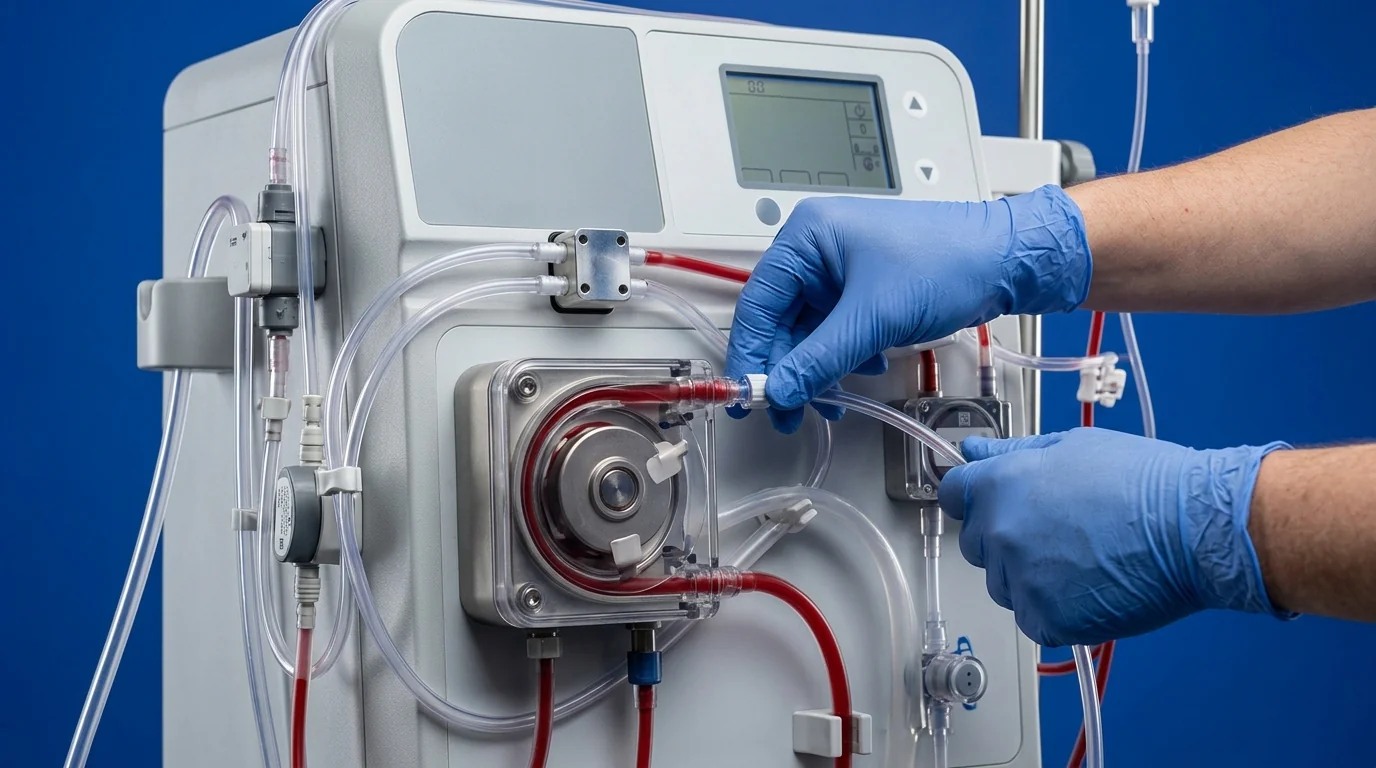 The primary function of any hemodialysis machine is to perform safe and effective extracorporeal therapy. The Dora 6000 is built around several key systems that ensure this.
- Volumetric Ultrafiltration (UF) Control: Precision in fluid removal is critical to prevent hypotension and other patient complications. The machine utilizes a closed-loop volumetric control system with two precision pumps, ensuring the prescribed UF volume is accurately removed, irrespective of transmembrane pressure (TMP) fluctuations. This provides a significant layer of safety and predictability over older, pressure-based control systems.
- Dialysate Preparation and Monitoring: The system facilitates online preparation of dialysate from acid and bicarbonate concentrates. A critical integrated feature is the dual-conductivity and temperature monitoring system. This real-time feedback loop constantly verifies that the dialysate composition is within safe, prescribed limits before it reaches the dialyzer, preventing ionic or thermal imbalances.
- Blood Circuit Management: The blood pump is designed for accurate and stable flow rates, which is essential for achieving the prescribed dialysis dose (Kt/V). The arterial and venous pressure sensors provide continuous monitoring of the extracorporeal circuit, alerting clinicians to potential issues like line kinks, access problems, or filter clotting.
User Interface and Workflow Integration
The efficiency of a dialysis unit is heavily dependent on the usability of its machines. A complex interface can lead to programming errors and increased turnaround time between patients.
The Dora 6000 features a large LCD touch screen that graphically displays key treatment parameters, pressure trends, and alarm statuses. This visual approach allows technicians and nurses to assess the treatment status at a glance.
From an operational standpoint, the machine's design considers the entire workflow:
- Automated Priming and Rinsing: Streamlines the setup process, reducing manual intervention and potential for contamination.
- Programmable Disinfection Cycles: Allows for automated heat or chemical disinfection routines to be run overnight or during off-hours, ensuring the machine is ready for the next shift. This is crucial for maintaining hygiene standards and preventing cross-contamination in high-volume centres.
- Data Logging: The system typically records treatment parameters and alarms, which is essential for quality audits, patient record-keeping, and troubleshooting.
Key Safety and Monitoring Systems
Patient safety during hemodialysis is paramount. The Dora 6000 integrates multiple, often redundant, safety systems to protect against common and critical adverse events. Understanding these is essential for any clinical or procurement head.
- Air Embolism Detection: An ultrasonic sensor on the venous bloodline is a critical safety feature. It is designed to detect microbubbles and immediately clamp the line and stop the blood pump if air is present, preventing a potentially fatal air embolism.
- Blood Leak Detection: An optical sensor continuously monitors the spent dialysate for any trace of blood. A positive detection, indicating a potential rupture in the dialyzer membrane, triggers an immediate audio-visual alarm and bypasses the dialyzer to protect the patient.
- Integrated Heparin Pump: The programmable syringe pump allows for precise, continuous administration of heparin throughout the treatment, calibrated to the patient's specific anticoagulation needs.
- Battery Backup: An internal battery provides essential power for a limited duration during an outage. This is not for running a full treatment but for ensuring the safe return of the patient's blood and an orderly shutdown of the procedure, a critical feature in areas with unstable power grids.
The robust safety architecture is a primary evaluation point when considering the Dora 6000 hemodialysis system for your facility.
Operational Considerations for Indian Dialysis Units
Beyond the clinical features, the practical realities of running a unit in India must be considered.
- Water Quality Requirements: The machine requires a reliable supply of reverse osmosis (RO) treated water that meets AAMI or ISO standards for hemodialysis. The performance of the machine and the health of your patients are directly linked to the quality of your water treatment plant.
- Consumables Compatibility: The Dora 6000 is generally designed for use with standard, universally compatible consumables like bloodlines, dialyzers, and concentrates. This is a significant advantage for procurement, as it avoids vendor lock-in and allows for more flexible sourcing. Ensuring compatibility with your existing supply chain for consumables is a critical step in procurement. For a wider view of equipment and supplies, you can explore our full Nephrology range.
- Maintenance and Calibration: Routine maintenance involves daily cleaning, regular disinfection cycles, and periodic calibration of sensors (pressure, temperature, conductivity) as per the manufacturer's service manual. The accessibility of trained biomedical engineers and spare parts should be a key part of your evaluation process.
Evaluating the Dora 6000 for Your Facility: A Checklist
When assessing this machine for your unit, run through these practical questions with your clinical and biomedical teams:
- Patient Volume and Duty Cycle: Can the machine withstand the rigours of running two or three shifts a day, six days a week?
- Specialised Therapies: Does it support the treatment modalities you require, such as sequential ultrafiltration (IUF) or sodium profiling, which can be beneficial for haemodynamically unstable patients?
- Staff Skill Level: Is the interface intuitive enough for your current team, and what is the learning curve for new technicians?
- Facility Infrastructure: Do you have the necessary space, stable power (with UPS backup), and a compliant RO water system to support the machine?
- Regulatory Compliance: Does the machine carry the necessary certifications (e.g., CE, ISO 13485) required for your facility's quality standards?
When evaluating its capabilities against other available dialysis machines, consider both standard and specialised therapy requirements for your patient population.
Equip Your Facility Today
Selecting the right hemodialysis equipment is a foundational decision for any nephrology unit. By focusing on clinical precision, operational reliability, and robust safety features, you ensure high standards of care for your patients. For detailed specifications and to explore options for your centre, browse the MedikaBazaar platform.
FAQs

