

Hospitals
Equipping for Emergencies: A Clinical Guide to Selecting a Medical Crash Cart
An essential guide for hospital procurement managers on selecting the right medical crash cart. Covers material, design, drawer configuration, and operational factors.


In any clinical setting, from the ICU to a dental operating suite, the medical crash cart is more than a piece of furniture; it is the central nervous system of your emergency response. A well-organized, instantly accessible, and correctly equipped cart can significantly impact patient outcomes during a Code Blue. The process to select and order a medical crash cart for your facility is therefore not a simple procurement decision but a critical investment in patient safety and operational readiness.
This guide is designed for clinical and operations heads. It bypasses marketing speak to focus on the practical, operational, and material considerations that matter when evaluating a crash cart for institutional use. We will cover material science, design ergonomics, and the maintenance protocols that ensure your cart is always ready.
The Core Anatomy of an Effective Crash Cart
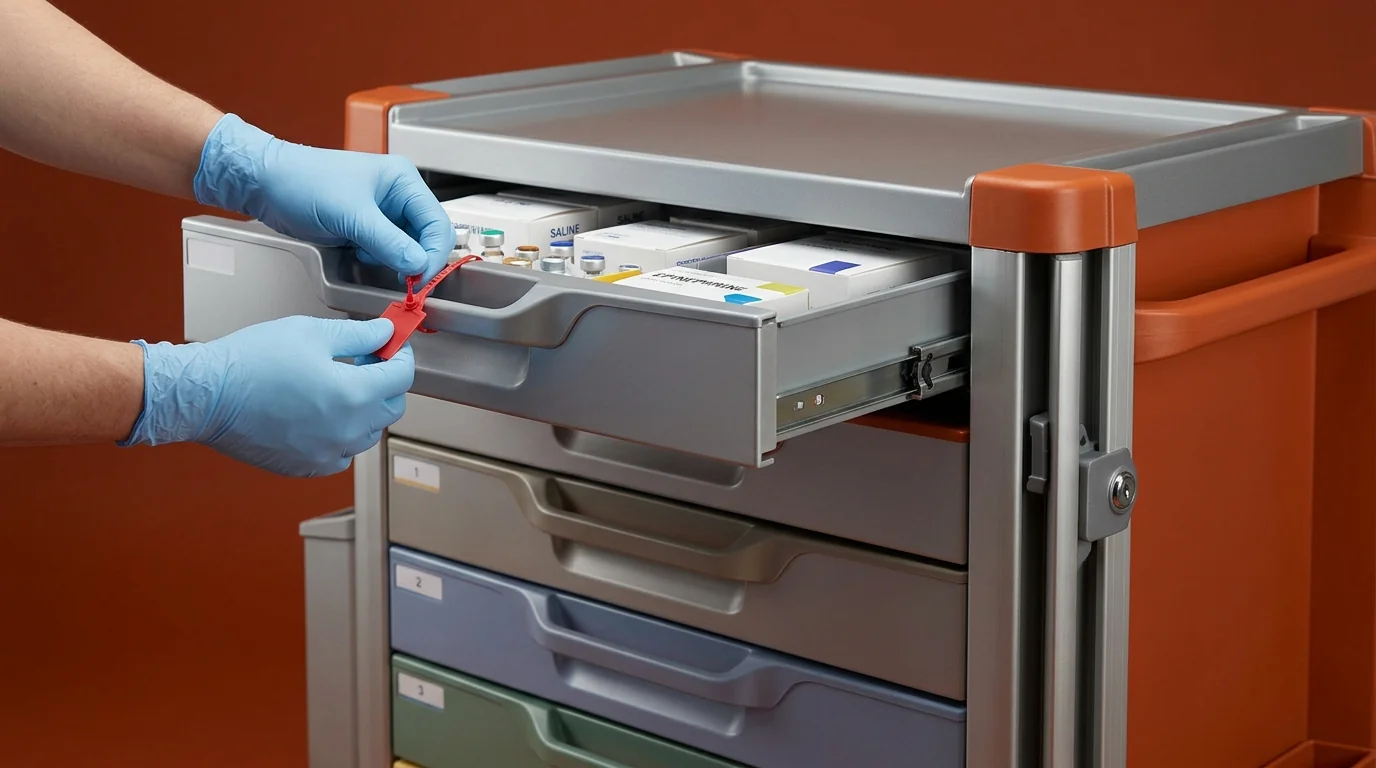 Before delving into specifications, it's essential to understand the cart as an integrated system. Every component serves a purpose dictated by the urgency of a medical emergency. A functionally superior
 crash cart is defined by its speed of deployment, logical organization, and durability.
Key functional zones include:
- Top Surface/Defibrillator Shelf: A secure, non-slip platform, typically with raised edges, to hold a defibrillator/monitor. It must be accessible without obstructing access to the top drawer.
- Drawer System: The heart of the cart. This is where medications, airway equipment, and IV supplies are stored. The configuration must be logical and standardized across your facility.
- Side Attachments: These extend the cart's functionality. Standard attachments include an IV pole, an oxygen cylinder holder, a cardiac board (for effective CPR), and often holders for suction units, sharps containers, and waste bins.
- Chassis and Casters: The foundation that allows for rapid, controlled movement. The quality of the frame and wheels determines how easily the cart can be navigated through crowded corridors and positioned at the bedside.
Key Evaluation Criteria for Your Facility's Needs
When selecting a crash cart, moving beyond the datasheet to assess build quality and functional design is paramount. Consider these factors from a clinical and operational perspective.
Material and Construction: The Foundation of Durability
The choice of material directly impacts the cart's lifespan, infection control compliance, and maintenance overhead.
- Stainless Steel (SS): The benchmark for high-use clinical environments. Grade 304 SS offers excellent corrosion resistance, is non-porous, and withstands harsh chemical disinfectants without degradation. It is the preferred choice for OTs and ICUs. Sourcing from a reputable
stainless steel hospital crash cart supplierensures you are getting the specified grade and weld quality. - Mild Steel (MS) with Powder Coating: A common and effective alternative. A thick, high-quality epoxy powder coat provides a durable, corrosion-resistant finish. The primary vulnerability is deep scratches or chips that expose the underlying steel to oxidation. Regular inspection is key.
- ABS Polymer: Acrylonitrile Butadiene Styrene (ABS) is a high-impact thermoplastic. Carts made from ABS are lightweight, corrosion-proof, and can be moulded into ergonomic designs with integrated features. They are easy to clean, but may not offer the sheer structural rigidity of a fully welded steel frame.
Mobility and Stability: The "Get There Fast" Factor
A cart that is difficult to move is a liability.
- Caster Specifications: Look for heavy-duty, anti-static casters of at least 125mm (5 inches) in diameter. Polyurethane wheels with ball bearings offer a smooth, quiet roll over various floor surfaces. At least two casters must have reliable, easy-to-engage brakes, preferably on diagonal corners for maximum stability.
- Protective Buffers: Rubber or polymer corner bumpers are non-negotiable. They protect the cart, walls, and doorways during rapid transit. A full-wrap bumper at the base offers the best protection.
Drawer Configuration and Security
Organization saves lives. The drawer system must support your standardized stocking protocol.
- Drawer Layout: A typical configuration includes two shallow drawers for medications and intubation supplies, followed by three deeper drawers for IV fluids, circulation supplies, and paediatric equipment. Ensure the drawers operate smoothly on ball-bearing slides and can extend fully for complete access.
- Internal Dividers: Adjustable drawer dividers are essential for keeping ampoules, vials, syringes, and small equipment segregated and organized. This prevents items from shifting during movement and allows for quick identification.
- Locking System: A central locking mechanism that secures all drawers with a single action is standard. This is almost always paired with a numbered plastic breakaway seal. The seal provides a quick visual cue that the cart is fully stocked and has not been accessed since its last check. Breaking the seal is faster than fumbling with a key in an emergency.
Material Deep Dive: Stainless Steel vs. Powder-Coated MS
The choice between a full stainless steel body and a powder-coated mild steel frame often comes down to the specific clinical environment and budget allocation. Here is a direct comparison of the operational characteristics:
| Feature | Stainless Steel (Grade 304) | Powder-Coated Mild Steel (MS) |
| Corrosion Resistance | Excellent. Impervious to water and most cleaning agents. Ideal for wet areas and frequent, aggressive cleaning protocols. | Good to Very Good. The powder coat provides a robust barrier, but is susceptible to rust if the coating is breached by a deep scratch or impact. |
| Durability & Impact | High. Resists dents and scratches well. Welded joints are extremely strong. | High. The steel frame is very strong. The powder coat finish, however, can chip or scratch with heavy impact. |
| Infection Control | Excellent. The non-porous surface is easy to clean and disinfect, leaving no place for microbes to harbor. | Very Good. The smooth coated surface is easy to clean. Chipped areas, however, can become a potential site for microbial growth. |
| Maintenance | Low. Requires regular cleaning but no special surface maintenance. | Low to Medium. Requires regular cleaning and periodic inspection for any chips or scratches in the coating, which should be repaired promptly. |
For many wards and general clinical areas, a well-constructed MS frame cart offers a practical and durable solution. Models like the Elite Crash Cart Ms Frame (SSPL549) demonstrate how a robust, powder-coated mild steel frame, combined with thoughtful design features like protective bumpers and quality casters, can provide excellent service life.
Operational Readiness: Stocking and Maintenance Protocols
Procuring the right cart is only the first step. Its life-saving value depends entirely on a rigorous maintenance and readiness protocol.
Standardize Your Layout Every crash cart in your facility should be organized identically. A common best practice follows the ACLS/PALS algorithm:
- Top Drawer: Airway management (endotracheal tubes, laryngoscopes, masks).
- Second Drawer: IV access, syringes, needles, and emergency medications (e.g., adrenaline, atropine).
- Third Drawer: IV fluids, infusion sets.
- Fourth Drawer: Circulation/Breathing support (e.g., suction catheters) and paediatric equipment (or Broselow tape).
- Fifth Drawer: Miscellaneous procedure kits (e.g., central line insertion).
The Daily Shift Check A designated nurse or clinician must perform a check at the start of every shift. This is not a full inventory but a readiness check:
- Is the cart in its designated location?
- Is the plastic breakaway lock intact? If not, the cart must be immediately opened, inventoried, restocked, and resealed.
- Does the defibrillator/monitor power on and pass its self-test? Are pads and electrodes in date?
- Is the oxygen cylinder pressure adequate? Is the flowmeter functional?
- Are all external components (cardiac board, suction) present and secure?
Post-Code Blue Protocol After any use, the cart must be taken out of service and undergo a complete restocking and checking procedure. Every single item used must be replaced, all equipment cleaned and tested, and a new breakaway seal applied. This process should be documented in a logbook kept with the cart.
Equip Your Facility Today
Evaluating your facility’s emergency preparedness starts with having the right equipment, standardized and ready for immediate deployment. A well-chosen medical crash cart is a cornerstone of that preparedness, providing the platform for your clinical team to perform at their best when it matters most.
For sourcing a range of hospital carts and other critical medical devices tailored to your clinical needs, explore the options available on MedikaBazaar.
FAQs

