

Hospitals
A Clinical and Operational Guide to Urine Pots in Healthcare Facilities
A detailed guide for procurement managers on selecting sterile and non-sterile urine pots for clinical use, focusing on material, capacity, and infection control.


The humble urine pot is one of the most ubiquitous consumables in any healthcare setting, from a high-dependency ICU to a local diagnostic lab. Its role, however, is far from simple. The integrity of a urine sample directly impacts diagnostic accuracy, patient treatment pathways, and infection control protocols. For a procurement or operations head, specifying the correct type of container is a decision with significant clinical and financial downstream effects.
This guide moves beyond a simple product description to detail the critical factors that inform the selection and management of urine pots within the Indian healthcare framework. We will address material specifications, sterility considerations, and operational best practices from a peer-to-peer perspective.
The Fundamental Distinction: Sterile vs. Non-Sterile Urine Pots
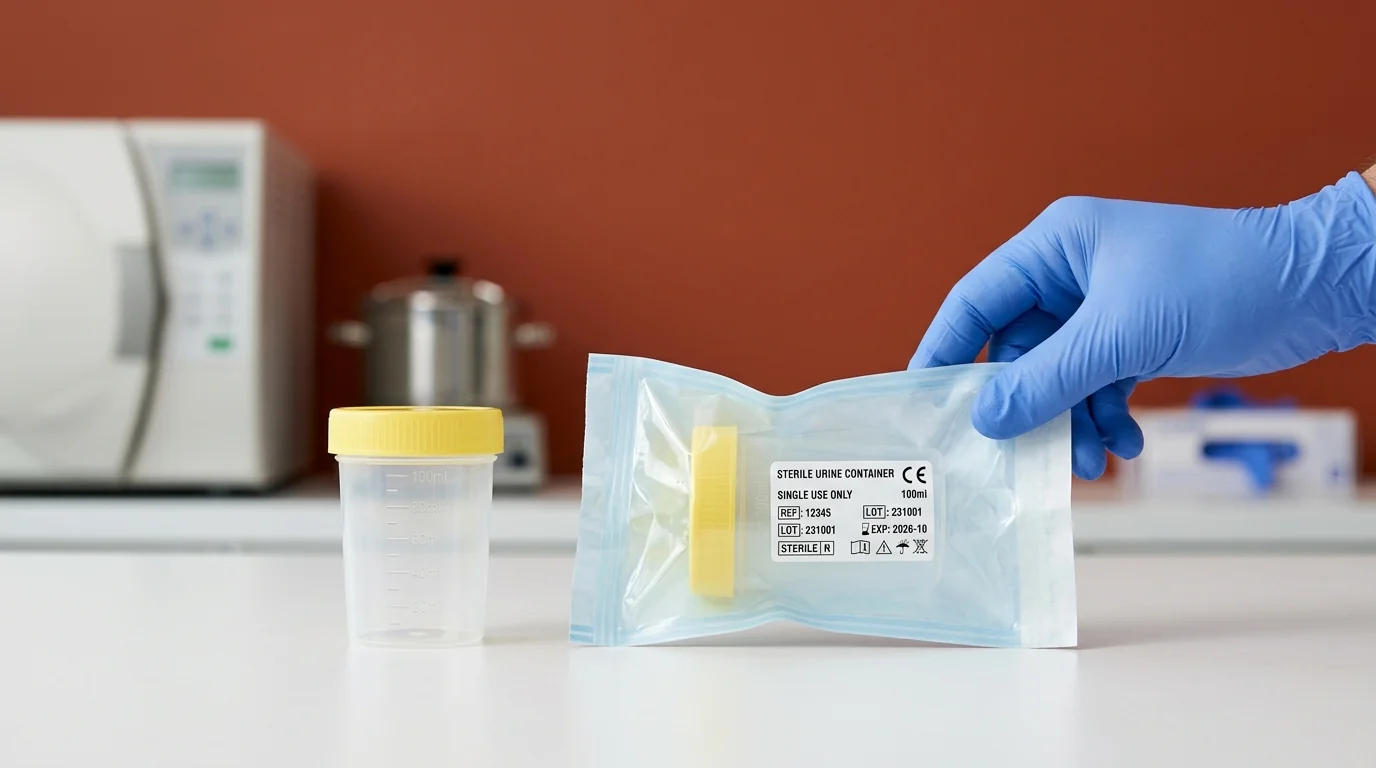 The first and most important decision point is determining the need for sterility. Using the wrong type of container can lead to contaminated samples, inaccurate results, and incorrect clinical interventions. This choice is dictated entirely by the intended diagnostic test.
Sterile Urine Pots These are mandatory for any microbiological investigation where the presence or absence of bacteria is the primary finding.
- Primary Use Case: Urine culture and sensitivity (C&S) testing. This test identifies the specific pathogen causing a urinary tract infection (UTI) and determines which antibiotics will be effective.
- Mechanism: Sterile containers are typically sterilised using Ethylene Oxide (ETO) or gamma radiation and are supplied in individual, tamper-evident packaging. This process eliminates any pre-existing microbial contamination on the container's inner surface.
- Operational Impact: Using a non-sterile container for a urine culture introduces external bacteria, leading to a false-positive result. This can result in the unnecessary prescription of antibiotics, contributing to antimicrobial resistance and adverse patient outcomes.
Non-Sterile Urine Pots These are suitable for a wide range of routine tests where microbial contamination does not affect the results.
- Primary Use Case: Routine urinalysis (RE/RM), including dipstick tests for pH, glucose, ketones, protein, and microscopic examination for cells, casts, and crystals. Also used for pregnancy tests and drug screening.
- Mechanism: These containers are manufactured in a clean environment but are not subjected to a terminal sterilisation process. They are often supplied in bulk packs (e.g., sleeves of 50 or 100).
- Operational Impact: Procuring non-sterile pots for these common tests is significantly more efficient. Using an expensive, individually-wrapped sterile pot for a simple dipstick test is a needless expenditure.
For a clear overview, consider the following:
| Feature | Sterile Urine Pot | Non-Sterile Urine Pot |
| Intended Use | Urine Culture & Sensitivity, Microbiology | Routine Urinalysis, Dipstick, Chemistry |
| Packaging | Individually wrapped, tamper-evident | Bulk packed (sleeves, bags) |
| Key Requirement | Absence of microbial contamination | Cleanliness, leak-proof design |
| Clinical Risk of Misuse | False-negative if used pot is contaminated | False-positive culture, incorrect diagnosis |
Key Specifications for Procuring Urine Pots
Beyond sterility, several physical and material characteristics determine a urine pot's suitability for a busy clinical environment.
Material Composition The choice of polymer affects clarity, durability, and chemical inertness.
- Polypropylene (PP): This is the most common material. PP offers a good balance of durability, chemical resistance, and is often translucent rather than transparent. It can typically withstand autoclaving, though this is rarely relevant for a single-use item.
- Polystyrene (PS): This material provides excellent clarity (glass-like transparency), which can be beneficial for initial visual inspection of the sample's colour and turbidity. However, PS can be more brittle than PP.
Capacity and Graduations Standard volumes for random sample collection typically range from 30 mL to 100 mL.
- A 50-60 mL capacity is generally sufficient for most routine and culture tests.
- Critically, look for containers with clear, accurate, and moulded graduations. Printed markings can sometimes wear or wash off, while moulded markings are permanent. This is essential for tests requiring a specific minimum volume.
Lid and Seal Design A leaking urine pot is a major operational headache and a significant biohazard. The cap design is paramount.
- Leak-Proof Seal: A secure, screw-top lid is the standard. The effectiveness of the seal prevents sample loss, protects healthcare workers from exposure, and avoids contamination of transport bags and lab equipment.
- Ease of Use: The cap should be easy for both patients and healthcare professionals to open and securely close without excessive force. A poorly designed thread can lead to mis-threading and subsequent leakage.
Packaging and Labelling Area How the containers are supplied and prepared for use impacts workflow efficiency.
- Packaging: As discussed, sterile pots must be individually wrapped to maintain their integrity until the point of use. Non-sterile containers are best sourced in dust-free bulk packaging. Evaluating the full range of options, from individual sterile packs to bulk non-sterile supplies, is a key part of procurement. A well-organised catalogue of medical grade urine pots will typically specify these details clearly.
- Writable Surface: The pot must have a designated area for patient identification. A frosted or matte-finish panel is ideal, as it accepts ink or marker without smudging. Labels should always be affixed to the body of the pot, never the lid, as lids can be inadvertently swapped.
Operational Best Practices for Urine Sample Collection and Handling
The quality of a diagnostic result depends as much on process as it does on the equipment.
Patient Instruction For urine cultures, proper patient instruction on the mid-stream clean-catch (MSU) technique is vital to minimise contamination from the patient's own skin flora. Clear, simple instructions provided by nursing staff can dramatically reduce the rate of contaminated samples that require a re-test.
Transport and Handling Once collected, the sample must be treated as potentially infectious.
- Ensure the exterior of the pot is clean and dry.
- Place the labelled pot into a secondary, sealed biohazard transport bag.
- Transport samples to the laboratory promptly and in an upright position. Delays can lead to the degradation of chemical analytes or the overgrowth of insignificant bacteria, confounding culture results. Even a standard plastic urine pot requires strict handling protocols to prevent cross-contamination within the facility.
Biomedical Waste Management Proper disposal is a legal and ethical requirement. According to India's Bio-Medical Waste Management Rules, 2016, used urine pots and their contents are classified as contaminated plastic waste. They must be discarded in designated yellow-coded, non-chlorinated bags or containers for incineration or other approved treatment methods.
Compliance and Quality Assurance in Sourcing
When sourcing consumables like urine pots, it is essential to look for markers of quality and compliance.
- Manufacturing Standards: Check if the manufacturer adheres to quality management systems like ISO 13485 (Medical Devices). This indicates a commitment to consistent quality, traceability, and process control.
- Material Inertness: The plastic should be medical-grade and free of leachates or other substances that could interfere with sensitive biochemical assays.
- Supplier Reliability: Your supplier should be able to provide clear specifications for each product, including material type, sterility method (if applicable), and packaging details.
Common Procurement Pitfalls to Avoid
- Focusing on Unit Price Alone: A pot that leaks, cracks, or has an ill-fitting lid creates far greater costs through re-tests, staff time, and potential biohazard cleanup than the marginal savings on its initial procurement.
- One-Size-Fits-All Inventory: Maintaining an inventory that doesn't match your facility's testing profile is inefficient. If 90% of your urine tests are routine, stocking primarily sterile pots is wasteful. A balanced inventory based on lab data is key.
- Ignoring End-User Feedback: The laboratory technicians and nurses who handle these pots every day are the best source of information on practical performance. Regular feedback sessions can identify issues with a particular model's lid, clarity, or label adhesion before they become systemic problems.
Equip Your Facility Today
Selecting the correct urine pot is a fundamental detail that supports diagnostic accuracy and operational efficiency. By carefully evaluating material, design, and sterility against your facility's specific clinical needs, you ensure your teams are equipped for reliable, safe, and efficient sample collection and analysis.
FAQs

