

Hospitals
A Clinical and Operational Guide to Tourniquets
An operational guide for clinicians and procurement heads on selecting and using the correct tourniquet for phlebotomy, surgical, and emergency applications.


The tourniquet is a fundamental instrument in modern medicine, ubiquitous from the phlebotomy tray to the orthopaedic operating theatre. While its basic principle—constricting a limb to control blood flow—is straightforward, the selection, application, and management of a tourniquet demands clinical precision and operational diligence. An incorrect choice or improper use can lead to consequences ranging from failed venipuncture to severe neurovascular complications.
This guide provides a peer-to-peer overview of tourniquet types, selection criteria, and safety protocols relevant to the Indian healthcare environment. It is intended for procurement managers, senior clinicians, and department heads responsible for equipping their facilities and ensuring best practices.
Tourniquet Types: Matching the Device to the Clinical Need
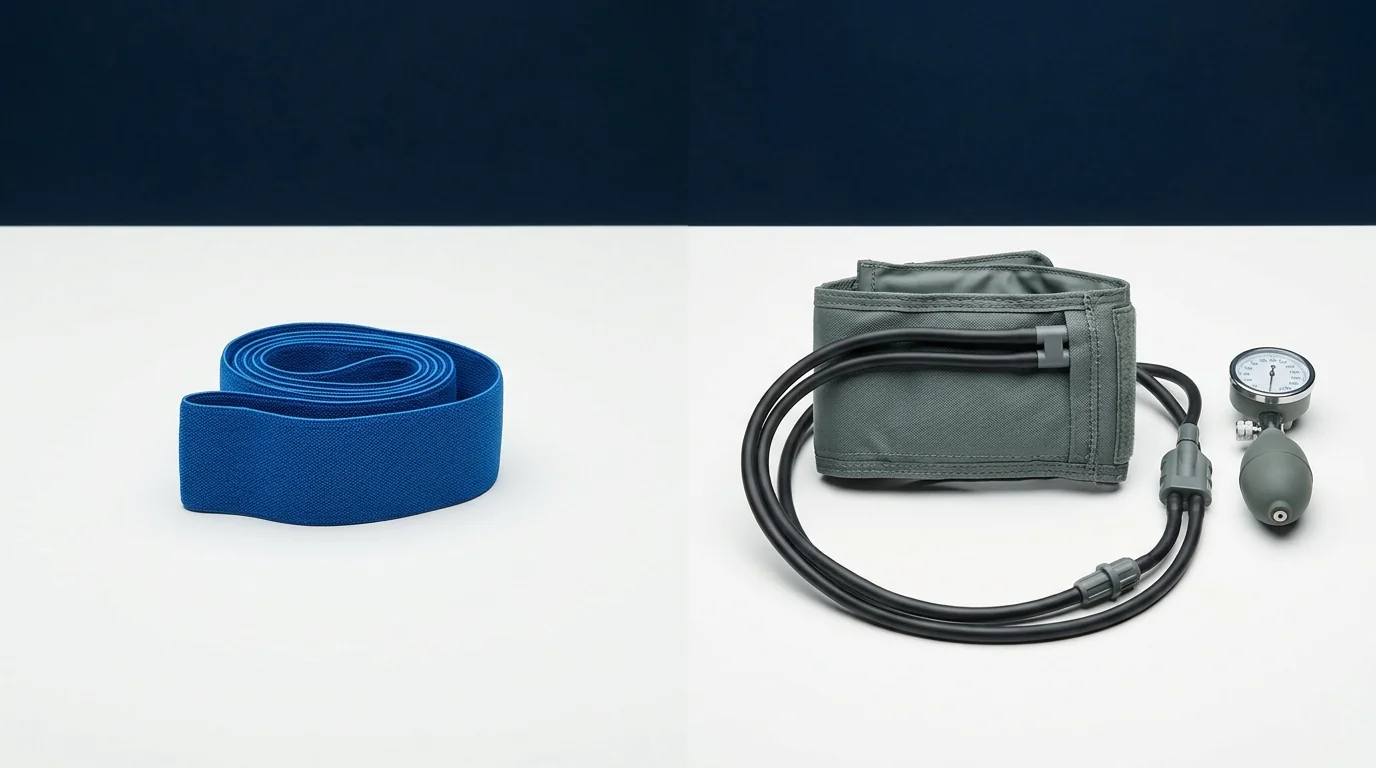 Not all tourniquets are created equal. The simple elastic band used for a blood draw is functionally worlds apart from the sophisticated system required for a two-hour knee replacement. Categorising them by application is the most practical approach.
At a glance:
- Phlebotomy/Venipuncture Tourniquets: These are designed for temporary, low-pressure venous occlusion to make veins more prominent for cannulation or blood sampling.
- Flat Elastic Straps (Latex or Latex-Free): The most common type. Single-use variants are the standard for minimising cross-contamination risk. Reusable versions require stringent disinfection protocols between patients, a significant operational burden.
- Clip-Style Tourniquets: Feature a plastic buckle for quick release. Often made of a durable fabric, they offer more consistent tension but present a greater challenge for effective cleaning.
- Surgical (Pneumatic) Tourniquets: These are essential devices for creating a bloodless field during limb surgery, primarily in orthopaedics, plastics, and vascular procedures.
- System Components: A pneumatic tourniquet is a system, not just a band. It includes an inflatable cuff, a pressure source with a regulator, connecting tubing, and a monitor that displays pressure and elapsed time.
- Cuff Types: Cuffs come in various sizes (from small paediatric to large thigh) and shapes (straight or contoured). Double-cuffs are specifically designed for procedures like Intravenous Regional Anaesthesia (IVRA), or Bier block.
- Pressure Control: Modern systems automatically regulate and maintain a set pressure. The ability to measure Limb Occlusion Pressure (LOP) is a critical feature, allowing the clinician to use the lowest effective pressure for that specific patient, enhancing safety.
- Emergency or Pre-Hospital Tourniquets: These are life-saving devices designed for rapid control of catastrophic haemorrhage from a limb injury.
- Windlass Mechanism: The defining feature is a rigid rod (the windlass) used to twist an internal band, applying extreme circumferential pressure quickly. This design allows for effective one-handed application.
- Application: Primarily used in emergency departments, ambulances, and trauma kits. Their robust construction is intended for high-stress, rapid-response scenarios.
Evaluation Criteria for Tourniquet Selection
Sourcing the correct tourniquet involves looking beyond the device itself to its intended use, the patient population, and the facility's existing protocols.
A practical checklist for evaluation:
- Clinical Application: Is this for high-volume phlebotomy in an OPD, a busy orthopaedic OT, or the casualty department's trauma cart? The primary use case dictates the necessary type and features.
- Material and Patient Safety:
- Is the material latex-free? Latex allergies are a significant patient safety concern. Standardising on latex-free options for all patient-contact items simplifies protocols and reduces risk.
- For surgical cuffs, is the material soft, pliable, and designed to distribute pressure evenly to minimise skin and nerve injury?
- For Pneumatic Systems — Precision and Safety Features:
- Pressure Accuracy: Does the unit provide reliable, calibrated pressure? What is the margin of error?
- LOP Technology: Does the system have an automated LOP sensor? This is a key feature for individualising patient care and moving beyond generic pressure settings.
- Alarms: Are the audible and visual alarms for time and pressure deviations clear and easily understood in a busy OT environment?
- Battery Backup: A non-negotiable feature for power outages during a procedure. What is the battery's run time?
- Usability and Training:
- Phlebotomy: Is the clip mechanism intuitive? Can it be released with one hand?
- Surgical: Is the user interface on the pneumatic unit clear? How steep is the learning curve for OT staff?
- Emergency: Can the tourniquet be effectively applied by a single person under immense pressure? Is the mechanism self-locking and secure?
- Durability and Maintenance:
- What is the lifecycle of the surgical cuffs? How do they withstand repeated autoclave cycles or chemical disinfection?
- For pneumatic units, what is the recommended calibration schedule? Are service and support readily available from the supplier?
Best Practices for Tourniquet Use and Safety
A tourniquet is an instrument of controlled ischemia. Adherence to strict safety protocols is mandatory to prevent patient harm.
Time and Pressure Management
The two most critical parameters are inflation time and pressure.
- Maximum Inflation Time: The generally accepted maximum is 120 minutes for a single continuous inflation. If surgery exceeds this, a reperfusion period of at least 15-20 minutes is recommended before re-inflation.
- Documentation: Application time, inflation pressure, and deflation time must be meticulously recorded in the patient's OT notes.
- Pressure Settings: For surgical tourniquets, pressure should be based on the patient's LOP, not a generic value. If LOP cannot be measured, a common guideline is 50-75 mmHg above systolic pressure for the upper limb and 100-150 mmHg above systolic for the lower limb, but LOP-based settings are the superior practice.
Infection Control
Hospital-Acquired Infections (HAIs) are a major concern, and reusable equipment is a known vector.
- Phlebotomy Tourniquets: While reusable elastic or clip-style tourniquets are common, evidence suggests they can harbour pathogens. Many leading institutions have mandated single-use tourniquets to break the chain of infection. If reusing, a protocol of wiping with an approved disinfectant after every patient is essential.
- Surgical Cuffs: Cuffs must be thoroughly cleaned and sterilised or high-level disinfected according to the manufacturer's Instructions for Use (IFU) and the hospital's infection control policy.
Staff Competency and Training
Proper use is as important as proper selection.
- Regular Drills: Staff in emergency departments should conduct regular, hands-on drills for applying emergency tourniquets.
- OT Staff Training: OT technicians and nursing staff must be fully trained on the setup, pre-use checks, alarm responses, and cleaning of the specific pneumatic tourniquet system used in your facility.
- Phlebotomists: Training should emphasise not leaving a tourniquet on for more than one minute, as prolonged application can affect blood test results (haemoconcentration).
Equip Your Facility Today
Ensuring your clinical teams are equipped with the appropriate tourniquet for each specific application—from routine blood draws to complex surgical procedures—is fundamental to patient safety and operational efficiency. Explore the range of clinically-vetted tourniquet solutions on MedikaBazaar to meet the needs of your departments.
FAQs

