

Hospitals
Clinical and Operational Guide to Selecting a Therapy Muscle Stimulator
A detailed guide for clinicians and procurement managers on evaluating therapy muscle stimulators. Covers key specifications, waveform types, and operational use.


As heads of physiotherapy departments, clinic operations, or procurement, our responsibility is to source equipment that is not only clinically effective but also operationally sound and safe for patient use. The selection of a therapy muscle stimulator is a case in point. These devices are foundational in rehabilitation, but their technical specifications directly impact treatment outcomes and patient safety. This guide provides a peer-to-peer overview of the essential criteria for evaluating and integrating these units into your facility.
The primary function of a clinical-grade muscle stimulator is to deliver controlled electrical impulses to targeted muscle groups. These impulses mimic the action potentials generated by the central nervous system, causing a muscle contraction. This is fundamentally different from consumer-grade gadgets; a professional unit offers precise control over waveform, frequency, and intensity, which is non-negotiable for therapeutic applications.
Understanding the Mechanism: How EMS Works in Rehabilitation
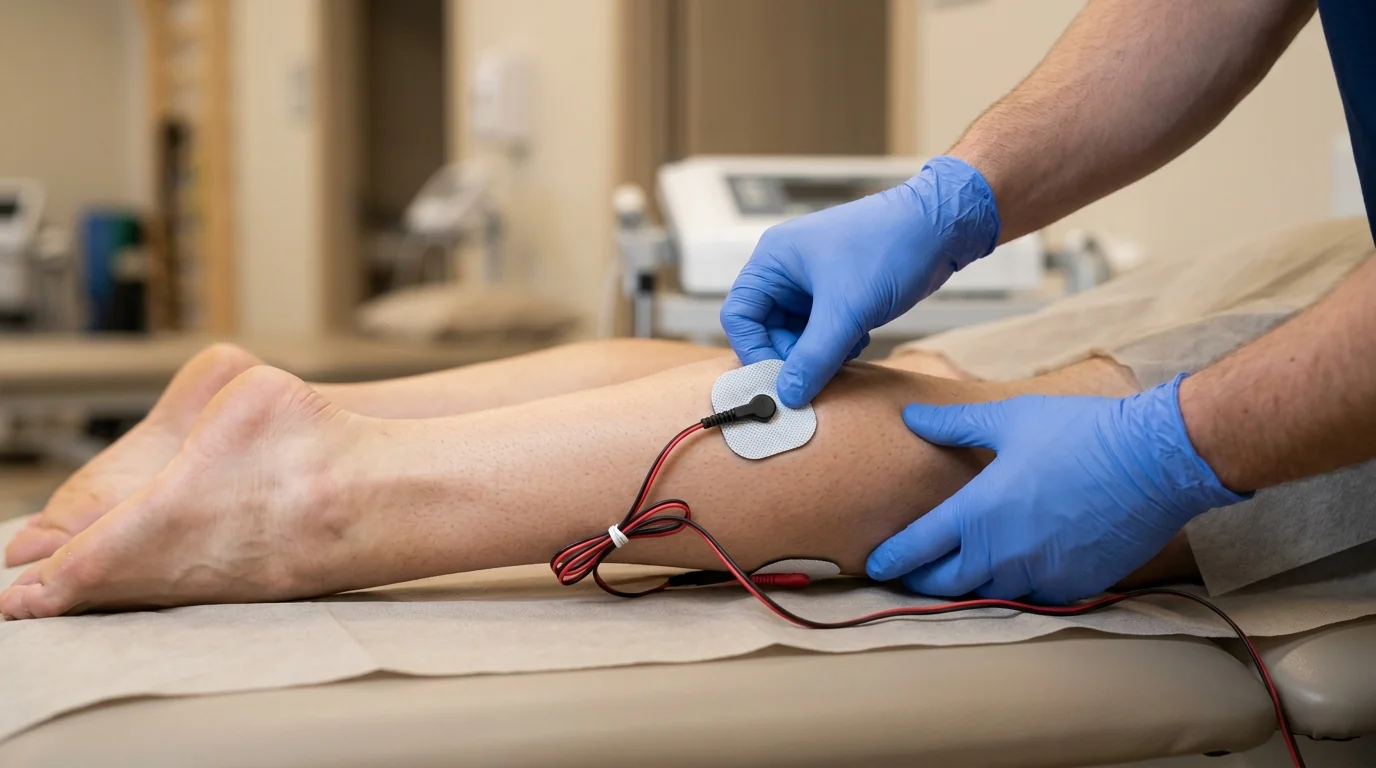 Electrical Muscle Stimulation (EMS) is a modality used to achieve specific physiological responses. For a patient who cannot voluntarily contract a muscle due to surgery, injury, or a neurological condition, EMS serves as a critical intervention. The goals are highly specific:
- Muscle Re-education: Assisting the patient in re-establishing neuromuscular pathways and voluntary control.
- Prevention of Disuse Atrophy: Maintaining muscle mass and preventing fibre deterioration when a limb is immobilised.
- Increasing Local Blood Circulation: The pumping action of muscle contraction can improve circulation, aiding in healing and reducing oedema.
- Relaxation of Muscle Spasms: Inducing muscle fatigue through repeated contractions can help break the pain-spasm cycle.
Understanding these applications is the first step in specifying the right device for your patient load and clinical focus.
Demystifying Waveforms: Galvanic vs. Faradic vs. TENS
The type of electrical current a device can produce determines its clinical utility. A versatile therapy machine should offer multiple waveforms, as each serves a distinct purpose.
| Waveform Type | Primary Current | Key Clinical Application | Mechanism of Action |
| Galvanic | Uninterrupted Direct Current (DC) | Treatment of denervated muscles, Iontophoresis | The continuous flow of ions stimulates muscle fibres that have lost their nerve supply. Polarity is critical for treatment and for driving medication through the skin (iontophoresis). Requires significant operator skill to avoid skin burns. |
| Faradic | Interrupted Direct Current (DC) | Stimulation of innervated muscles for re-education and strengthening | Short-duration pulses that stimulate the motor nerve, which in turn causes the muscle to contract. The 'interrupted' nature prevents tetanic contraction, allowing for individual muscle twitches. |
| Surged Faradic | Modified Faradic Current | Producing near-normal tetanic contractions and relaxation | The intensity of the current is gradually increased and decreased. This mimics a voluntary muscle contraction more closely than a simple interrupted current, making it ideal for muscle re-education and improving muscle pumping action. |
| TENS | Pulsed Biphasic Current | Pain management (analgesia) | A Transcutaneous Electrical Nerve Stimulator, or nerve stimulator, primarily targets sensory nerves to block pain signals (Gate Control Theory) or stimulate endorphin release. While it is a form of electrotherapy, its goal is pain relief, not muscle contraction. |
For a physiotherapy department, a device that combines Galvanic and multiple Faradic modalities provides the most comprehensive treatment capability.
Key Evaluation Criteria for Your Facility's Next Therapy Machine
When evaluating specific models, move beyond the datasheet and consider these operational factors. The right choice depends on your patient volume, the types of conditions you treat, and your physical space.
- Output Channels: A dual-channel stimulator is significantly more efficient for a busy department. It allows for the simultaneous treatment of bilateral limbs (e.g., both quadriceps post-TKR) or two separate muscle groups on one patient, effectively halving the treatment time for certain protocols.
- Waveform Versatility: Confirm the device explicitly offers Galvanic, Interrupted Faradic, and Surged Faradic outputs. A unit limited to one type of current will severely restrict your clinical applications.
- Parameter Control Precision: Your clinical team needs granular control over pulse duration (milliseconds) and frequency (Hz). Different muscle groups respond best to different parameters. Coarse, pre-set controls are inadequate for tailored, patient-specific treatment. Intensity dials must be smooth and responsive to prevent sudden, painful jolts.
- Portability and Form Factor: For facilities with limited space or for physiotherapists providing bedside care in wards, a compact unit is essential. A mini muscle stimulator for physiotherapy offers significant operational flexibility. For example, the portable design of the Medansh Mini Muscle Stimulator (Medansh2202) allows for easy transport between treatment rooms or patient bedsides without compromising on core Galvanic and Faradic functionalities.
- Safety and Compliance: Verify that the equipment complies with medical electrical equipment standards, such as IEC 60601-1. Features like an automatic treatment timer and a patient-operable safety switch are not optional; they are essential for risk management.
Integrating Muscle Stimulators into Clinical Workflow: Safety and Protocol
Sourcing the device is only half the battle. Proper integration ensures patient safety and effective outcomes.
Patient Assessment is Paramount: Before any treatment, a thorough assessment must be conducted to rule out contraindications. These include patients with cardiac pacemakers, implantable cardioverter-defibrillators (ICDs), epilepsy, deep vein thrombosis (DVT), pregnancy (over the abdominal/pelvic area), and active malignancies.
Electrode and Skin Protocol:
- Ensure the patient's skin is clean, dry, and free of lotions.
- Use an appropriate amount of conductive gel to ensure uniform current distribution.
- Secure electrodes firmly with tape or straps to prevent movement and potential 'hot spots'.
- Check skin integrity under the electrodes post-treatment for any signs of irritation or burns, especially after Galvanic current application.
Consumables and Maintenance: Electrode pads, lead wires, and gels are ongoing operational expenses. Establish a reliable supply chain for these consumables. The main unit should be cleaned and inspected regularly as per the manufacturer's guidelines. For sourcing a range of compatible devices and accessories, it is efficient to work with a supplier who can provide a broad selection of Muscle Stimulator options and related consumables.
Distinguishing Therapeutic Stimulators from Diagnostic Tools
In a procurement role, it's easy to group all 'electrode-based' machines together. However, their functions can be opposite. A therapy muscle stimulator is an active device—it sends a calibrated electrical current into the patient to create a physiological effect.
In stark contrast, a diagnostic device like a portable ECG machine is a passive recording instrument. It uses electrodes to detect and record the heart's intrinsic electrical activity for analysis. It sends no therapeutic current. Understanding this distinction—active therapeutic output versus passive diagnostic recording—is fundamental to sourcing the correct equipment for the intended clinical application.
Equip Your Physiotherapy Department
Selecting the right electrotherapy equipment is a critical decision for any rehabilitation department. By focusing on clinical needs, waveform versatility, and operational safety, you can equip your team with tools that deliver effective patient outcomes. For a detailed look at specifications across a range of vetted devices, explore the therapeutic equipment available through MedikaBazaar.
FAQs

