

Dentist
A Clinical and Operational Look at Dental Glass Ionomer Cement
An in-depth guide for procurement managers on selecting dental glass ionomer cement (GIC). Covers types, clinical applications, and key evaluation criteria.


For any busy practice, clinic, or hospital dental department, material selection is a constant balance of clinical performance, operational efficiency, and patient outcomes. Among the array of restorative and luting materials, dental glass ionomer cement (GIC) remains a foundational tool due to its unique combination of properties. It is not merely an older material, but a distinct class of dental cement with specific indications where it outperforms other options.
Understanding the chemistry and handling characteristics of GIC is critical for both clinicians and procurement heads. At its core, GIC is a water-based cement formed by reacting an acidic polymer liquid (polyalkenoic acid) with a basic ion-leachable glass powder (fluoroaluminosilicate glass). This reaction results in a material that chemically bonds to tooth structure and, crucially, acts as a sustained-release reservoir for fluoride ions, offering a valuable cariostatic effect. This guide provides a peer-level overview of GIC to inform your selection and standardisation protocols.
Understanding the Types of Glass Ionomer Cements
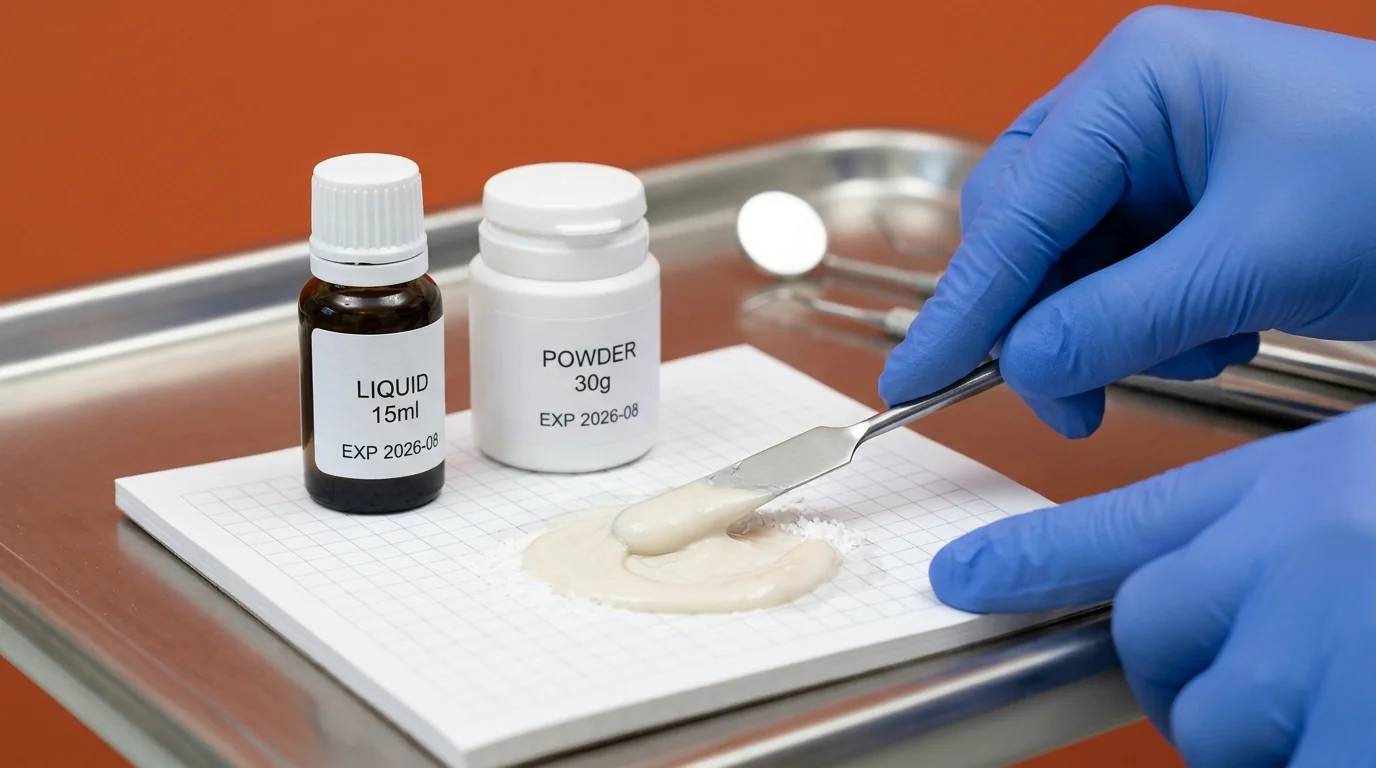 The versatility of GIC stems from modifications to its formulation, leading to different types classified by their intended clinical application. Standardising on the correct type for a given procedure is essential for predictable results.
- Type I: Luting Cements: This is perhaps the most common application in many practices. A
gic type 1is formulated with a fine particle size to achieve a very low film thickness (typically under 25 microns). This is critical for the precise seating of crowns, bridges, inlays, onlays, and orthodontic brackets without altering occlusion. Their moderate strength and fluoride release make them an excellent choice for cementing metal-based and high-strength ceramic restorations. A reliable example for institutional evaluation is the Orikam Neocem Type 1 Luting GIC - Intro Pack, known for its consistent mix and handling. - Type II: Restorative Cements: These are designed for direct restorations and are further divided into aesthetic and reinforced variants. They have a larger particle size for improved wear resistance and strength compared to Type I. They are the material of choice for non-load-bearing restorations such as Class III and V cavities, root caries, and in paediatric dentistry for primary teeth.
- Type III: Liners and Bases: With a lower powder-to-liquid ratio, these GICs are more fluid and are used as a protective layer over the dentin in deep cavities. They provide thermal insulation for the pulp and release fluoride directly where it's most needed, under a composite or amalgam restoration.
- Type IX (High-Viscosity): Often referred to as "packable" GIC, this high-strength variant was developed for the Atraumatic Restorative Technique (ART). Its high viscosity allows for placement in posterior cavities using only hand instruments, making it suitable for field dentistry and for patients where conventional cavity preparation is not feasible.
Key Clinical and Operational Evaluation Criteria
When evaluating a new dental glass ionomer cement for your facility, move beyond the brand name and assess the material based on these critical performance indicators.
- Working and Setting Time: These two parameters dictate clinical efficiency. The working time (from start of mix to initial hardening) must be sufficient for proper mixing and placement. The setting time (when the material is hard enough to withstand functional forces) should be sharp and predictable. Look for manufacturer specifications and choose between regular-set and fast-set variants based on your procedural needs.
- Compressive Strength and Film Thickness: For a
gic luting cement, these are the most important physical properties. Compressive strength ensures the cement can withstand occlusal forces under a crown. Film thickness, as mentioned, is non-negotiable for luting; a high film thickness will prevent a restoration from seating completely. - Fluoride Release and Recharge: This is the hallmark of GIC. The initial burst of fluoride release after placement helps inhibit secondary caries at the restoration margin. Critically, the cement can be "recharged" with fluoride from external sources like fluoridated toothpaste, acting as a long-term protective reservoir. Evaluate manufacturer data on the level and duration of fluoride release.
- Biocompatibility and Adhesion: GIC is exceptionally biocompatible and kind to the pulp. Its primary advantage is its intrinsic chemical adhesion to both enamel and dentin via an ion-exchange layer. This minimizes the need for aggressive tooth preparation and reduces post-operative sensitivity compared to techniques that rely solely on micromechanical bonding.
- Radiopacity: Any restorative or luting material must be sufficiently radiopaque to be visible on a radiograph. This allows clinicians to verify marginal integrity and differentiate the cement line from recurrent decay or a void.
Best Practices for Mixing and Application
Incorrect handling is the primary cause of GIC failure. Standardising the protocol across your clinical team is key to achieving optimal, long-lasting results.
- Isolate and Prepare: The tooth surface should be clean and free of debris. GIC is sensitive to moisture during its initial setting phase, so proper isolation is mandatory. Unlike resin bonding, the surface should not be desiccated; a slightly moist surface (after blotting with a cotton pellet) is ideal for the chemical bond. A brief application of a polyacrylic acid conditioner removes the smear layer and enhances adhesion.
- Dispense and Mix Precisely: Adhere strictly to the manufacturer's recommended powder-to-liquid ratio. An altered ratio significantly compromises the cement's physical properties. Use the provided scoop and dropper. Mix rapidly (within 30-45 seconds) on a cool, dry glass slab or paper pad by folding the powder into the liquid until a homogenous, glossy consistency is achieved. A dull appearance indicates the mix has passed its working time and must be discarded.
- Place and Protect: Apply the mixed cement immediately. Once placed and set, the GIC is vulnerable to dehydration and water contamination for the first 24 hours as it matures. It is crucial to coat the surface of the restoration or the margins of the crown with a protective agent like a varnish or unfilled resin.
Comparing GIC with Other Dental Cements
Choosing the right dental cement depends entirely on the clinical situation. Understanding where GIC fits is key to effective procurement. While brands like GC have a long history with products like GC luting cement, newer formulations from companies such as Orikam provide excellent clinical performance and are important to evaluate.
| Feature | Glass Ionomer Cement (GIC) | Resin-Modified GIC (RMGIC) | Resin Cement |
| Primary Adhesion | Chemical (ionic bond) | Chemical & Micromechanical | Micromechanical |
| Fluoride Release | High, sustained, rechargeable | High, sustained | Low to none (unless added) |
| Moisture Tolerance | Moderate (sensitive during set) | Moderate | Low (requires strict isolation) |
| Bond Strength | Moderate | Good | Very High |
| Pulp Compatibility | Excellent | Very Good | Good (can cause sensitivity) |
| Primary Indication | Metal/PFM crowns, liners, ART | Luting, restorations | All-ceramic, veneers, high-stress |
This comparison highlights that GIC is not a one-size-fits-all solution but an indispensable tool for specific applications, particularly where fluoride release and biocompatibility are paramount. For procurement teams looking to equip their clinicians with a range of options, exploring the full category of Luting Glass Ionomer Cements provides a comprehensive view of the available formulations. It's also worth noting that many leading dental suppliers offer a full suite of materials; for instance, a brand known for cements may also produce high-quality impression materials like Orikam alginate.
Equip Your Facility Today
Standardising the dental materials in your practice or department with high-quality, reliable products is fundamental to consistent clinical success. Dental glass ionomer cement, with its unique properties of chemical adhesion and fluoride release, remains an essential material for luting and restorative procedures. By understanding its classifications and proper handling techniques, you can ensure your team leverages its full potential. For your procurement needs, explore the comprehensive range of dental cements on MedikaBazaar to find the right solutions for your clinical team and patients.
FAQs

