

Hospitals
Pen Light Medical Use: A Practitioner's Guide to Clinical Assessment
Learn pen light medical use in pupillary, oral and neurological checks, plus features to look for, infection control and care in clinical settings.


In any clinical setting, from the high-acuity ICU to a busy outpatient department, pen light medical use is part of daily practice. Far more than a simple light source, it is a precision tool for neurological assessment, oral examination and general patient evaluation. For procurement managers and senior clinicians, understanding the functional differences between a medical-grade pen torch and a generic flashlight is fundamental to diagnostic accuracy and patient safety.
This guide gives an operational overview of the pen torch, covering its clinical applications, key evaluation criteria for sourcing, and best practices for maintenance and infection control. It is written from a practitioner's perspective, for professionals who rely on their equipment at the point of care.
Core Clinical Applications: Pen Light Medical Use
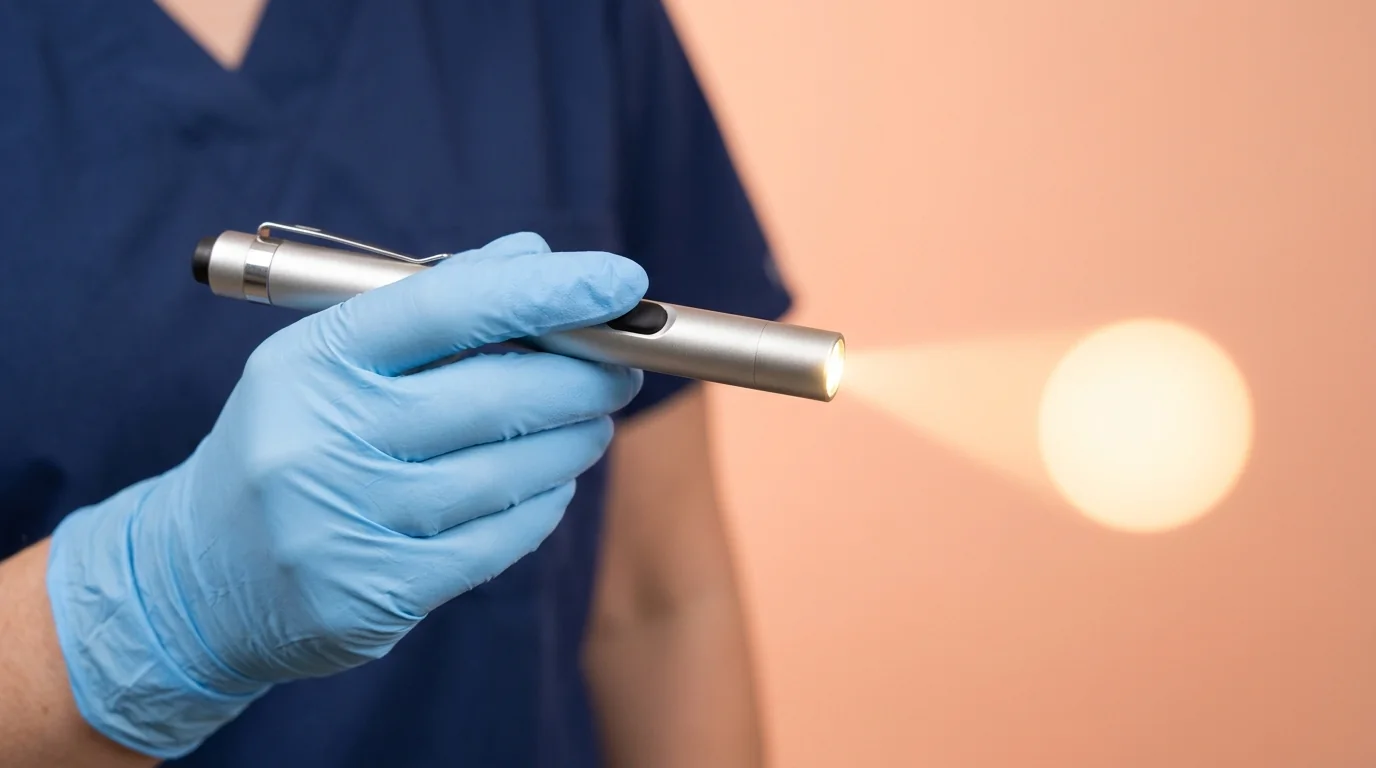 The medical uses of a pen torch extend across multiple specialities. Its primary function is to provide focused, good-quality illumination for a variety of assessments.
- Pupillary Response Assessment: This is the most critical application. Clinicians use the light to evaluate PERRLA (Pupils Equal, Round, and Reactive to Light and Accommodation). This involves checking the direct light reflex (constriction of the pupil exposed to light) and the consensual light reflex (constriction of the opposite pupil). An abnormal response can be an early indicator of severe neurological issues, such as increased intracranial pressure, nerve damage, or the effects of certain medications.
- Oral and Pharyngeal Examination: Proper visualisation of the oral cavity and pharynx is impossible without direct illumination. A medical pen torch examination allows a clear look at the tongue, gums, oral mucosa, tonsils and posterior pharynx for signs of inflammation, infection (e.g., pharyngitis, tonsillitis), lesions or other abnormalities.
- Neurological Examination: Beyond pupillary reflexes, the light helps in assessing extraocular movements by having the patient follow it, which can reveal nystagmus or cranial nerve palsies.
- General Illumination and Skin Assessment: Everyday pen torch uses also include assessing wound beds, checking the skin under casts or dressings, examining intravenous cannula insertion sites for signs of phlebitis, or simply visualising any area on a patient in a poorly lit room.
What Is a Pen Light and What Is Its Purpose?
A pen light is a slim, pocket-sized LED light used by clinicians to examine the eyes, ears, throat and skin. Its purpose is to give a narrow, controllable beam of light at the bedside, so that findings such as pupil size and reaction can be observed and documented reliably.
A pen type torch light is slim enough to sit in a coat pocket and is quick to switch on, which is why it is carried by doctors and nurses across departments. Some clinicians also refer to a penlight for medical use, but the instrument is the same.
What Is the Function of a Flashlight?
The function of a flashlight is to provide portable, directed light so that an area can be seen clearly in the dark. A clinical pen light does the same job at close range, with a focused beam designed for examining the eyes, throat and skin rather than lighting up a room.
Parts of a Pen Light: Reading a Diagram
A pen torch diagram usually labels the LED head, the barrel that houses the batteries, the push-button switch, the pocket clip and, on many models, a pupil gauge printed on the body. Knowing these parts helps staff handle, clean and troubleshoot the instrument correctly.
How a Pen Light Differs from a Standard Flashlight
Sourcing the correct instrument requires recognising the features that distinguish a medical pen torch from a consumer-grade product. The differences are not trivial; they directly affect clinical utility and patient safety.
Light Source and Quality
- LED vs. Halogen: Modern medical pen torches almost exclusively use LED (Light Emitting Diode) technology. Unlike older halogen bulbs, LEDs provide a longer lifespan, better energy efficiency, and a more consistent colour temperature and brightness over the life of the batteries.
- Colour Temperature: The light should be a clean, neutral or warm white (typically 3000K to 4500K). Harsh, blue-tinted light (above 5000K) can alter the appearance of tissues, making it difficult to assess for cyanosis or jaundice.
- Colour Rendering Index (CRI): A high CRI (>90) is essential. This metric indicates how accurately the light source reveals the true colours of an object. In a clinical context, it ensures that skin tones, blood and tissues appear natural.
Beam Characteristics A medical pen torch should project a clear, focused and evenly illuminated beam. A standard flashlight often has a diffuse beam with dark spots or rings, which is unsuitable for a precise pupillary or oral exam. The beam must be bright enough for clear visualisation but not so intense that it causes significant patient discomfort or retinal over-stimulation.
Material and Construction
- Durability: Casings are typically made from materials like stainless steel, brass or anodized aluminium. These materials are robust enough to withstand drops and daily use.
- Disinfectability: The smooth, non-porous surface of a metal or high-grade polymer casing allows effective cleaning and disinfection with hospital-grade wipes, which is a critical infection control requirement.
Evaluation Criteria for Sourcing a Pen Light
When equipping a department or an entire facility, consider these practical factors to ensure the selected instrument meets clinical and operational needs.
Illumination and Power
- Light Source: Specify LED for reliability and longevity. Some models offer both warm yellow and white LEDs.
- Brightness: Avoid the "brighter is better" fallacy. An overly bright light is uncomfortable for the patient and can cause a strong blink reflex, hindering examination. The goal is clear illumination, not dazzling intensity.
- Power Source: The choice is between disposable (usually AAA) and rechargeable (often via USB) batteries.
- Disposable: Simple, widely available, and requiring no charging infrastructure. Suited to settings where access to charging ports is limited.
- Rechargeable: Higher initial acquisition cost but lower long-term operational expense and less environmental waste. Requires a disciplined charging protocol to ensure availability.
Design and Ergonomics
- Activation Switch: A momentary push-button switch is often preferred for safety, as it cannot be accidentally left on in a patient's eyes or drain the battery in a pocket. A click-on/click-off switch offers convenience for prolonged use, such as during wound care.
- Pupil Gauge: Many medical pen torches feature a pupil size gauge (from 2mm to 9mm) printed on the body. This aids accurate documentation for neurological charting. A small ruler (e.g., 5cm) may also be included.
- Pocket Clip: A firm, durable pocket clip is essential for keeping the device secure on a lab coat or scrubs.
How to Use a Pen Light in Examinations
To use a pen light, switch it on, hold it steady and direct the beam at the area being examined from a short, comfortable distance. For a pen torch pupil examination, bring the light in from the side of the patient's head (laterally) toward the eye, which is less startling than approaching head-on.
- Hold the light steady for only a few seconds, enough time to observe the speed and degree of constriction.
- Never leave the pen light unattended on a patient's bed or within reach of a disoriented patient.
What Kind of Pen Light Do Nurses Use?
Nurses generally use a compact LED pen light with a push-button switch, a pocket clip and, often, a built-in pupil gauge. One example is the MCP Mini Portable Pen Light LED Flashlight Pocket Medical Doctor Torch Light Silver, which has a 2 to 9 mm pupil gauge, an integrated clip, warm yellow and white LEDs and runs on AAA batteries. It is intended for examination of the eyes, ears and throat and for general clinical assessment.
Which Way Do the Batteries Go in a Pen Light?
The batteries go in according to the plus and minus markings printed inside the barrel or on the battery compartment. Unscrew the cap, insert the AAA cells as marked, and close the cap firmly. If the markings are unclear, check the maker's instructions supplied with the product.
Why Is My Pen Light Not Working?
The most common reason a pen light stops working is weak or incorrectly fitted batteries. A dimming or flickering light is a sign of failure, not a clinical finding, so replace the batteries first and confirm they are inserted the right way round. Then check that the cap is tight and the battery contacts are clean. Avoid exposing the pen light to extreme temperatures or moisture, and store it in a dry place to prevent corrosion of the battery contacts.
Best Practices for Maintenance and Infection Control
Proper handling and care extend the life of the instrument and, more importantly, support patient safety and infection control.
Infection Control
- Establish a clear departmental protocol for disinfection. The pen light should be wiped down with a suitable disinfectant (e.g., 70% isopropyl alcohol wipe) between each patient use.
- Pay close attention to cleaning the switch and the clip, as these are high-touch areas.
- Do not take a pen light used in an isolation room to another patient area without thorough disinfection.
Operational Readiness
- For battery-powered models, ensure a steady supply of fresh batteries is available in clinical areas.
- For rechargeable models, designate a charging station and use a rotation system so a fully charged device is always available.
While the pen light is a fundamental tool, it is part of a broader suite of diagnostic instruments. Ensuring your facility is equipped with reliable stethoscopes, otoscopes and other essential Medicalequipments is critical for comprehensive patient assessment.
Equip Your Facility
Selecting the right diagnostic tools is fundamental to delivering quality patient care. To see the range of pen lights and related diagnostic instruments suited to demanding clinical environments, Browse Pen torch options on Medikabazaar and match them to your departmental needs.
FAQs