

Hospitals
A Procurement Manager's Checklist for Selecting Nitrile Disposable Gloves
A detailed procurement guide for selecting the right nitrile disposable gloves. Understand key specs, certifications, and common pitfalls before sourcing.


As procurement leads, our responsibility extends beyond unit cost. For a high-volume consumable like nitrile disposable gloves, the right choice impacts staff safety, clinical outcomes, and operational efficiency. A suboptimal glove can lead to increased consumption from tears, cross-contamination risks, and decreased user compliance. This guide provides a structured framework for evaluating and standardizing your facility's glove selection process.
Step 1: Needs Assessment Checklist
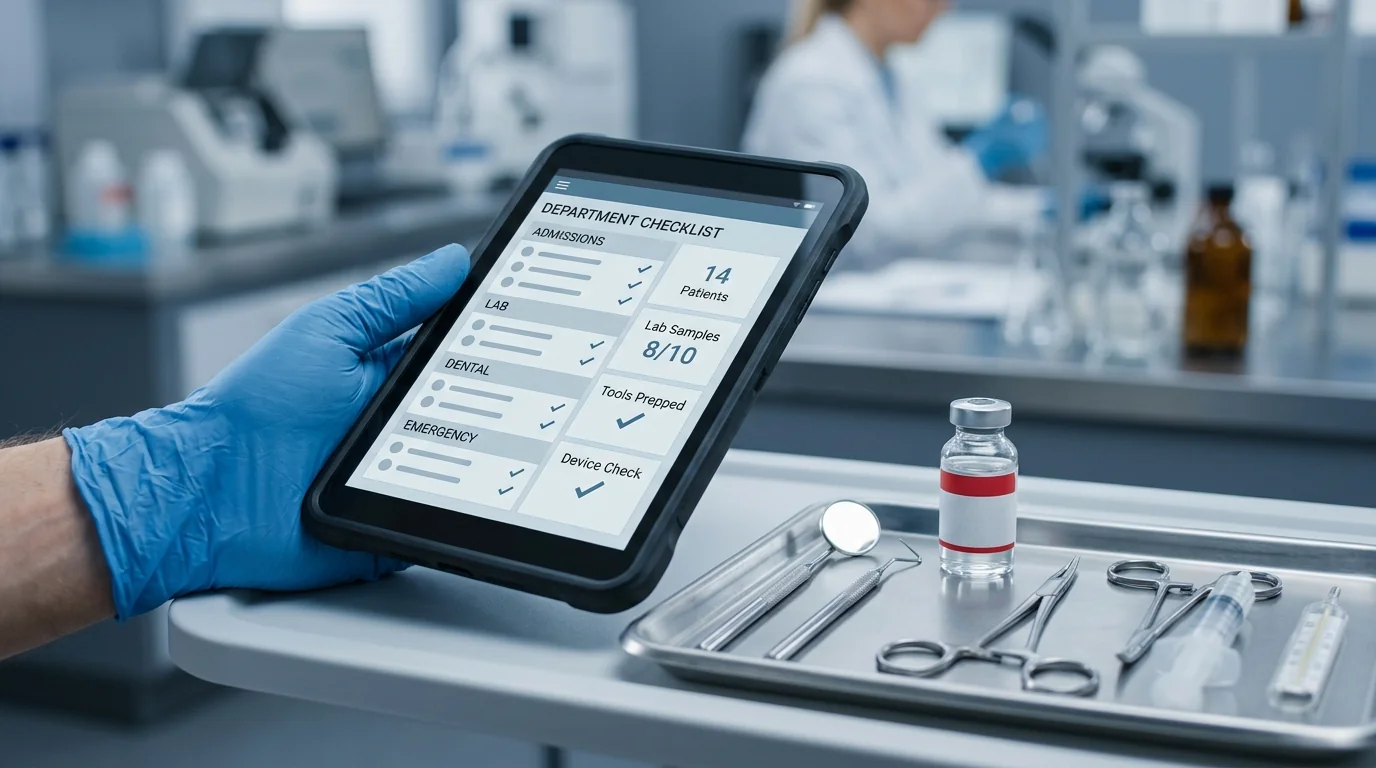 Before evaluating any product, define your specific requirements. A multi-specialty hospital's needs differ vastly from a standalone dental clinic or a pathology lab.
- Define Use Cases by Department:
- General Examination (OPD, Wards): Standard tactile sensitivity and barrier protection are sufficient.
- Phlebotomy/Lab Work: Requires high tactile sensitivity, puncture resistance, and a secure grip.
- Dental Procedures: High demand for puncture resistance (from sharp instruments) and tactile feedback.
- Minor Procedures/Sterile Fields: Requires individually wrapped, sterile gloves.
- Janitorial/Housekeeping: Needs higher chemical resistance and durability; may not require medical-grade specifications.
- Estimate Consumption Volume:
- Calculate daily usage per bed, per department, or per procedure.
- Factor in buffer stock requirements based on your supply chain lead times.
- Review historical data to identify consumption spikes and plan accordingly. When you order examination gloves for clinic or hospital use, accurate forecasting prevents both stockouts and overstocking.
- Identify User-Specific Needs:
- Are there known latex sensitivities among staff that mandate a 100% nitrile policy?
- What are the most common sizes required? (Typically Medium and Large, but ensure Small and Extra-Large are available to prevent poor fit and tears).
Step 2: Key Specifications & Regulatory Standards to Evaluate
Once you know what you need, use these technical criteria to assess potential products. The details on the box and in the technical data sheet are non-negotiable points of verification.
- Material Integrity:
- 100% Nitrile Butadiene Rubber (NBR): Verify the material composition. Nitrile offers superior chemical and puncture resistance compared to latex and vinyl, and it eliminates the risk of Type I latex allergies.
- Certifications and Compliance (Non-negotiable for Medical Use):
- BIS (Bureau of Indian Standards): Check for IS 17462:2020 certification for medical examination gloves. This is a critical mark of quality and safety for use in India.
- CDSCO Manufacturing License: Ensure the manufacturer is licensed by the Central Drugs Standard Control Organization.
- International Standards: Look for compliance with ASTM D6319 (the standard for nitrile examination gloves for medical application) and EN 455 (the European standard for medical gloves). These indicate a product manufactured to global quality benchmarks.
- Physical and Performance Metrics:
- AQL (Acceptable Quality Level): This measures the percentage of acceptable defects (pinholes) in a batch. For medical-grade examination gloves, an AQL of 1.5 is the standard. A lower number signifies higher quality and better barrier integrity. Avoid gloves with an AQL of 2.5 or 4.0 for clinical tasks.
- Thickness (mil): Measured in thousandths of an inch.
- 3-4 mil: Standard for tasks requiring high tactile sensitivity, like examinations or phlebotomy. A quality product like the Glovesi Nitrile Powder Free Examination Gloves - Medium fits this profile.
- 5-8 mil: Better suited for tasks with higher puncture or chemical exposure risks, such as in labs or for some emergency procedures.
- Powder-Free: This is now the clinical standard. Cornstarch powder on older glove types can aerosolize, causing respiratory irritation, allergic reactions, and potential wound contamination. Polymer coatings or chlorination processes are used in modern gloves to make them easy to don without powder.
- Texture: Most quality nitrile gloves feature micro-textured fingertips to provide a reliable grip on instruments, even when wet.
- Sterility: Differentiate between non-sterile examination gloves (supplied in dispenser boxes) and sterile powder free surgical gloves (packaged in individual sterile pairs). Do not use non-sterile gloves for any invasive procedure.
Step 3: Comparison Criteria Beyond the Spec Sheet
Two products with similar specifications can perform very differently in a real-world clinical setting.
| Evaluation Criteria | What to Look For | Why It Matters Operationally |
| Sizing Consistency | Request samples to check for uniformity across a single size and between different sizes. A "Medium" should be consistent from box to box. | Poor sizing leads to staff frustration, gloves tearing during donning, and unnecessary waste, driving up overall consumption. |
| Donning & Fit | How easily can the glove be put on? Does the beaded cuff prevent roll-down during use? | Difficult-to-don gloves slow down clinical workflows. A cuff that rolls down exposes the wrist, compromising barrier protection. |
| Packaging Design | Is the dispenser box durable? Does it dispense one glove at a time without causing clumps? | Flimsy boxes get crushed in storage. Poor dispensing leads to contamination of other gloves in the box and increases waste. |
| Shelf Life | Check the manufacturing and expiry dates on the carton. A typical shelf life for nitrile gloves is 3-5 years. | Sourcing products near their expiry date creates a risk of material degradation, reducing their protective properties and forcing premature disposal. |
Step 4: Common Procurement Pitfalls to Avoid
Even experienced teams can make oversights. Here are common traps to avoid when sourcing nitrile gloves.
- The "One-Glove-Fits-All" Approach: Standardizing on a single glove type for every department to simplify ordering is inefficient. A heavy-duty glove is overkill for a simple check-up, and a thin examination glove is unsafe for handling cytotoxic drugs or harsh disinfectants.
- Ignoring End-User Feedback: The clinicians, nurses, and lab technicians using these gloves daily are your best source of information on performance. A glove that looks good on paper but causes skin irritation or tears easily will be rejected by staff, leading to compliance issues.
- Sourcing from Unverified Suppliers: Procuring from suppliers who cannot provide batch test reports (Certificates of Analysis) or proof of regulatory compliance exposes your facility, staff, and patients to significant risk from counterfeit or substandard products.
- Focusing Exclusively on Unit Cost: A cheaper glove that tears 15% of the time is more expensive in the long run than a slightly higher-cost glove with a 1% failure rate. Total cost of ownership includes the cost of waste and the clinical risk of barrier failure.
By implementing a systematic evaluation process based on these checklists, you ensure that your facility is equipped with reliable, compliant, and fit-for-purpose hand protection.
Equip Your Facility Today
A methodical approach to sourcing consumables like gloves reinforces your facility's commitment to safety and quality. By evaluating products against these technical and operational benchmarks, you can build a reliable supply chain that supports your clinical teams effectively. Explore MedikaBazaar's range of vetted, high-quality consumables to meet your institution's specific needs.
FAQs

