

Labs
Understanding Ultrasound Gel: A Clinical and Operational Perspective
A detailed guide for healthcare professionals on the properties, types, and operational considerations of medical ultrasound gel. Learn key selection criteria.


As clinicians and operations managers, we understand that diagnostic accuracy depends on the integrity of every component in the imaging chain. While we focus heavily on the specifications of the ultrasound machine and the skill of the sonographer, an often-overlooked consumable plays a non-negotiable role: ultrasound gel. This is not merely a lubricant; it is a critical acoustic coupling agent, and its properties directly impact image quality, patient safety, and operational efficiency.
This guide moves beyond the basics to provide a practical framework for evaluating, sourcing, and managing ultrasound gel within an Indian healthcare facility, whether a high-volume hospital radiology department or a specialised private clinic.
The Physics of Acoustic Impedance: Why Gel is Non-Negotiable
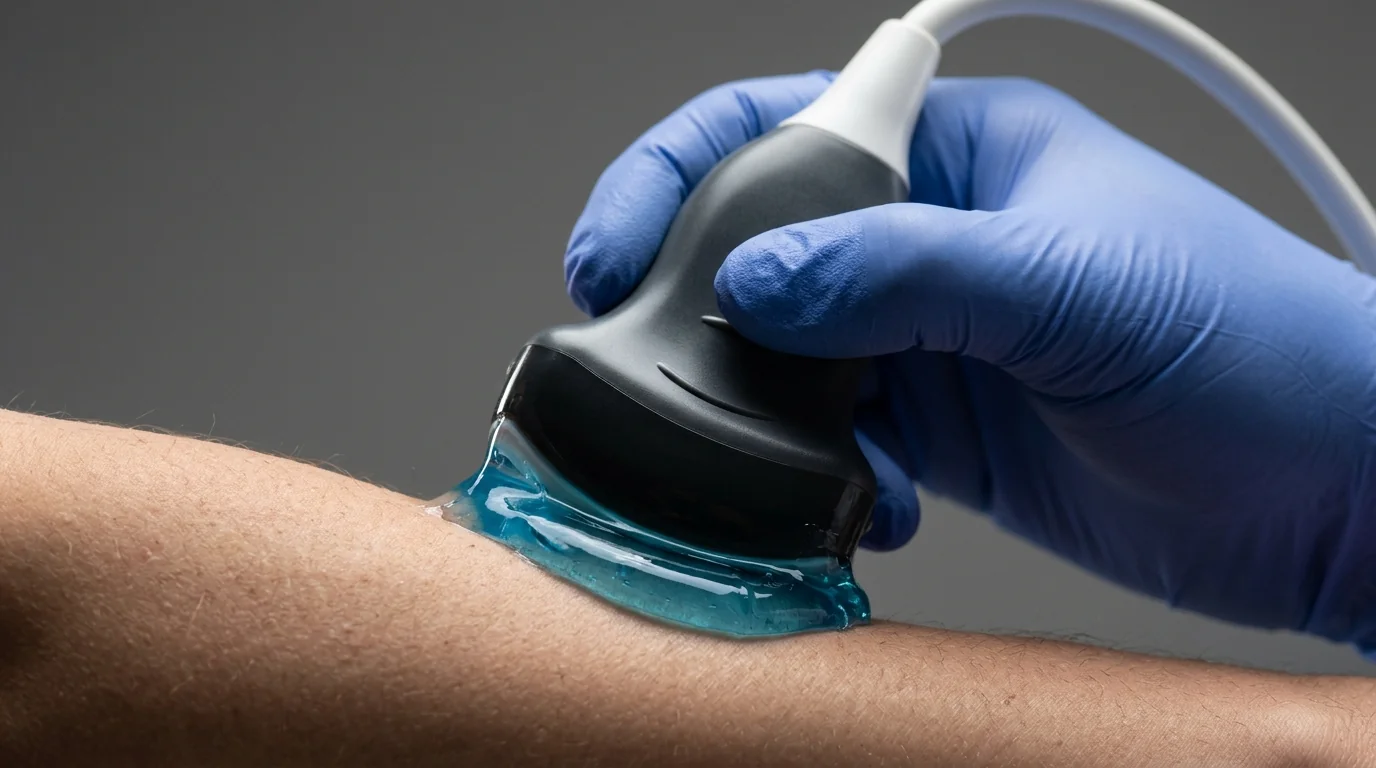 To appreciate the function of the gel, we must first consider the physics. An ultrasound transducer emits high-frequency sound waves. For these waves to generate a clear image, they must travel from the transducer into the body's tissues with minimal disruption.
The primary obstacle is air. The significant difference in acoustic impedance—a measure of resistance to sound wave propagation—between the transducer face and the air trapped against the skin causes over 99% of the ultrasound energy to be reflected. This results in a complete loss of signal and an uninterpretable image.
Ultrasound gel solves this problem. It is a water-based medium specifically formulated to have an acoustic impedance similar to that of human soft tissue. By displacing the air and creating a seamless connection between the transducer and the skin, it ensures efficient and clear transmission of sound waves, forming the foundation for any diagnostic ultrasound procedure.
Key Properties: An Evaluation Framework for Ultrasound Gel
When evaluating different types of ultrasound gel, move beyond a simple feature list and consider how each property translates to clinical performance and patient experience.
- Acoustic Transmission: This is the gel's primary purpose. A quality formulation is "acoustically correct for the broad range of frequencies used," ensuring minimal signal loss or artifact generation.
- Viscosity: This determines the gel's consistency and handling characteristics. There is no single "best" viscosity; the optimal choice depends on the application.
- High Viscosity: Thicker, less "runny." Stays in place on contoured or vertical body parts. Ideal for vascular Doppler, musculoskeletal (MSK) scans, or any procedure requiring the probe to remain stationary for extended periods.
- Medium/Low Viscosity: Spreads easily and quickly across large surface areas. Preferred for standard abdominal, pelvic, and obstetric examinations.
- Hypoallergenic Formulation: Patient safety is paramount. The gel should be non-irritating, non-sensitising, and free from common allergens like latex, parabens, and added fragrances. This is especially critical for paediatric patients or individuals with sensitive skin.
- Water Solubility and Non-Staining: From an operational standpoint, ease of cleanup is essential. The gel should be completely water-soluble, wiping away cleanly from the patient's skin and the transducer without leaving a sticky residue or staining linen and uniforms.
- Sterility: This is a critical differentiator. Gels are broadly categorised as non-sterile for general use and sterile for specific procedures. We will cover this in more detail below.
Types of Ultrasound Gel and Their Clinical Applications
Matching the type of gel to the clinical procedure is a fundamental aspect of both patient safety and regulatory compliance.
Standard Blue or Clear Gel (Non-Sterile) This is the workhorse for most diagnostic imaging departments.
- Clinical Use: For all external, non-invasive procedures on intact skin. This includes routine abdominal, obstetric, gynaecological (transabdominal), cardiac (transthoracic), and vascular scans.
- Packaging: Typically supplied in 250ml squeeze bottles for direct use or in 5-litre cans for refilling smaller dispensers in high-volume settings.
Sterile Gel (Single-Use) This is mandatory for any procedure that breaches the skin or involves contact with mucous membranes or sterile fields.
- Clinical Use: Ultrasound-guided biopsies, fine-needle aspirations (FNA), fluid drainage, central line placements, transvaginal/transrectal scans, and intraoperative ultrasound.
- Packaging: Always supplied in sterile, single-use foil or plastic sachets (commonly 20g) to prevent cross-contamination.
Operational Checklist for Procurement and Use
Effective management of this simple consumable can prevent procedural delays and mitigate risks.
- Volume Estimation: Base your procurement cycle on actual consumption. A busy department might use 3-5 litres per day, whereas a single-physician clinic may only need one 5-litre can per month. Track usage to optimise stock levels.
- Dispensing Strategy: Evaluate the trade-offs between bulk containers and single-use bottles.
- 5L Cans: More economical for high-volume use but introduce the risk of contamination during refilling. Refilling must be done in a designated clean area, not in the patient examination room.
- 250ml/500ml Bottles: More convenient and significantly reduce the risk of cross-contamination. The slightly higher unit outlay is often justified by improved infection control.
- Stock Rotation and Storage: Implement a strict First-In, First-Out (FIFO) system. Store gel in a cool, dry location away from direct sunlight, and always check the expiry date before use. Expired gel can lose its optimal viscosity and may pose a microbial risk.
- Transducer Care: Always select a gel that is certified as non-corrosive and safe for ultrasound transducers. Improper formulations can degrade the sensitive membrane of the probe over time, leading to costly repairs or replacement. While the gel is a crucial consumable, its effective use depends on well-maintained probes and systems, part of the broader range of Medicalequipments that require regular quality checks.
Safety, Sterility, and Regulatory Compliance
Infection control is a major consideration in the handling of ultrasound gel. Multi-use, non-sterile bottles are a known potential vector for nosocomial pathogens if handled improperly.
- Never Top-Up Bottles: A partially empty bottle should never be refilled. This practice can introduce and cultivate bacteria. Use the bottle until it is empty and then discard it.
- No Patient Contact with Dispenser: The tip of the gel bottle must never touch the patient's skin, the transducer, or any other surface. Dispense a sufficient amount onto the transducer head first.
- Strict Adherence to Sterility: For any procedure involving broken skin, mucous membranes, or entry into a sterile cavity, the use of sterile, single-use gel packets is non-negotiable. Using non-sterile gel in these situations constitutes a serious breach of patient safety protocols.
- Compliance: Ensure the products you procure are from reputable manufacturers with appropriate quality management certifications, such as ISO 13485, and comply with medical device regulations.
Equip Your Facility Today
Selecting the appropriate ultrasound gel is a fundamental decision that impacts diagnostic accuracy, operational workflow, and patient safety. By evaluating its acoustic properties, viscosity, and sterility against your specific clinical needs, you ensure your team can deliver the highest standard of care.
Review the range of medical-grade ultrasound gels and related diagnostic supplies available on MedikaBazaar to find the appropriate solutions for your department.
FAQs