

Dentist
Understanding the Class B Autoclave: Beyond Surface Sterilization
An operational guide for clinicians and procurement heads on the Class B autoclave. Understand the EN 13060 standard, pre/post-vacuum cycles, and why it's essential for hollow and porous loads.


As clinical and operations leads, our primary responsibility is patient safety, which hinges on uncompromising infection control. Central to this is the sterilization of our instruments. While standard autoclaves handle basic, solid instruments effectively, the challenge intensifies with complex loads. Achieving true sterility inside the fine lumens of a dental handpiece or deep within a wrapped surgical kit requires a more advanced approach. This is the specific role of the class b autoclave, the highest standard in steam sterilization technology.
These systems are not just an upgrade; they represent a fundamental difference in sterilization mechanics, designed to handle the most difficult loads encountered in surgical, dental, and specialty practices. Understanding their operation is key to making sound procurement decisions and ensuring compliance.
What Distinguishes a Class B Autoclave? The EN 13060 Standard
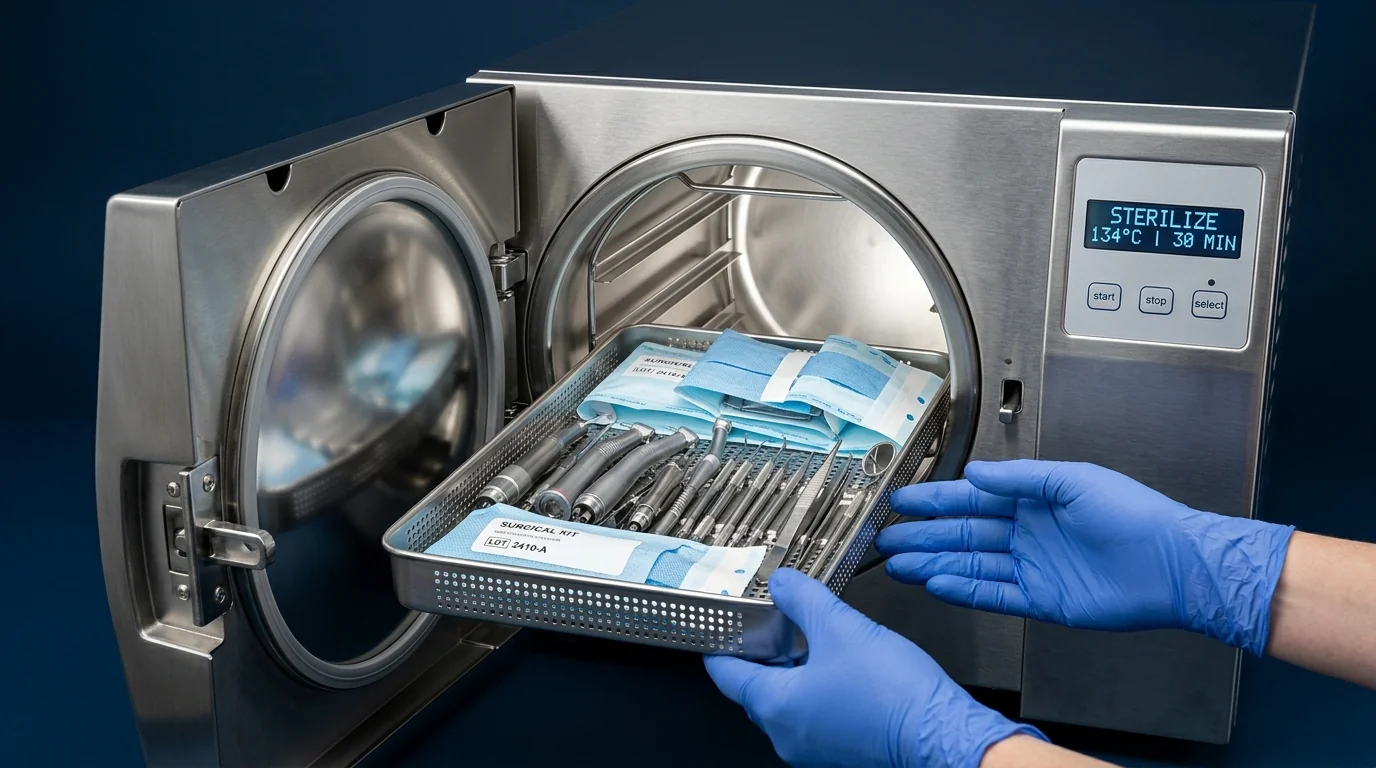 The classification of small steam sterilizers—the type most common in clinics and private practices—is governed by the European standard EN 13060. This standard defines three classes based on the types of loads they are designed to sterilize. The distinction is crucial for matching the equipment to your facility's actual instrument inventory.
- Class N Autoclaves: The 'N' stands for 'Naked' or 'Non-wrapped'. These units are designed for solid, unwrapped instruments only. They use a passive gravity displacement method, where steam entering the chamber displaces the cooler, denser air downwards. This method is ineffective for hollow, porous, or wrapped items, as air pockets can easily get trapped, preventing steam contact and sterilization.
- Class S Autoclaves: The 'S' stands for 'Specified'. These are an intermediate class designed to sterilize specific loads as defined by the manufacturer. They may include a single pre-vacuum stage for better air removal than Class N, but they are not considered universal. Their suitability depends entirely on whether your specific instrument types are validated for that machine.
- Class B Autoclaves: The 'B' stands for 'Big', referencing their ability to sterilize loads comparable to the large sterilizers found in hospital CSSDs. These are universal autoclaves, capable of sterilizing all types of loads: solid, hollow (both Type A and Type B lumens), porous materials (like surgical gowns and drapes), and single or double-wrapped instruments.
The defining feature of a Class B autoclave is its active air removal system, which makes it the only type suitable for every instrument and load configuration.
The Mechanics of a Class B Cycle: Pre-Vacuum and Post-Vacuum
The superior performance of a Class B autoclave comes from its dynamic, multi-stage sterilization cycle, primarily involving a sophisticated vacuum system.
Fractionated Pre-Vacuum Before sterilization begins, the chamber door is sealed, and a powerful vacuum pump begins to actively remove air. This is not a single, sustained pull but a series of vacuum pulses interspersed with steam injections. This "fractionated" process is highly effective at removing air from the most challenging areas—the deep recesses of porous textile packs and the long, narrow channels of hollow instruments. By removing over 99% of the air, it eliminates the air pockets that cause sterilization failures in gravity-displacement units.
Pressurized Steam Penetration Once a deep vacuum is achieved, the chamber is filled with high-temperature, saturated steam under pressure. With no air to impede it, the steam makes immediate and direct contact with every surface of the load, ensuring rapid and effective transfer of thermal energy to kill all microorganisms, including highly resistant bacterial spores.
Post-Vacuum Drying After the sterilization phase, the cycle concludes with a post-vacuum drying phase. The vacuum pump activates again to remove all residual moisture from the chamber and the load. This is critically important for two reasons:
- Maintaining Sterility: A wet instrument pack can act as a wick, drawing microorganisms from the environment through the packaging, compromising its sterility.
- Instrument Care: Thorough drying prevents corrosion and spotting on valuable instruments, extending their lifespan.
Wrapped instrument packs emerge from a Class B autoclave completely dry and ready for sterile storage or immediate use.
Clinical Applications: Where is a Class B Autoclave Non-Negotiable?
The need for a Class B autoclave is dictated entirely by the type of instruments and materials your facility uses. This level of performance is critical across several disciplines, from routine Dental procedures to complex surgical interventions. If your inventory includes any of the following, a Class B unit is the operational and clinical standard.
- Dentistry: This is perhaps the most common application. Dental handpieces, turbines, contra-angles, and implantology instruments are classic Type A hollow instruments. Air trapped within their internal channels cannot be removed by a Class N autoclave, leading to certain sterilization failure. This is why a Class B autoclave, such as a tabletop unit like the SUN-23-II Class B Autoclave, is considered the standard of care in any modern practice.
- Ophthalmology: Instruments like phaco handpieces, irrigation/aspiration cannulas, and vitreoretinal instruments have fine, complex lumens that demand the air removal capability of a Class B cycle.
- Endoscopy and Laparoscopy: While many scopes are processed via high-level disinfection, ancillary instruments like trocars, biopsy forceps, and suction cannulas require terminal sterilization. Their long, hollow construction makes a Class B unit essential.
- Minor OT and Surgical Suites: Any facility that prepares and uses wrapped surgical kits, drapes, or gowns requires a Class B autoclave. The pre-vacuum cycle is necessary to ensure steam penetrates the layers of textile or wrapping material.
Operational Considerations for Procurement and Management
When selecting a Class B autoclave, several operational factors beyond the sterilization class itself must be evaluated.
- Load Type Assessment: The primary driver is your instrument inventory. A thorough audit of all items requiring sterilization will confirm the necessity of a Class B unit. If you use any hollow, porous, or wrapped items, the decision is clear.
- Chamber Size and Throughput: Chamber capacity, measured in litres, must align with your daily operational volume. Consider the size of your largest instrument trays and the number of cycles you anticipate running per day. A larger chamber can process more instruments at once, but may have longer cycle times and higher utility consumption.
- Cycle Speed: The total time for a standard wrapped-instrument cycle is a key performance metric. Faster cycles improve workflow and instrument turnaround time, which is particularly important in high-volume clinics.
- Water Quality: This is a non-negotiable operational point. Class B autoclaves must be fed with demineralized or distilled water. Using tap water will lead to rapid scale buildup, clogged valves, and damage to both the autoclave and the instruments. Your facility must have a reliable source of high-purity water, whether from a distiller or a reverse osmosis (RO) system.
- Data Logging and Traceability: For NABH accreditation and general best practice, maintaining a record of each sterilization cycle is mandatory. Modern autoclaves provide this through built-in printers or USB ports that log all critical cycle parameters (time, temperature, pressure). This data is your proof of sterility for every batch.
Routine Maintenance and Validation for Assured Sterility
A Class B autoclave is a precision instrument; its reliability depends on proper use and routine validation.
- Daily Maintenance: This includes visually inspecting the door gasket for damage, wiping it clean, and cleaning the interior of the chamber to remove any debris.
- Periodic Cleaning: Weekly or monthly, the trays, rack, and any filters should be removed and cleaned according to the manufacturer's instructions.
- Process Validation and Monitoring: This is how you prove the machine is working correctly.
- Bowie-Dick Test: This test is specifically for autoclaves with a pre-vacuum cycle. It uses a special chemical indicator sheet placed in the center of a textile pack to challenge the system's air removal efficiency. It should be run daily in an empty chamber.
- Helix Test: This Process Challenge Device (PCD) is the standard for validating performance on hollow loads. It consists of a long, narrow tube with a chemical indicator at the end. If steam successfully penetrates the entire length of the tube and changes the indicator, it confirms the vacuum system is capable of sterilizing your most challenging hollow instruments.
- Biological Indicators (BIs): Considered the gold standard of sterility assurance, BIs contain a high concentration of highly resistant bacterial spores (Geobacillus stearothermophilus). A BI is placed in the most challenging part of a load and run through a cycle. It is then incubated to see if any spores survived. This test is typically performed weekly and after any major repairs.
- Chemical Indicators (CIs): These are strips or tapes (Class 4, 5, or 6) placed inside each pack. They undergo a color change when exposed to the correct sterilization parameters, providing a visual confirmation for each individual pack.
Equip Your Facility Today
Ensuring the highest standard of sterilization is fundamental to patient safety and operational excellence. By understanding the specific capabilities and operational requirements of a Class B autoclave, you can make an informed decision that aligns with your facility's clinical needs and quality standards. For a detailed look at specifications and options suitable for your practice, explore the range of sterilization equipment on MedikaBazaar.
FAQs

