
Tracheostomy Basics & Types


Tube Materials & Sizing Guide
Tracheostomy tubes are essential for maintaining a patent airway, enabling positive pressure ventilation, and allowing effective secretion removal in patients with upper airway obstruction. Choosing the appropriate tube is crucial for patient comfort, safety, efficient ventilation, and long-term care, as the tube also keeps the tracheal stoma open.
These tubes are made from different materials, each with specific benefits. Metal tubes (silver or stainless steel) are durable, resist bacterial growth and biofilm formation, and can be heat-sterilized, but their rigidity, higher cost, lack of a cuff, and absence of a 15-mm ventilator connector limit routine use. Non-metallic tubes, commonly made from PVC, silicone, or polyurethane, are more widely used. PVC softens at body temperature to adapt to patient anatomy, while silicone remains soft, resists colonization, and is sterilizable. Most modern tubes include an obturator for safe insertion, and some feature a tracheal wedge to reduce the risk of accidental dislodgement.
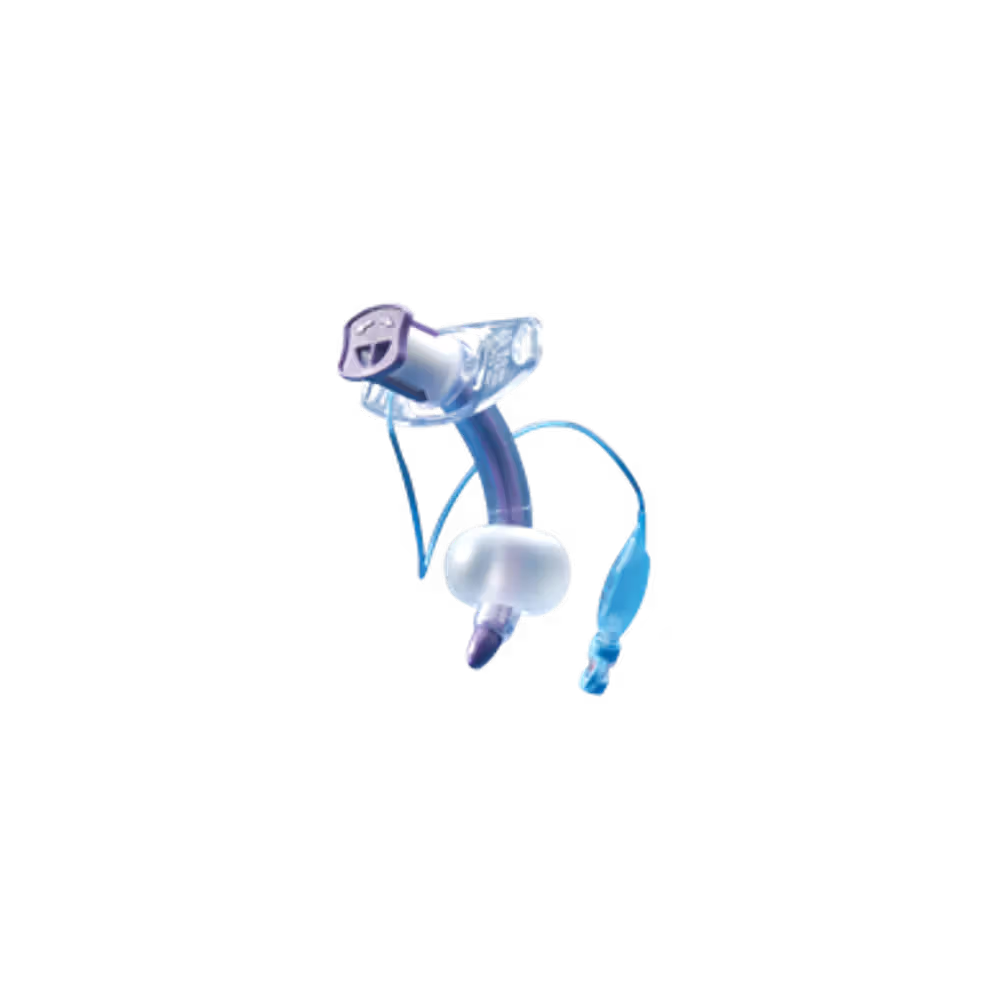
Tube dimensions play a key role in care and comfort. Many tracheostomy tubes have a removable inner cannula that allows easy cleaning without replacing the outer tube. Both inner diameter (ID) and outer diameter (OD) must be considered, as material thickness affects airflow and fit. Tube shape is also important tapered tubes are easier to insert during changes, and size is defined by the inner diameter at the tip. Changes in diameter can influence breathing effort and speech, making correct selection essential.
| Patient Category | Weight Range | Recommended Inner Diameter (ID) |
| Premature infants | < 2.5 kg | 2.0 – 3.0 mm |
| Newborns | 2.5 – 5.0 kg | 3.0 – 3.5 mm |
| Children | 5 – 8 kg | 3.5 – 4.0 mm |
| Children | 8 – 10 kg | 4.0 – 5.0 mm |
| Children | 10 – 15 kg | 4.5 – 5.5 mm |
| Children | 15 – 20 kg | 5.0 – 6.0 mm |
| Children | 20 – 35 kg | 6.0 – 7.5 mm |
| Women | — | 7.0 – 9.0 mm |
| Men | — | 8.0 – 10.5 mm |
An appropriately sized tracheostomy cannula ensures adequate airflow, reduces airway trauma, and supports effective phonation and secretion clearance. Tubes with a smaller inner diameter may increase breathing effort, while larger diameters can affect speech by reducing airflow pressure. Material type and wall thickness also influence both the inner and outer diameters, making careful selection critical.
Indications for Tube Placement
Tracheostomy may be performed as an emergency or elective procedure, depending on the patient’s clinical condition. In routine clinical practice, the most common indication is to support ventilator weaning in patients with acute respiratory failure who cannot be successfully liberated from mechanical ventilation in the intensive care unit (ICU).
Emergency Indications
An emergent tracheostomy is required when there is an immediate threat to airway patency or ventilation, such as:
Upper airway obstruction: Acute obstruction caused by foreign bodies, soft tissue edema, trauma, or infections may necessitate an urgent tracheostomy. Severe or permanent airway damage, such as from inhalation or chemical burns, may require long-term tracheostomy.
Inability to maintain a patent airway: Patients with reduced consciousness, brainstem injury, or dysfunction of cranial nerves (V, VII, IX, X, or XII) may be unable to protect their airway or prevent aspiration of saliva, food, or liquids.
Ineffective clearance of bronchial secretions: Patients with a weak or ineffective cough may benefit from tracheostomy to allow easier suctioning and airway clearance.
Elective Indications
Elective tracheostomy is considered when long-term airway support is anticipated or when it improves patient safety and comfort:
Prolonged mechanical ventilation: Extended endotracheal intubation increases the risk of oral, pharyngeal, and tracheal injury, limits communication, and increases the work of breathing. Tracheostomy reduces airway resistance, shortens dead space, facilitates communication, and supports ventilator weaning.
Surgery involving the upper airway: Certain maxillofacial or ENT procedures require a secure airway without obstructing the oral or pharyngeal surgical field.
Laryngectomy: In cases of advanced laryngeal cancer unresponsive to radiation therapy, removal of the larynx requires permanent diversion of the trachea to a stoma in the neck, making tracheostomy essential.
Cuffed vs. Uncuffed Options
Cuffed endotracheal tubes are widely used in surgical and critical care settings where secure airway management and precise ventilation are essential. Cuffed tubes create an effective tracheal seal, helping prevent aspiration of gastric contents and reducing the risk of aspiration pneumonia. They support efficient, loss-free ventilation with better control of airway pressure, making them suitable for adult patients and those at higher aspiration risk. These tubes also minimize accidental dislodgement, ensuring airway stability throughout procedures, while emphasizing safe cuff inflation to protect tracheal tissues.
Role of Uncuffed Tracheal Tubes in Pediatric Care
Uncuffed tracheal tubes are commonly used in pediatric patients due to their smaller and more delicate airways. The absence of a cuff reduces the risk of tracheal injury and lowers airway resistance, supporting easier breathing and suctioning. While uncuffed tubes carry a higher risk of air leakage and aspiration, they remain a preferred option in certain pediatric cases. Clinical practice is evolving, with careful use of cuffed tubes in children when better airway sealing and ventilation control are required.
Inner Cannula Maintenance
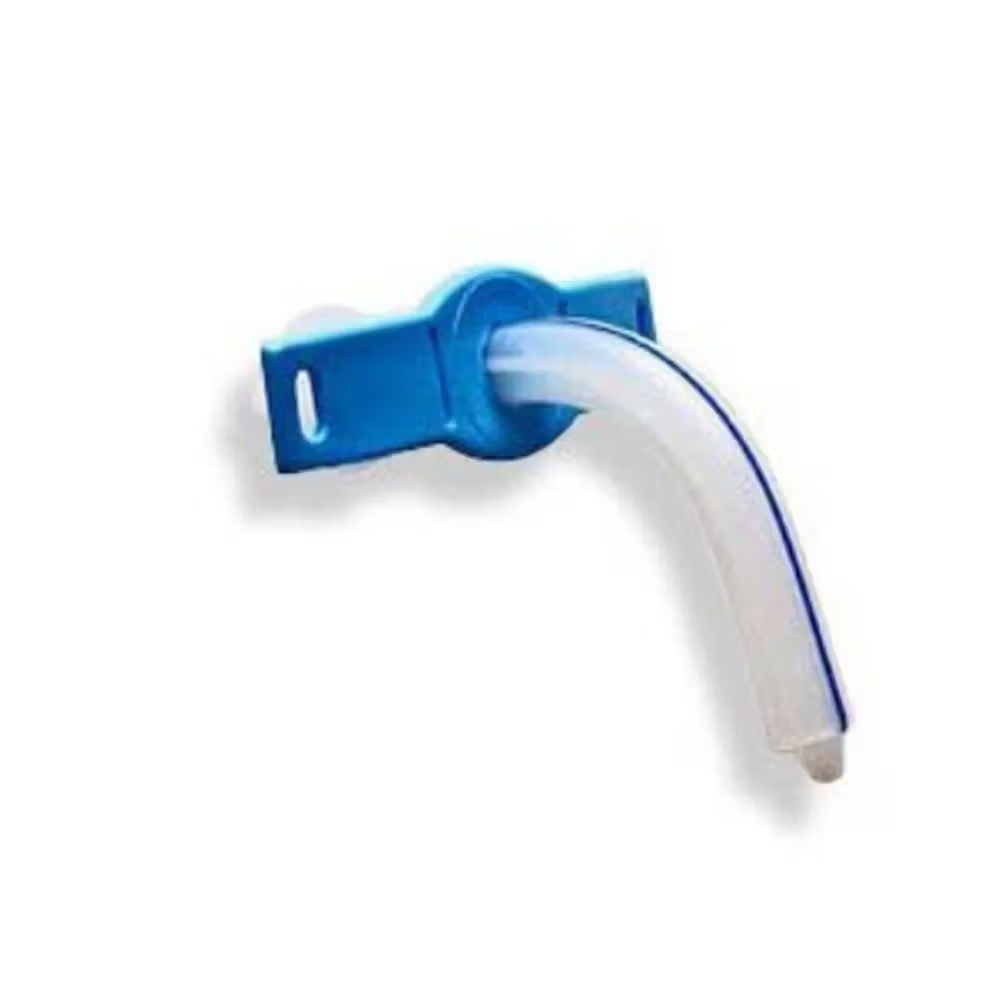
The inner cannula is a removable tube placed inside the outer cannula of a tracheostomy tube and is primarily used for effective secretion management. While it slightly reduces the inner diameter of the airway thereby increasing airflow resistance it offers a major safety advantage: if blocked by secretions, the inner cannula can be quickly removed and replaced without changing the entire tracheostomy tube, helping avoid emergency tube replacement.
Inner cannulas may be disposable or non-disposable. Disposable cannulas are replaced after use, while non-disposable types are cleaned and reinserted. Regular inspection and cleaning are essential to prevent secretion buildup, airway blockage, and infection. The inner cannula should be checked at least once every 8 hours or sooner if respiratory distress is suspected. Cleaning practices vary, though sterile saline is commonly used. Disposable inner cannulas can improve care compliance but involve higher costs and environmental considerations.
Emergency Tube Replacement
Emergency Tube Replacement is required when a tracheostomy tube becomes blocked, dislodged, or causes acute respiratory distress. Immediate assessment of airway patency, oxygenation, and patient stability is essential. If possible, the inner cannula should be removed first to relieve obstruction before replacing the entire tube. Prompt, skilled intervention helps prevent hypoxia, airway trauma, and life-threatening complications.
Wholesale Buying Tips
When buying medical supplies wholesale, prioritize certified products from trusted manufacturers to ensure quality and safety. Compare pricing, shelf life, and minimum order quantities to avoid wastage. Choose suppliers that offer reliable delivery and after-sales support for uninterrupted operations.
Respiratory Consumables Overview
Respiratory consumables include essential products such as oxygen masks, nebulizer kits, breathing circuits, filters, and tracheostomy accessories used in airway and ventilatory care. These items support effective oxygen delivery, infection control, and patient comfort across hospitals and homecare settings. Consistent quality and timely replacement are critical for safe respiratory management.
Related Products

Fastest by 11th Apr
COD
Romsons Romo Soft Percutaneous Tracheostomy Tube
₹344
₹1,73880% OFF
Fastest by 8th Apr
COD
Portex Blue Line Ultra Cuff Tracheostomy Tube
₹8,662
₹16,29547% OFF
₹8,229 with MBPLAN
Clearance
Fastest by 9th Apr
COD
Romsons Tracheostomy Tube
₹120
₹59580% OFF
5
Fastest by 16th Apr
COD
Madored Tracheostomy Tube
₹550
₹2,07874% OFF
₹523 with MBPLAN
Clearance
5
Fastest by 9th Apr
COD
Romsons Tracheostomy Tube Cuffed
₹1,203
₹6,68582% OFF


FAQs
SOCIAL MEDIA
DOWNLOAD APP
HELP US IMPROVE
SOCIAL MEDIA
DOWNLOAD APP