

Dentist
Selecting the Right Surgical Scissors: A Clinician's Operational Guide
An operational guide for clinicians and procurement heads on selecting surgical scissors. Covers types, materials (stainless steel vs. tungsten carbide), and maintenance.


In any operating theatre, outpatient department, or specialised clinic, surgical scissors are a foundational instrument. However, their ubiquity can lead to oversight in selection and management. Choosing the correct pair is not a trivial matter of "sharps"; it's a critical decision that directly impacts tissue handling, procedural efficiency, and patient outcomes. An instrument designed for dissecting delicate fascia will fail when used on a suture, and vice-versa.
For procurement managers and senior clinicians, understanding the functional distinctions between different types of surgical scissors is essential for equipping a facility correctly. This guide moves beyond basic identification to cover the operational realities of selection, material science, and lifecycle management, ensuring every cut is clean, precise, and appropriate for the task at hand.
Differentiating Surgical Scissors by Function and Design
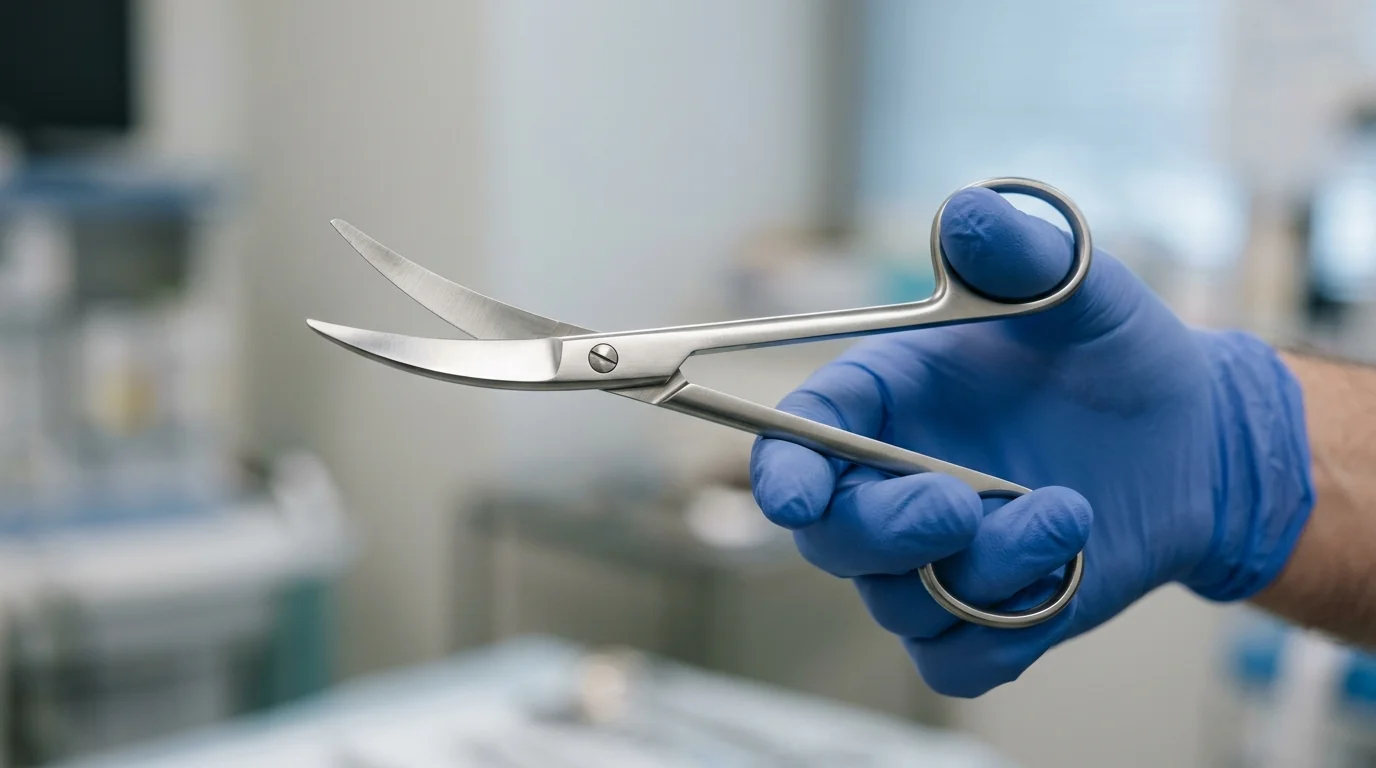 The primary classification of surgical scissors is based on their intended use, which dictates their physical design—from the weight and length to the shape of the blades and tips. Matching the instrument to the tissue type and procedural depth is the first and most critical step.
-
Mayo Scissors: These are the heavy-duty workhorses of the OT. Characterised by their semi-blunt tips and a robust shank-to-blade ratio, they are designed for cutting dense tissues, such as fascia, muscle, and cartilage. They are also the standard instrument for cutting sutures.
- Straight Mayo Scissors: Typically used for surface-level work and suture cutting.
- Curved Mayo Scissors: Allow for deeper penetration into a wound, enabling dissection of tougher tissues while keeping the operator's hands out of the line of sight. For a versatile option in general procedures, facilities often stock a range of operating and dressing scissors.
-
Metzenbaum Scissors: In contrast to Mayos, Metzenbaum scissors are built for fine dissection of delicate tissues. They feature long, slender shanks and relatively short blades. This design provides excellent control and reach for separating and cutting soft tissues with minimal iatrogenic trauma. Using them on sutures or heavy fascia will quickly dull and damage their fine blades.
-
Iris Scissors: Originally developed for ophthalmic procedures, these small, sharp scissors are now indispensable for any procedure requiring fine, precise cuts. With their extremely sharp, pointed tips, they are ideal for detailed dissection of delicate tissues and are frequently used in plastic surgery, dermatology, and dental procedures.
-
Suture Scissors: These instruments are purpose-built for suture removal. Models like Spencer or Littauer scissors have a distinct feature: a small hook or notch on one blade. This allows the operator to safely slip the tip under a suture, lift it away from the skin, and cut it without pinching or pulling the patient's tissue.
-
Bandage Scissors (Lister): A common sight in casualty and on ward trolleys, these scissors are designed for safety. The angled blades and the blunted, flattened tip on the lower blade allow for the cutting of bandages and dressings while the instrument is pressed against the skin, minimising the risk of accidental injury.
Material Science: Stainless Steel vs. Tungsten Carbide Inserts
The material from which a pair of surgical scissors is made determines its sharpness, durability, and longevity. This is a primary consideration from both a clinical performance and a long-term procurement standpoint.
Surgical-Grade Stainless Steel This is the industry standard for most reusable surgical instruments. High-grade stainless steel (often from the 400 series, like 420 or 440) provides an excellent balance of properties. It can be honed to a very sharp edge, is highly resistant to corrosion from blood and cleaning agents, and can withstand repeated high-temperature sterilisation cycles in an autoclave. For routine procedures where a reliable, sharp edge is needed, a standard pair like the Topdent Surgical Scissors is a common and effective choice.
Tungsten Carbide (TC) Inserts For high-volume, high-precision environments, scissors with tungsten carbide blade inserts represent a significant upgrade.
- Hardness and Edge Retention: Tungsten carbide is one of the hardest materials used in surgical instruments. TC blades retain their sharp edge far longer than stainless steel, delivering consistently clean cuts with less force. This reduces tissue trauma and operator fatigue.
- Identification: By convention, instruments with TC inserts are identified by gold-plated finger rings. This allows for quick identification in a surgical set, ensuring these premium instruments are used and handled appropriately.
- Lifecycle: While the initial investment is higher, the extended lifespan and superior performance can make TC scissors a more operationally sound choice for busy operating theatres.
Blade and Tip Variations: A Practical Checklist
Beyond the broad categories, the specific configuration of the blades and tips defines the instrument's precise role. When evaluating options, consider these three factors:
-
Blade Configuration
- Sharp/Sharp (S/S): Both blades are sharp and pointed. Ideal for penetrating tissue and making precise cuts where entry and exit points are well-defined. Iris scissors are a prime example.
- Sharp/Blunt (S/B): A versatile combination. The sharp blade handles the cutting, while the blunt blade can be placed against underlying structures to prevent accidental puncture or damage.
- Blunt/Blunt (B/B): Used for blunt dissection, spreading tissues rather than cutting them. Also used for cutting sutures or other materials where a pointed tip would be a hazard.
-
Blade Curvature
- Straight Blades: Best for superficial work and making straight, clean cuts. Suture removal and surface tissue trimming are common applications.
- Curved Blades: Essential for working in deeper cavities. The curve follows the natural contours of the body, improves visibility at the tip, and allows the surgeon to cut around vital structures.
-
Blade Edge
- Plain Edge: The standard, smooth-honed edge found on most surgical scissors.
- Serrated Edge: One blade features fine serrations. This is designed to grip slippery or tough tissue, preventing it from sliding out of the blades during the cutting motion. The other blade remains plain to provide the clean cut.
Focus on Dental Applications
In dental and maxillofacial surgery, the precision and scale of work demand specialised instrumentation. While standard scissors have their place, several designs are tailored specifically for the oral cavity.
- Goldman-Fox Scissors: These are delicate scissors, often with a slight curve and very fine, sharp tips. They are a staple for gingival and periodontal procedures, allowing for precise trimming of soft tissue.
- LaGrange Scissors: The characteristic S-shaped curve of both the shanks and blades of LaGrange scissors allows for exceptional access and control in difficult-to-reach areas of the mouth.
- Crown and Bridge Scissors: These are shorter, more robust scissors, often with angled or curved blades. Their primary function is not tissue cutting but trimming materials like temporary crowns, retraction cords, and dental dams.
Equipping a modern practice requires a specific set of tools, and our full Dental collection provides instruments tailored for these precise applications. For these specific needs, exploring a curated collection of dental surgical scissors is a practical next step for any procurement manager.
Instrument Care, Sterilization, and Lifecycle Management
The performance of even the highest-quality surgical scissors degrades without proper care. Adherence to a strict cleaning and sterilisation protocol is non-negotiable for patient safety and instrument longevity.
1. Cleaning: Instruments must be cleaned immediately after use to prevent bioburden from drying. Use a neutral pH detergent and soft brush. For complex instruments, an ultrasonic cleaner is highly effective.
2. Inspection: Before sterilisation, every instrument must be inspected. Check for any signs of damage, such as cracks, pitting, or rust. Test the action to ensure it is smooth. Critically, test for sharpness. A simple and effective method is to cut through a thin piece of surgical latex glove; the scissors should cut cleanly without snagging or tearing the material.
3. Sterilisation: The standard method is steam sterilisation in an autoclave. Typical parameters are 121°C at 15 psi for 30 minutes, or 134°C for shorter flash cycles, but you must follow your facility's validated protocols and the instrument manufacturer's instructions for use (IFU). Ensure instruments are fully dry before storage.
4. Sharpening: Reusable scissors are not disposable. When an instrument fails the sharpness test, it should be removed from service and sent for professional sharpening. Tungsten carbide blades require specialised diamond-dust grinding wheels and should only be serviced by qualified technicians.
Key Procurement Considerations for Your Facility
When specifying surgical scissors, move beyond the instrument name to consider the operational context.
- Case Mix and Volume: A high-volume orthopaedic OT needs durable, heavy-duty Mayo scissors, likely with TC inserts. A low-volume dermatology clinic may be perfectly served by standard stainless steel Iris scissors.
- Surgeon Preference: Engage with senior clinicians. Surgeons develop a feel for specific instruments—their weight, balance, and action. Involving them in the evaluation process leads to better selection and user satisfaction.
- CSSD Integration: Confirm that any new instruments are fully compatible with your Central Sterile Services Department's existing cleaning and sterilisation equipment and protocols.
- Quality and Certification: Procure instruments from reputable sources that provide clear documentation on material grade (e.g., German or Japanese stainless steel) and adherence to quality management standards like ISO 13485.
Equip Your Practice with the Right Instruments
Selecting the right surgical instruments is fundamental to safe and effective clinical practice. By understanding the specific design, material, and maintenance requirements of different surgical scissors, you can ensure your teams are properly equipped for every procedure.
For a detailed look at instruments tailored to your facility's specific needs, explore the comprehensive range of surgical and dental equipment available on MedikaBazaar.
FAQs

