

Labs
Choosing the Right HIV Rapid Card: A Comparison for Indian Healthcare Facilities
A detailed comparison for procurement managers on selecting between the Oscar and Alpine HIV rapid card 50-packs for institutional diagnostic needs in India.


Selecting the right rapid diagnostic test (RDT) for HIV screening is a critical decision for any laboratory, clinic, or hospital. Beyond basic availability, the choice impacts clinical workflow, diagnostic accuracy, and compliance with national guidelines. The decision often comes down to specific operational needs and the clinical context of testing. This guide provides a structured framework for evaluating two commonly sourced options: the Oscar HIV I&II Rapid Card and the Alpine 1/2 HIV Rapid Card, both available in 50-pack configurations.
Pre-Procurement Checklist: Assessing Your Facility's Needs
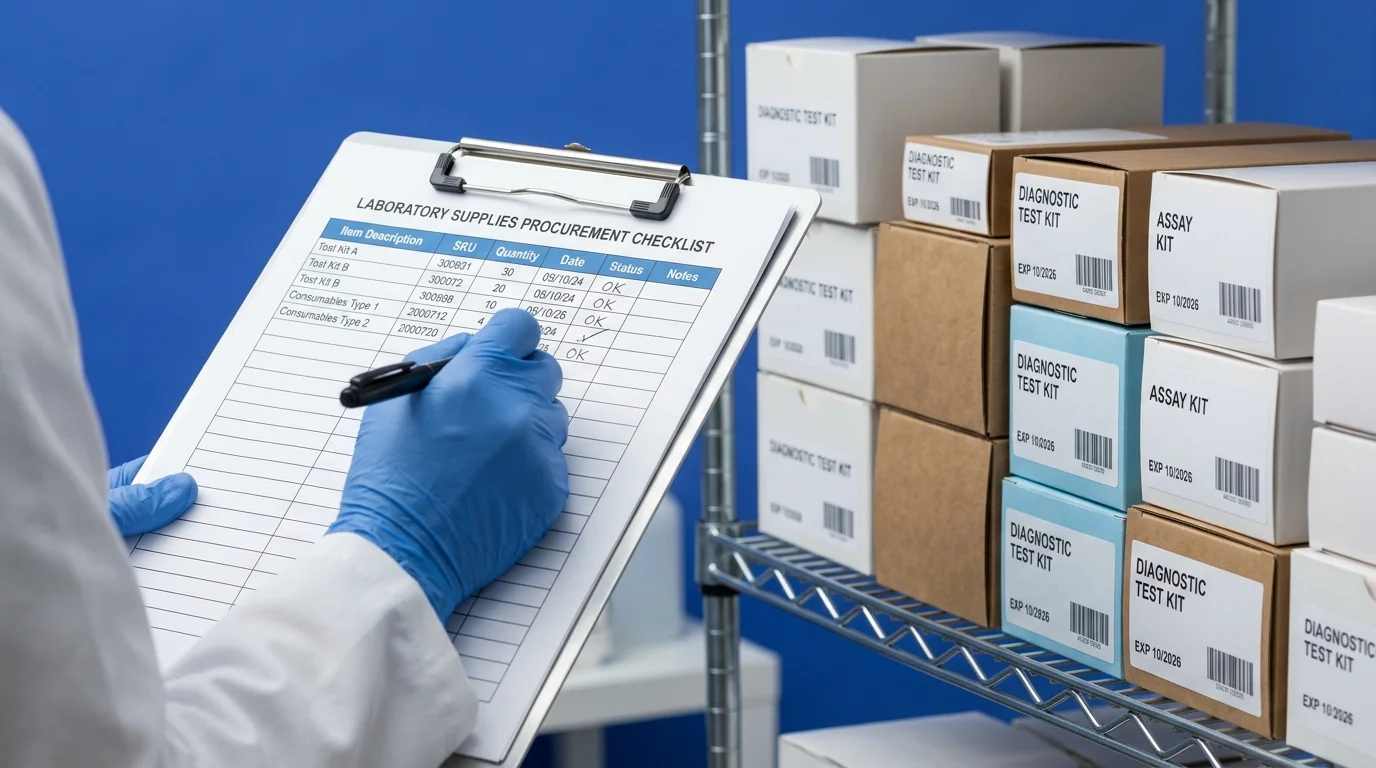 Before comparing specific kits, a thorough internal needs assessment is essential. This ensures your selection aligns with your facility's unique operational and clinical demands.
- Testing Volume: What is your anticipated daily or weekly throughput? A high-volume setting like a VCTC or blood bank has different inventory management and workflow needs than a small private clinic conducting occasional screenings.
- Use Case: Is the primary use for routine OPD screening, pre-surgical clearance, emergency/casualty triage, or as part of a structured VCTC/ICTC program under NACO guidelines? Different protocols may favor specific test characteristics.
- Sample Type: Will your phlebotomy team primarily be working with serum, plasma, or capillary (finger-prick) whole blood? Confirm that the selected diagnostic kit is validated for all sample types you intend to use.
- Staff Competency: Are your technicians well-versed in various RDT procedures, or do you require a kit with the simplest possible workflow to minimize user error? Consider factors like buffer addition steps and result interpretation time windows.
- Storage Infrastructure: Do you have consistent, temperature-controlled storage (typically 2-30°C) available, away from direct sunlight? Factor in your facility's climate and storage reliability.
Option 1: Oscar HIV I&II Rapid Card - Pack of 50 Tests
The Oscar HIV I&II Rapid Card is a widely recognized name in the Indian diagnostics market. As a long-standing product, it is frequently encountered in various healthcare settings, from large hospital labs to standalone clinics. Facilities looking for a dependable and familiar testing platform often specify this kit.
This is an immunochromatographic assay designed for the qualitative detection of antibodies specific to HIV-1 and HIV-2 in human serum, plasma, or whole blood. Its primary strength lies in its established presence and the familiarity many technicians have with its procedure. For facilities that prioritize continuity and minimal disruption to existing SOPs, sourcing from a known Oscar diagnostic tests supplier can be a key consideration. The kit typically includes individually pouched test devices, a buffer solution, and disposable sample droppers, making it a complete solution for point-of-care or laboratory use.
Ideal Use Case: High-throughput laboratories, blood banks, and VCTCs where staff are already trained on common RDT platforms and consistency with established protocols is a priority. Its use of separate bands for HIV-1 and HIV-2 (if featured) can be a useful differentiator for reference labs, though this should be confirmed from the specific lot's package insert.
Option 2: Alpine 1/2 HIV Rapid Card - Pack of 50 Tests
The Alpine 1/2 HIV Rapid Card represents another solid option for institutional screening. Like the Oscar test, it is a lateral flow immunoassay for detecting antibodies to both HIV-1 and HIV-2. While perhaps less ubiquitous than some legacy brands, Alpine provides a functional and reliable rapid test for HIV suitable for a wide range of clinical environments.
Procurement teams evaluating alternatives or seeking to diversify their supply chain may consider the Alpine kit. The key is to assess its performance characteristics—sensitivity and specificity—as detailed in the package insert and any available validation data. The workflow is generally comparable to other rapid card tests, involving the application of a sample followed by a buffer, with results available within a specified time frame (e.g., 15-20 minutes). For smaller clinics or dental practices, where simplicity and a straightforward procedure are paramount, this kit serves as an effective screening tool.
Ideal Use Case: General clinics, smaller hospitals, and diagnostic labs looking for a reliable screening diagnostic kit. It is also a viable option for facilities building a dual-supplier strategy to mitigate stock-out risks for critical consumables.
Side-by-Side Comparison: Key Evaluation Criteria
When selecting from the available range of HIV rapid card options, a direct comparison based on operational and clinical parameters is crucial. Use the following table as a template for your evaluation.
| Feature / Parameter | Oscar HIV I&II Rapid Card | Alpine 1/2 HIV Rapid Card | Your Evaluation Notes |
| Test Principle | Lateral Flow Immunoassay | Lateral Flow Immunoassay | Both use established, reliable technology. |
| Antigens Used | Recombinant HIV-1 & HIV-2 | Recombinant HIV-1 & HIV-2 | Confirm specificity from package insert. |
| Sample Type | Serum / Plasma / Whole Blood | Serum / Plasma / Whole Blood | Verify compatibility with your primary sample type. |
| Typical TAT | ~15-20 minutes | ~15-20 minutes | Check package insert for exact reading window. |
| Kit Components | Test devices, buffer, droppers | Test devices, buffer, droppers | Ensure all necessary components are included. |
| Storage Conditions | Typically 2-30°C | Typically 2-30°C | Check for any specific temperature excursions allowed. |
| Regulatory Status | Refer to product details | Refer to product details | Verify relevant licenses (e.g., CDSCO). |
Beyond the Kit: Evaluating Your Supplier
The reliability of your hiv card test is as dependent on the supply chain as it is on the manufacturer. A good hiv rapid diagnostic test supplier provides more than just a product.
- Supply Chain Consistency: Can the supplier guarantee a steady supply of
50 pack hiv rapid test kitswith adequate shelf life? Inconsistent supply can disrupt critical screening programs. - Lot Traceability and Documentation: Does the supplier provide Lot-specific Certificates of Analysis (CoA) upon request? This is non-negotiable for quality assurance and regulatory compliance.
- Batch-to-Batch Consistency: A reliable partner ensures that the performance of the kits remains consistent from one order to the next, which is vital for maintaining diagnostic accuracy.
- Support and Logistics: Evaluate the supplier’s delivery timelines, cold chain management capabilities (if required), and responsiveness to queries or issues.
Operational Considerations and Common Pitfalls to Avoid
- Strict Adherence to Procedure: Even the best kit can fail if SOPs are not followed. Ensure all staff are trained on the specific procedure for the chosen kit, especially regarding sample volume, buffer drops, and the exact result reading time. Reading results too early or too late can lead to false negatives or false positives.
- Inventory Management (FEFO): Implement a strict "First-Expiry, First-Out" system. Using expired kits is a major compliance violation and can produce unreliable results.
- Quality Control: Your internal laboratory protocols should include running known positive and negative controls periodically, and with each new lot of kits, to verify performance.
- Regulatory Compliance: Always remember that rapid tests are for screening purposes only. All reactive (positive) samples must be confirmed using the strategy and algorithm recommended by the National AIDS Control Organisation (NACO) or other relevant regulatory bodies.
FAQs

