

Labs
BDK Life Non-Vacuum Blood Collection Tubes: A Clinical & Operational Comparison
An expert guide for procurement heads comparing BDK Life non-vacuum blood collection tubes. Evaluate Clot Activator, K2 EDTA, and Sodium Fluoride tubes for your facility.


As a procurement manager or laboratory head, standardizing your phlebotomy consumables is a foundational step toward achieving consistent pre-analytical quality. The choice of blood collection tubes directly impacts sample integrity, turnaround time, and staff safety. While vacuum systems are prevalent, non vacuum blood collection tubes remain a critical tool, particularly for patients with difficult venous access, such as in pediatric or geriatric care, where controlled, manual aspiration is preferable.
This guide provides a direct, operational comparison of key BDK Life non-vacuum tubes. We will dissect the clinical applications determined by the additive—Clot Activator, K2 EDTA, or Sodium Fluoride—and the practical workflow implications of single-cap versus double-cap designs. The goal is to equip your team to make an informed selection based on your facility’s specific testing menu and operational protocols.
Key Evaluation Criteria for Non-Vacuum Tubes
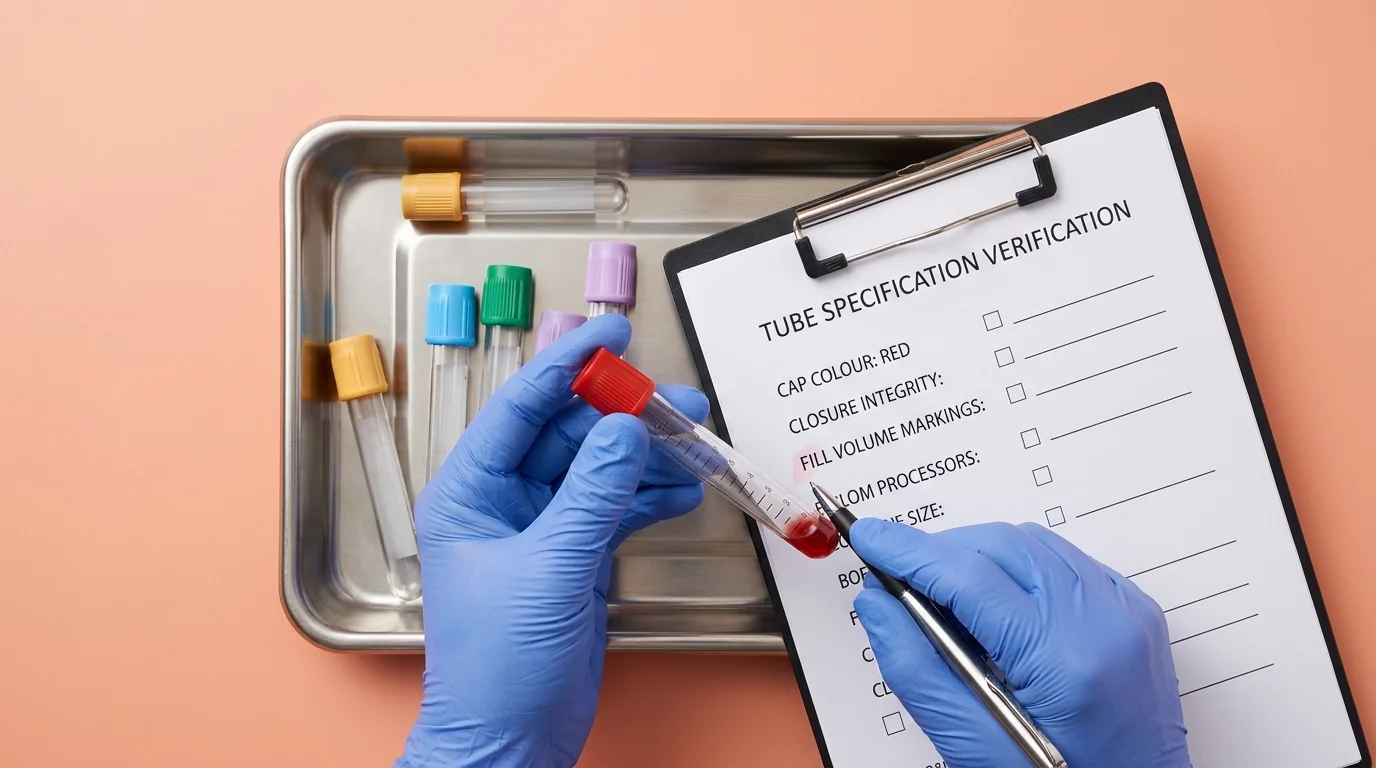 Before comparing specific products, let's establish the decision framework. The right tube is a function of three primary factors:
- Additive and Intended Use: This is the most critical clinical decision. The chemical additive determines whether you yield serum (from clotted blood) or plasma/whole blood (from anticoagulated blood).
- Clot Activator (Red Top): For serology, immunology, and clinical chemistry. The tube walls are coated with a substance (like silica particles) to accelerate blood clotting, allowing for the separation of serum after centrifugation.
- K2 EDTA (Lavender Top): For hematology. Ethylenediaminetetraacetic acid (EDTA) is an anticoagulant that chelates calcium ions, preventing clotting and preserving cellular morphology. This is the standard for Complete Blood Count (CBC), ESR, and HbA1c.
- Sodium Fluoride (Grey Top): For glucose and lactate testing. Sodium fluoride acts as a glycolytic inhibitor, preventing the breakdown of glucose by blood cells post-collection. It is typically paired with an anticoagulant like potassium oxalate.
- Cap Design and Workflow: This choice directly impacts lab safety and efficiency.
- Single Cap: A traditional, simple press-on cap. It is straightforward to open and suitable for lower-volume settings or where manual de-capping is the standard workflow.
- Double Cap (Safety Cap): Features an outer cap and an inner rubber stopper. This design significantly reduces the risk of aerosol generation upon opening, protecting technicians from potential exposure to blood-borne pathogens. It is the preferred choice for high-volume labs and facilities with stringent biosafety protocols.
- Tube Volume: The volume (e.g., 2ml or 4ml) must align with the sample requirements of your analyzers and the specific test panel. Using a 4ml tube for a single test requiring only 0.5ml can be wasteful, while a 2ml tube may be insufficient for a comprehensive metabolic panel.
At-a-Glance Comparison
This table outlines the primary function and configuration of the BDK Life tubes we will discuss in detail.
| Product Name | Additive | Cap Type | Volume | Primary Clinical Use | Ideal For |
| BDK Clot Activator Tube, 4ml - Double Cap | Silica (Clot Activator) | Double | 4ml | Serum Chemistry, Immunology, Serology | High-volume labs, biosafety-conscious environments |
| BDK Clot Activator Tube, 4ml - Single Cap | Silica (Clot Activator) | Single | 4ml | Serum Chemistry, Immunology, Serology | Clinics, smaller labs, manual processing |
| BDK K2 EDTA Tube, 2ml - Single Cap | K2 EDTA | Single | 2ml | Hematology (CBC, ESR), Blood Banking (Grouping) | General hematology, point-of-care settings |
| BDK K2 EDTA Tube, 2ml - Double Cap | K2 EDTA | Double | 2ml | Hematology (CBC, ESR), HbA1c | Labs processing infectious disease samples |
| BDK Sodium Fluoride Tube, 2ml - Double Cap | Sodium Fluoride/K.Oxalate | Double | 2ml | Glucose, Lactate, Glucose Tolerance Testing (GTT) | Endocrinology, diabetes clinics, high-volume labs |
BDK Life Sciences Clot Activator Non Vacuum Blood Collection Tube 4ml - Double Cap Pack of 100 Pieces
The BDK Life Clot Activator 4ml Double Cap Tube is engineered for facilities where both sample quality and technician safety are paramount. The 4ml volume is ample for most routine and specialized serum-based assays, including liver function tests (LFTs), kidney function tests (KFTs), lipid profiles, and infectious disease serology.
The key operational differentiator is its double-cap design. This safety feature minimizes the risk of aerosolization when the tube is opened, a critical consideration in labs handling a high volume of samples or those with a potential for infectious pathogens. This makes it an excellent choice for central laboratories in multi-specialty hospitals. When evaluating your full range of testing needs, you can explore our complete collection of Clot Activator Tube options to standardize across your departments.
- Best Suited For: Hospital central labs, high-volume diagnostic centers, and any setting prioritizing biosafety protocols.
- Clinical Use: All applications requiring stable, fibrin-free serum.
BDK Life Sciences Clot Activator Non Vacuum Blood Collection Tube 4ml - Single Cap Pack of 100 Pieces
Functionally identical to its double-capped counterpart in terms of additive and volume, the BDK Life Clot Activator 4ml Single Cap Tube offers a simpler, more direct workflow. The single-press cap is quick to remove, making it efficient for smaller clinics, dental practices, or labs where throughput is lower and manual processing is the norm.
This tube is a practical choice for facilities that have established safety protocols that do not mandate a safety cap. The 4ml capacity ensures sufficient serum volume for comprehensive test panels from a single draw. It delivers the same high-quality serum required for accurate chemistry and immunology results, but with a more traditional handling profile.
- Best Suited For: Private clinics, smaller hospital labs, and outpatient departments (OPDs) with moderate sample loads.
- Clinical Use: Routine biochemistry, hormone assays, and serological screening.
BDK Life Sciences K2 EDTA Blood Collection Tube Non Vacuum - 2ml Single Cap Pack of 100
This is the workhorse edta tube for any hematology department. The spray-dried K2 EDTA anticoagulant effectively preserves the cellular components of whole blood, which is essential for accurate CBCs, platelet counts, and peripheral blood smear preparations. As a leading lab blood collection tubes 2ml supplier, we see this configuration widely adopted for routine hematological investigations.
The 2ml volume is ideal for standard hematology analyzers and minimizes the required sample volume, a significant advantage in pediatric and geriatric phlebotomy. The single-cap design facilitates quick and easy access for manual pipetting or placement onto automated sample rockers. It is a reliable and efficient choice for everyday hematology testing.
- Best Suited For: Routine hematology labs, pediatric wards, and blood banks for cross-matching and blood grouping.
- Clinical Use: Complete Blood Count (CBC), Erythrocyte Sedimentation Rate (ESR), HbA1c, and peripheral smear analysis.
BDK Life Sciences K2 EDTA Blood Collection Tube Non Vacuum - 2ml Double Cap Pack of 100
The BDK Life K2 EDTA 2ml Double Cap Tube provides the same trusted K2 EDTA anticoagulant for hematology testing but adds the critical layer of safety offered by the double cap. This is the preferred option for labs that handle a high volume of samples or those from infectious disease wards, where minimizing aerosol exposure during de-capping is a non-negotiable safety requirement.
While the clinical applications are identical to the single-cap version, the choice to specify this tube is an operational one, rooted in occupational health and safety policy. It ensures that technicians are protected without compromising the quality of the whole blood sample needed for precise and reliable hematological analysis.
- Best Suited For: Tertiary care hospital labs, labs processing samples from high-risk patients, and facilities with automated or semi-automated hematology lines where safety caps are compatible.
- Clinical Use: Same as the single-cap EDTA tube, with an enhanced safety profile.
BDK Life Sciences Sodium Fluoride Non Vacuum Blood Collection Tube 2ml - Double Cap Pack of 100 Pieces
When analyte stability is the primary concern, particularly for glucose, the fluoride tube is the only correct choice. This BDK Life tube contains Sodium Fluoride as a glycolytic inhibitor and Potassium Oxalate as an anticoagulant. This combination immediately halts glycolysis, ensuring that glucose levels in the sample remain stable for up to 72 hours at room temperature.
This stability is crucial for accurate diagnosis and monitoring of diabetes mellitus, especially when there is a delay between sample collection and analysis. The 2ml volume is sufficient for glucose and lactate testing, and the double-cap design aligns with safety best practices in busy labs. Sourcing this tube from a reliable bdk blood collection tubes supplier ensures consistency for critical endocrinology assays.
- Best Suited For: Endocrinology departments, diabetes management clinics, and for samples collected in remote camps or satellite centers that will be transported to a central lab.
- Clinical Use: Fasting Blood Sugar (FBS), Post-Prandial Blood Sugar (PPBS), Glucose Tolerance Tests (GTT), and lactate measurements.
Best Practices for Sample Integrity
Choosing the correct tube is only the first step. Proper handling is essential to prevent pre-analytical errors that can lead to sample rejection or erroneous results.
- Order of Draw: When collecting multiple blood sample collection tubes from a single venipuncture via syringe, a specific order should be followed to prevent cross-contamination of additives. The generally accepted order is: 1) Blood cultures, 2) Coagulation (Blue), 3) Serum (Red/Clot Activator), 4) Heparin (Green), 5) EDTA (Lavender), 6) Glycolytic inhibitor (Grey/Fluoride).
- Proper Mixing: Immediately after collection, tubes with additives must be gently inverted to ensure thorough mixing.
- EDTA & Fluoride Tubes: Invert 8-10 times.
- Clot Activator Tubes: Invert 5-6 times.
- Do not shake the tubes, as vigorous agitation can cause hemolysis (rupturing of red blood cells), which interferes with many chemistry tests.
- Fill Volume: Under-filling or over-filling anticoagulant tubes can alter the critical blood-to-additive ratio, potentially affecting results for tests like ESR. Ensure the tube is filled to the indicated mark.
Final Considerations
Selecting the correct non-vacuum blood collection tubes is a strategic decision that balances clinical requirements, operational efficiency, and staff safety. For routine serum chemistry in a high-volume setting, the 4ml Double Cap Clot Activator is a sound choice. For pediatric hematology, the 2ml Single Cap K2 EDTA provides the right volume and anticoagulant. For precise glucose monitoring where delays are possible, the Sodium Fluoride tube is indispensable.
By carefully evaluating your lab's specific test menu, sample throughput, and safety protocols against these BDK Life options, you can effectively standardize your inventory and ensure the highest level of pre-analytical quality. Explore the full range of BDK Life consumables on MedikaBazaar to equip your facility with reliable and appropriate lab disposables.
FAQs

