
The Clinical Guide to Karman Cannulas: Sizes, Applications, and Hospital Sourcing


What is Karman Cannula and Its Primary Clinical Uses?
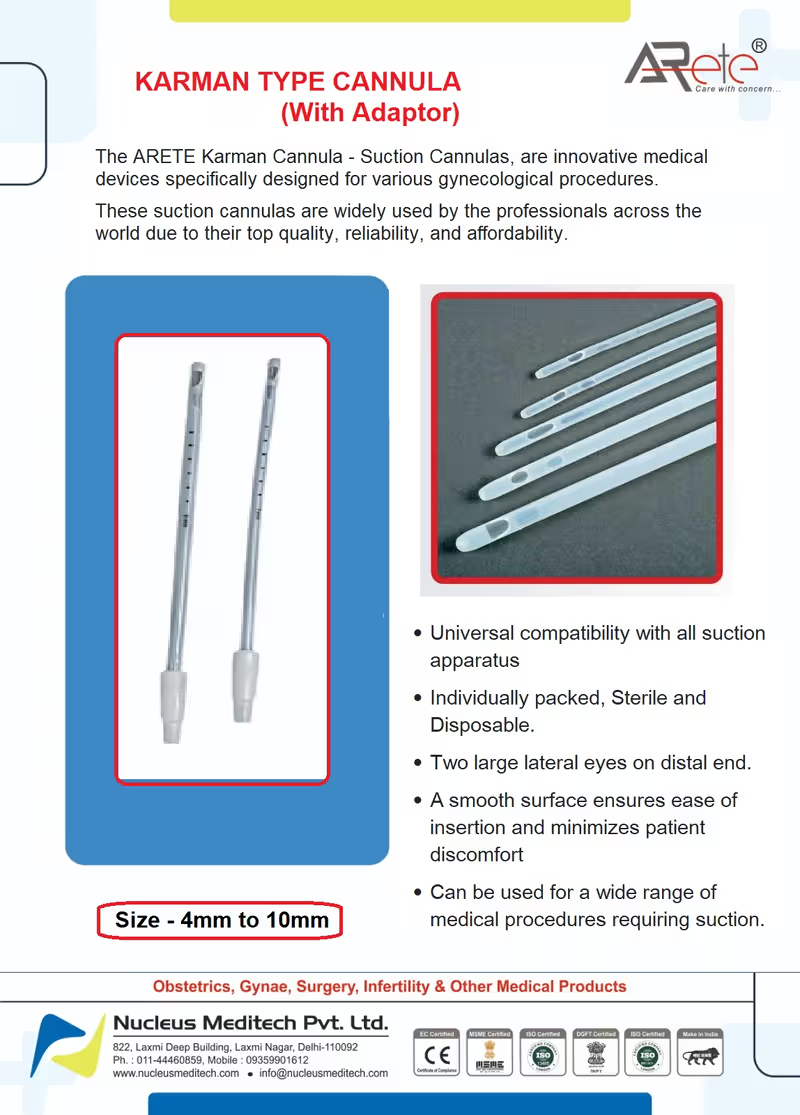
The Karman cannula is a soft, flexible, blunt-tipped suction device constructed from medical-grade plastic, designed for uterine aspiration in gynecological procedures such as manual vacuum aspiration (MVA).
it facilitates the evacuation of uterine contents—including in early pregnancy termination, incomplete or missed abortion, and retained products of conception—by connecting to a hand-held syringe that generates vacuum suction without reliance on electricity or anesthesia.
It’s non-rigid structure reduces the risk of uterine perforation compared to rigid metal alternatives, enabling safer outpatient use in resource-constrained environments, though procedural efficacy depends on gestational age and operator skill, with success rates exceeding 95% for gestations under 8 weeks.
Decoding the Universal Karman Cannula Color Code and Sizes
Karman cannula, used primarily for Manual Vacuum Aspiration (MVA) and gynecological procedures, follow a specific sizing and color-coding system distinct from IV cannula. Sizes are measured in millimeters (mm) and often assigned to a specific color code.
While color coding may vary slightly by manufacturer, common standards include:
| Size (mm) | Code | Common Color |
| 8 mm | KC8 | White |
| 9 mm | KC9 | Cherry Red |
| 10 mm | KC10 | Dark Green |
| 12 mm | KC12 | Dark Blue |
Note: Sizes are also commonly available in ranges such as 5 mm, 6 mm, 7 mm, 8 mm, 10 mm, and 12 mm. Also, If you are looking for IV Cannula coding instead (often confused with Karman), those are color-coded by gauge (e.g., Orange 14G, Green 18G, Pink 20G)
Specific Clinical Applications: Karman Cannula No 4 vs. No 8
The clinical application of a Karman cannula is primarily determined by its diameter, which correlates to the volume of tissue or fluid to be evacuated, and the degree of cervical dilation required. While No. 4 and No. 8 are both flexible, medical-grade plastic tools, they serve distinct procedural roles based on their size.
Karman Cannula No. 4 (4 mm)
This smaller diameter cannula is predominantly used for diagnostic purposes and very early-stage interventions because it often does not require cervical dilation.
- Endometrial Sampling: It is a standard tool for endometrial aspiration biopsy to investigate abnormal uterine bleeding (AUB) or suspected endometrial cancer
- Menstrual Regulation: Used for uterine evacuation in cases of delayed periods (typically within 6 weeks of the last menstrual period)
- Infertility Investigation: Frequently applied in diagnostic workups to assess the endometrial lining
- Manual Vacuum Aspiration (MVA): Can be used with a 10cc disposable syringe to create high-pressure suction for small-volume samples
Karman Cannula No. 8 (8 mm)
The No. 8 cannula has a larger diameter and is typically used for therapeutic evacuation of larger volumes of uterine contents.
- Early Pregnancy Termination: Commonly used in surgical abortion procedures, typically between 8 to 10 weeks of gestation
- Miscarriage Management: Used for the evacuation of incomplete or missed abortions to remove retained products of conception
- Molar Pregnancy: Effective for evacuating abnormal tissue in cases of hydatidiform mole
- Suction Curettage: Often used as part of a Manual Vacuum Aspirator (MVA) kit with a 60cc syringe
Key Differences at a Glance
| Feature | No. 4 (4 mm) | No. 8 (8 mm) |
| Primary Use | Diagnostic (Biopsy, MR) | Therapeutic (Abortion, Miscarriage) |
| Cervical Dilation | Rarely required | Often required |
| Gestation Limit | Up to ~6 weeks | Up to ~8-10 weeks |
| Vacuum Source | Often 10cc-20cc syringe | Standard 60cc MVA syringe |
The Advantages of a Plastic Suction Cannula Karman Type
The plastic Karman-type suction cannula is a vital, single-use, flexible instrument used primarily for uterine evacuation and gynecological aspiration. Its design, featuring a blunt, rounded tip and side holes, is specifically engineered to minimize trauma to the uterine walls while ensuring effective suction.
Key Advantages
- Reduced Injury Risk: The flexible, blunt-tipped design significantly lowers the risk of uterine perforation compared to rigid, metal curettes
- Patient Comfort: The pliable nature of the plastic is less traumatic and typically reduces pain, often allowing procedures to be performed without general anesthesia
- Sterility & Safety: As a sterile, single-use, disposable device, it eliminates the risk of cross-contamination between patients
- Efficiency: It is highly effective for manual vacuum aspiration (MVA) and enables quick, controlled removal of uterine contents
- Versatility: Available in various sizes (typically 4mm to 12mm) to suit different anatomical needs and procedural requirements
Sourcing Reliable Cannulas for Your Healthcare Facility
To source reliable cannulas, prioritize suppliers holding ISO 13485 certification and those with established CE marking or FDA compliance. Key manufacturers and suppliers include Iscon Surgicals Ltd., Mediplus India, Lars Medicare, Cruzine Healthcare, and HMD. Always verify batch-level traceability and request third-party testing reports before committing to bulk procurement to ensure sterility and material quality.
Related Products
Fastest by 25th May
COD
Arete Karman Cannula With Adaptor
₹1,250
₹2,14342% OFF
Fastest by 1st Jun
COD
Vaishanav Surgicals Hoprin Cannula
₹81
₹9817% OFF
Fastest by 26th May
COD
Laparomed 2 Way Sliding Valve Suction irrigation with Cannula
₹4,388
₹6,37531% OFF
Fastest by 25th May
COD
Arete Reusable Iui Cannula
₹2,250
₹3,76240% OFF
Fastest by 26th May
COD
Laparomed Trumpet valve Suction Irrigation with Cannula
₹5,727
₹8,31931% OFF


FAQs
SOCIAL MEDIA
DOWNLOAD APP
HELP US IMPROVE
SOCIAL MEDIA
DOWNLOAD APP