
Infusion Pump vs Syringe Pump: Uses, Working & Setup


What Is an Infusion Pump?
An infusion pump is a medical device used to deliver fluids such as medications, nutrients, or electrolytes into a patient’s body in a controlled and precise manner. Unlike manual methods, infusion pumps ensure accurate flow rates, which are essential in critical care and complex treatment protocols. Depending on clinical needs, these devices can administer fluids intravenously, subcutaneously, or epidurally through tubing connected to the patient.
Used widely across healthcare settings, infusion pumps provide a consistent and steady delivery of medication over a predetermined period. They may be operated manually or remotely, allowing healthcare professionals greater control and monitoring during therapy. Although available in different types, all infusion pumps function on the same principle of regulated fluid delivery. This article explores how infusion pumps work, their applications, and their role in modern medical practice.
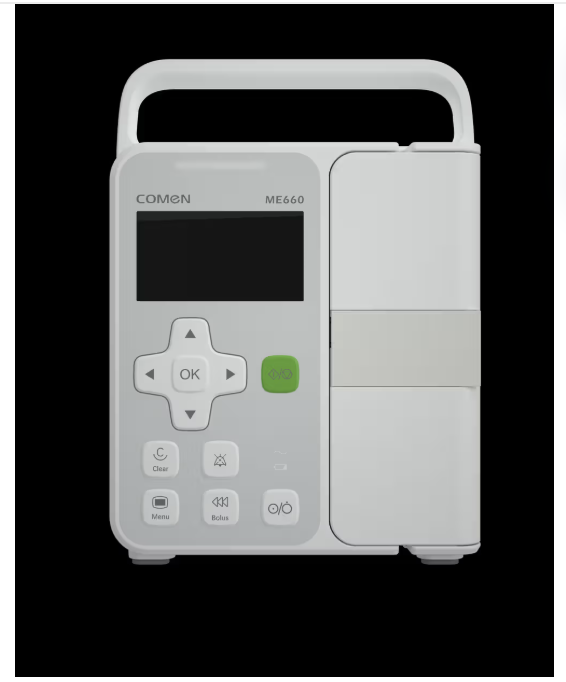
Brief Working Principle of Infusion Pumps
Infusion pumps operate using mechanical systems that regulate the delivery of fluids through a controlled pump mechanism. Let’s understand how to start the infusion pump. Healthcare professionals program the device with the required infusion rate and total volume via a user interface, after which the pump delivers the fluid at a consistent and precise flow through the tubing into the patient’s intravenous line.
To ensure patient safety, infusion pumps are equipped with sensors and alarm systems that continuously monitor the process. These features detect issues such as air bubbles, occlusions, low battery levels, or interruptions in flow, allowing timely intervention and ensuring that therapy is administered exactly as prescribed.
Why Infusion Pumps Are Used in Hospitals and Clinics?
Infusion pumps offer precise and controlled delivery of fluids, reducing the risk of over- or under-dosing while ensuring consistent therapy. Equipped with continuous monitoring systems, these devices track flow rates and promptly detect issues such as blockages or air bubbles. Their customisable settings allow healthcare providers to tailor infusion rates according to individual patient needs. Together, these features enhance patient safety by minimising manual errors, improve time efficiency by reducing constant supervision, and provide greater comfort through steady, pain-free administration making infusion pumps an essential part of modern medical practice.
What Is a Syringe Pump?
A syringe pump is an infusion device used to deliver very small volumes of medication with high precision. It holds a medication-filled syringe and advances the plunger at a controlled rate, ensuring accurate and consistent drug administration.
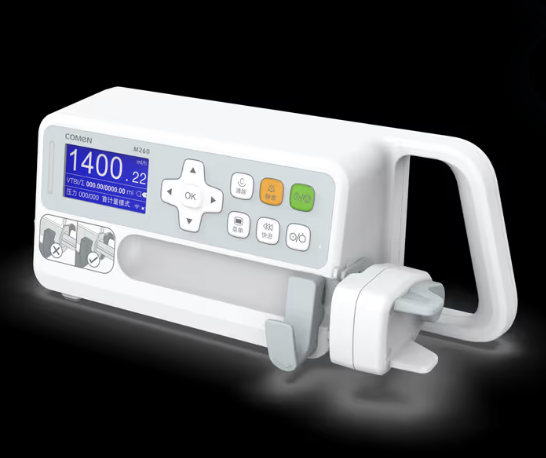
How a Syringe Pump Works: Step by Step
Let’s understand how to connect syringe pump. A syringe pump uses a battery-driven motor to gently and steadily push the syringe plunger, delivering medication through tubing and a needleless catheter placed under the skin. As only very small amounts of fluid are delivered at a time, the process is usually not felt by the patient. A green flashing light on the front of the pump, above the grey on/off button, indicates that the pump is functioning correctly.
The syringe pump is refilled daily by nursing staff using the medications prescribed and supplied by the hospital or pharmacy. The pump can be carried in a small bag worn over the shoulder or around the waist, allowing you to move around comfortably while treatment continues. If you are confined to bed, the pump may also be placed nearby, such as in a pillowcase. The needleless catheter is secured with a clear dressing and can remain in place for several days. The insertion site is checked daily and the catheter is replaced if there are signs of redness, pain, or swelling. Once in place, the catheter should be painless; however, any discomfort should be reported to the nurse.
A syringe pump may be required if you need frequent injections to manage symptoms such as pain or nausea, if you are unable to take medicines by mouth due to swallowing difficulties, or if oral medications are not being absorbed effectively.
Why Syringe Pumps Are Used for Precise Dosing?
A syringe pump is a type of infusion device designed to deliver very small volumes of medication with high accuracy. Instead of using an IV fluid bag, a syringe filled with the prescribed drug is mounted on the pump, which advances the syringe plunger at a controlled rate to ensure precise administration. This makes syringe pumps especially suitable for medications that require strict dosing control.
In hospital settings, syringe pumps are widely used to administer potent drugs such as insulin, adrenaline, cardiac medications, anaesthetics, chemotherapy agents, and neonatal nutrition, particularly in intensive care units where minute dosing is critical. Hospitals prioritise syringe pumps with features such as high accuracy, advanced programming options, safety alarms, and easy cleaning for use in critical care environments.
Syringe pumps, are used across multiple hospital departments. In ICUs, they support continuous delivery of life-saving medications; in operating rooms, they assist with anaesthesia and fluid management; in emergency rooms, they enable rapid resuscitation; in neonatal ICUs, they ensure precise micro-dosing for premature infants; in oncology departments, they allow controlled chemotherapy delivery; and in general wards, they help administer antibiotics and nutritional support as scheduled.
Key differences between the pump
Although both devices deliver fluids in a controlled manner, infusion pumps and syringe pumps differ in their application and design. Infusion pumps are used to administer larger volumes of fluids over extended periods, making them suitable for hydration, nutrition, and continuous drug delivery. Syringe pumps deliver very small volumes with high accuracy and are preferred for potent medications requiring precise dosing.
Infusion pumps typically draw fluids from IV bags and are commonly used in wards and ICUs, while syringe pumps use pre-filled syringes and offer greater precision and portability. While both are accurate, syringe pumps provide finer control for low-volume delivery, making them essential in critical care, neonatal, and surgical settings.
How infusion pumps work and how to use?
Infusion pumps work by delivering fluids through a controlled mechanism at a programmed rate and volume via tubing into the patient’s line. To use the pump, the healthcare professional sets the prescribed flow rate and total volume, connects the tubing securely, and monitors the device to ensure safe and accurate delivery.
How syringe pumps work and how to use?
Syringe pumps work by holding a medication-filled syringe and slowly advancing the plunger at a preset rate to deliver precise doses through connected tubing. To use the pump, the syringe is secured in place, the required rate and volume are programmed, and the system is monitored to ensure accurate and uninterrupted medication delivery.
Buying pumps on Medikabazaar
Buying infusion and syringe pumps on Medikabazaar ensures access to authentic, quality-certified devices from trusted brands. With competitive pricing, reliable logistics, and a wide product range, Medikabazaar makes procurement easy and dependable for hospitals and clinics.
Related Products

Fastest by 10th Apr
COD
Life Plus Infusion Pump
₹12,500
₹26,00052% OFF
₹11,625 with MBFIRST
Fastest by 8th Apr
COD
Beyond Infusion Pump
₹20,625
₹22,0006% OFF
₹19,625 with MBFIRST
Fastest by 9th Apr
COD
Allied Meditec Single Channel
₹39,360
₹48,00018% OFF
₹38,360 with MBFIRST
Fastest by 10th Apr
COD
Keewell Blood Infusion Warmer - QW3
₹38,125
₹41,2508% OFF
₹37,125 with MBFIRST
Fastest by 13th Apr
COD
Keewell Blood Infusion Warmer - QW-618
₹83,974
₹1,00,76917% OFF
₹82,974 with MBFIRST


FAQs
SOCIAL MEDIA
DOWNLOAD APP
HELP US IMPROVE
SOCIAL MEDIA
DOWNLOAD APP